

Share:
Watch live: Deborah Birx testifies on Trump administration's COVID response
Deborah Birx, who served as former President Trump’s White House coronavirus response coordinator, is slated to testify before a House panel Thursday morning.
The hearing will begin at 10 a.m. ET.
Watch the live video above.
Source: TEST FEED1
Share:
Watch live: Federal Reserve chairman testifies before House panel on inflation and economic woes
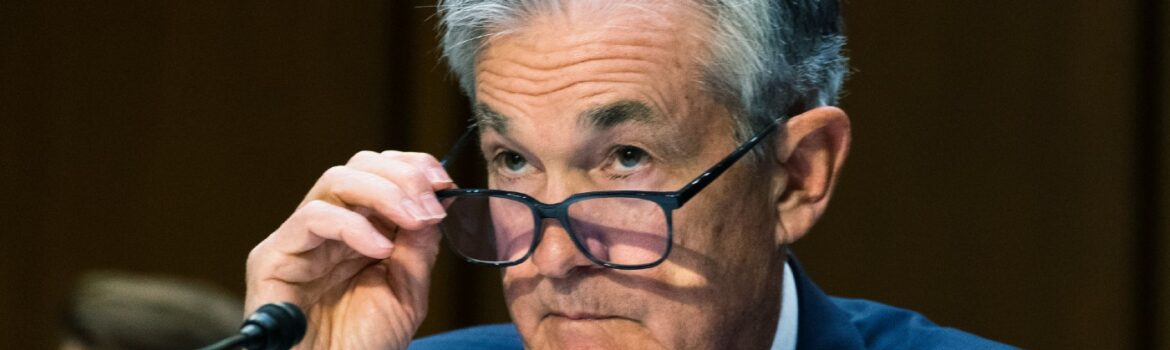
Federal Reserve Chairman Jerome Powell is scheduled to testify before a House panel Thursday morning to discuss the state of inflation in the United States.
The hearing will begin at 10 a.m. ET.
Watch the live video above.
Source: TEST FEED1
Share:
GOP pollster Frank Luntz: Republicans are saying 'it's time to move on' from Trump
Veteran GOP pollster Frank Luntz said on Thursday that a recent New Hampshire poll showing Florida Gov. Ron DeSantis (R) narrowly edging out former President Trump indicates Republicans are saying “it’s time to move on” from Trump.
During an interview on CNN’s “New Day,” Luntz and the network’s chief White House correspondent, Kaitlan Collins, spoke about the University of New Hampshire Granite State Poll, which found that 39 percent of likely Republican primary voters in the state would back DeSantis as their first choice in a list of Republican candidates who are considered possible GOP presidential candidates. Trump, meanwhile, received 37 percent support in that poll. The results are within the survey’s margin of error of 5.5 percent.
“DeSantis is … the greatest threat to Trump when it comes to the Republican Party,” Collins said.
“It’s more than a threat,” Luntz noted. “The governor is proving that his approach and what he’s trying to accomplish and what he has accomplished in Florida is more significant and Republicans are now saying it’s time to move on.”
The pollster noted that Trump is still “the most popular political figure” within the GOP, adding that the former president now has a “specific challenger” for the upcoming 2024 presidential election.
Trump and DeSantis have not officially announced that they are running in the 2024 presidential election, though the former president has at times teased the possibility.
The development comes against the backdrop of hearings conducted by the House select committee investigating the Jan. 6, 2021 Capitol rioting, which have sought to show the role that Trump and his allies have played in pressuring then-Vice President Pence and state officials to overturn the 2020 election results.
“There’s now polling out that shows that Donald Trump is actually paying a price for what these hearings are showing,” Luntz said on Thursday.
Source: TEST FEED1
Share:
With inflation comes the check for past ‘free’ lunches
With President Biden talking about employing the Defense Production Act to force petroleum companies to open the oil valves wider and produce more gasoline, we are reminded that there is no such thing as a government-provided outcome, environmental or otherwise, without cost. Consumer outrage at $5-per-gallon gas is evidently strong enough to get the attention of a president known for his commitment to improving the condition of the planet.
It’s another version of that old saw famously associated with Nobel laureate and economist Milton Friedman: There’s no such thing as a free lunch. Today, inflation is putting a price tag on past political actions that only sounded free at the time.
Friedman, known for his wit and unwavering free market critique of public policy, was making a simple point: If society’s scarce resources are being used to prepare this proverbial lunch (even if it’s to orchestrate cleaner air or some other worthwhile goal), then we can be certain that some people, somewhere, are paying the bill, voluntarily or otherwise.
Unwavering in his support of the freedom to choose, Friedman once led a march during the Vietnam War with much younger men and women protesting the draft and calling for an all-volunteer army. It was not defense policy that motivated him as much as the cost imposed when individuals have no choice but to go off to war without being fully compensated. Eventually, of course, his message was received, and our laws were changed. Today, we have an all-volunteer military.
That said, the free-lunch politics of most other issues are such that promises get our attention and, when placed in front of the people and our representatives, our approval. Through a pageant of presidents from Obama to Trump to Biden and in face of economic difficulties, we the people have been promised and have received subsidies and checks from the federal government that entered our bank accounts as if by magic.
At the same time, we were promised that only higher income individuals would face tax increases to help pay for the checks. Yes, it sounded a lot like a free lunch. But now, with all that extra cash circulating, every American is facing 8 percent or higher inflation, no matter what their income level. No amount of planning and promising could negate Friedman’s rule, and the bill for the free lunch hits most of us each time we go shopping.
Of course, political promises that sound like free lunches come in many forms. During the Trump administration, animosity toward China regarding respect for intellectual property rights and other trade matters led to the imposition of tariffs on a large variety of Chinese goods imported by the United States. The purpose, one could argue, was to provide “free” trade protection to corporate investors who were complaining about China’s abusive actions. No doubt plenty of investors had legitimate gripes, but the tariffs’ real costs were consistently downplayed by the administration.
All along, those involved in these matters had to know that American consumers would be picking up the tab for the higher priced Chinese goods. There is no such thing as free enforcement of trade policies on unwilling partners. Now, it seems, with inflation alarms ringing loudly, President Biden is giving serious consideration to removing some of the Trump-imposed tariffs, all in the interest of lifting the burden that was not so long ago imposed through active policymaking on American consumers.
Yes, sometimes the check for a free lunch is slow in coming, but eventually, the buck will stop, and someone will have to pay the bill.
Bruce Yandle is a distinguished adjunct fellow with the Mercatus Center at George Mason University, dean emeritus of the Clemson College of Business and Behavioral Sciences, and a former executive director of the Federal Trade Commission.
Source: TEST FEED1
Share:
Support for tougher gun laws climbs after May mass shootings: Gallup
Americans’ support for tougher gun laws and reform has risen in the wake of several deadly mass shootings last month, according to a new Gallup poll.
The poll found that 66 percent of respondents said they want stricter gun laws, while 25 percent of those surveyed said they would prefer gun laws remain as they are and 8 percent of respondents believe that they should be less strict.
The percentage of Americans who want stricter gun laws is up 14 percentage points from a poll conducted after the mass shooting at Marjory Stoneman Douglas High School in Parkland, Fla. in 2018, according to the survey giant.
Fifty-five percent of respondents in the new survey also said they want the government to pass new gun reform legislation in addition to enforcing current laws.
Another 55 percent said that gun policy is an “extremely important” ahead of the midterm elections, while 27 percent of those surveyed said that gun policy is a “very important” issue to them.
When broken down by political affiliation, 94 percent of Democrats surveyed said they want to see stricter gun laws, as did 66 percent of independents and 38 percent of Republicans.
This findings come just after Senate negotiators reached an agreement on bipartisan gun safety legislation.
The Bipartisan Safer Communities Act includes funding for school safety resources, expanded background checks for buyers under the age of 21, penalties for straw purchases of firearms and new protections for domestic violence victims.
The bill is expected to pass in the Senate, as 14 GOP lawmakers voted to advance it Tuesday evening. A final vote in the upper chamber is expected later this week.
Ninety-two percent of those recently surveyed by Gallup said they would support enhanced background checks on all gun sales, and 86 percent of respondents would support banning individuals who are deemed dangerous from purchasing a firearm.
The Gallup poll was conducted from June 1 to June 20 with a total of 1,015 respondents surveyed. The poll’s margin of error is 4 percentage points.
Source: TEST FEED1
Share:
Biden approval rating at 42 percent: poll
President Biden’s low job approval rating isn’t getting any better.
A NewsNation/DDHQ poll released on Thursday shows that only 42 percent of U.S. voters approve of the job Biden is doing in the White House. By comparison, 58 percent say they disapprove.
That’s largely on par with where his approval rating sat in the same poll conducted last month. Still, it’s the latest evidence that the president’s political fortunes don’t appear to be improving.
Driving Biden’s poor approval rating is deepening economic and financial concerns among voters. According to the poll, 53 percent of voters say they are worse off financially now than they were last year.
What’s more, respondents were almost unanimously worried about inflation, which is rising at its fastest pace in more than 40 years. Ninety-seven percent say they are either somewhat or very concerned about rising prices, up from 89 percent in the same poll conducted in April.
Overall, 72 percent of those surveyed rank inflation at the top of their list of concerns. Crime came in second place, with only 15 percent naming it as the top issue, the NewsNation/Decision Desk HQ poll found.
Biden himself won’t be on the ballot this year, but his party is already facing strong headwinds heading into the midterm elections.
Republicans need to net just five seats in the House and one in the Senate to reclaim their majorities in Congress. Making things more difficult for Democrats is the fact that, historically, the party in power almost always loses ground in Congress in midterm elections.
The poll also found that a plurality of voters – 42 percent – blame Biden for the current state of the economy. Another 18 percent blame congressional Democrats, while 21 percent say Republicans in Congress are responsible.
The NewsNation/DDHQ poll surveyed 1,006 registered voters nationwide from June 19-20. It has a margin of sampling error of +/-3 percentage points.
Source: TEST FEED1
Share:
Work to do: Our full labor history must include Asian Pacific Americans
President Biden recently signed into law a bill that would explore whether to establish a National Museum of Asian Pacific American History and Culture. In his support of H.R. 3525, Biden said Asian Americans and Pacific Islanders (AAPIs) “have literally shaped the history and the contours of this country.”
The news of a potential national museum offers Americans a prime opportunity to better acquaint themselves with Asian Pacific American interventions in unionizing and union history.
Even as employees at corporations such as Apple, Starbucks, Amazon and Microsoft are organizing unions, the contributions of Asian Americans and Pacific Islanders to U.S. union history remain overlooked. Deep connections exist between labor history and historically underrepresented groups, making the early unionizing efforts of AAPIs significant.
One of the earliest labor disputes in the U.S occurred when Native Hawaiians protested their pay and working conditions on a Hawaiian plantation in 1841 by walking off the job.
In 1930, Carlos Bulosan arrived in Seattle from the Philippines at age 17 and spent two decades working low-wage jobs along the West Coast. He was allowed few breaks and meals, lived in second-rate housing, and often experienced discrimination based on his race and nationality. He chronicled many of these experiences in the 1946 semi-autobiographical classic, “America is in the Heart.” While organizing an independent Filipino union for agricultural workers, Bulosan’s friend reportedly was accosted by a woman who exclaimed, “I hate the Filipinos as deeply as I hate unions!”
The Asian Pacific American Labor Alliance reported that in 2017, the number of Native Hawaiians and Pacific Islander workers was highest among all racial groups, as is their participation in labor unions, further proving the need to disaggregate data about workers across specific ethnicities to better understand their needs and cultural backgrounds.
Connecting labor and unionizing to race and ethnicity matters because early movements in labor deliberately excluded immigrants and other marginalized groups, often leading to violence and an early echo of the racism against AAPIs that persists today. Stop AAPI Hate reports over 9,000 recent incidents of anti-Asian discrimination in the U.S. in 2020 and 2021, including harassment, physical assault and workplace discrimination.
But the discrimination and targeting of Asian workers is not a new phenomenon in this country.
The Chinese Exclusion Act of 1882 targeted Chinese migrant workers and was the first U.S. law to prevent a specific ethnicity or nationality from entry into the United States. Hatred of immigrant Chinese laborers — mostly men, due to U.S. labor and immigration laws — led to one of the largest mass lynchings in U.S. history when a mob in 1871 killed 19 Chinese immigrants in Los Angeles.
A century later, in 1982, Chinese American auto technician Vincent Chin was killed in a hate crime by two white auto workers who thought he was Japanese and blamed Japan for the economic crisis in the Detroit auto industry. This month marks the 40th anniversary of Chin’s murder.
Of course, all Americans, especially those of marginalized groups, have contributed to increasing the rights of workers, even if their contributions have been overlooked.
Black civil rights leaders such as Frederick Douglass, Martin Luther King Jr. and John Lewis praised the work of unions in helping to bring equality to all Americans. Chris Smalls and Derrick Palmer, the Amazon Labor Union leaders in New York, and Nikki Taylor, one of the seven workers trying to organize a union at the Memphis Starbucks, follow in their footsteps.
The history of American farm labor movements, and what would become the United Farm Workers of America, has origins in Latinx organizers, including Cesar Chavez and Dolores Huerta. Yet, in this framing, many skip the contributions of Filipino organizers Larry Itliong and Philip Vera Cruz. Itliong was acknowledged in 2013 with the naming of the Itliong-Vera Cruz Memorial Bridge in California. The 2018 publication of a children’s book about Itliong adds to the narrative of these organizers.
But as these stories emerge, Asian Pacific American contributions need to be highlighted.
Almost 15,000 Chinese workers helped build the U.S. transcontinental railroad between 1863 and 1869, but their efforts were until recently overshadowed by white Irish and Mormon workers whose work was made iconic in the 1869 official photograph commemorating the railroad’s completion.
In his endorsement of a museum, Biden said, “More than anything else, it’s going to help people see themselves in the story of America, a story that makes us better Americans.”
Yes, publicly supporting the development of a National Museum of Asian Pacific American History and Culture would help make these histories — and other stories of Asian American, Native Hawaiian and Pacific Islander history — easier to learn and access.
This is just the beginning. Employers, union leaders and policymakers must actively combat AAPI hate in the workplace and foster cultures of inclusion by hiring more diversely, offering access to support groups and equitable and affordable mental health care, and unequivocally addressing and providing active resolutions to discrimination in the workplace and everywhere.
Leah Milne is associate professor of multicultural American literature at the University of Indianapolis, author of “Novel Subjects: Authorship as Radical Self-Care in Multiethnic American Narratives,” and a Public Voices Fellow through The OpEd Project. Follow her on Twitter @DrMLovesLit.
Source: TEST FEED1
Share:
The Hill's Morning Report — Biden gas tax call lands with a thud
President Biden made his latest push to ease prices for Americans on Wednesday by calling for a gasoline tax holiday. But he faces an uphill climb on Capitol Hill to enact it as Democratic leaders gave the proposal a lukewarm reception.
After weeks of deliberations, Biden made his call for a three-month holiday of the federal gas tax through the summer travel season, which has driven already-high prices even higher. The president also made a separate appeal to states to provide similar relief to consumers by suspending their own gas taxes (The Hill).
“It doesn’t reduce all the pain, but it will be a big help,” Biden said. “I’m doing my part. I want Congress, states and industry to do their part as well.”
The federal gas tax is 18 cents per gallon, while state gas taxes average about 26 cents per gallon, according to the American Petroleum Institute. Biden also referred to cuts to the 24 cent federal tax on diesel.
Standing in the way of the president’s wish is a Congress that has not given the idea a positive reception dating back months. Summing up their apprehension was Speaker Nancy Pelosi (D-Calif.), who declined to endorse a suspension of the tax.
“Democrats are united in our determination to lower gas prices for families at the pump. … We will see where the consensus lies on a path forward for the President’s proposal in the House and the Senate,” Pelosi said in a statement (The Hill).
In late March, Pelosi indicated that she was cool to a possible suspension, telling reporters that the benefit of such a move “is not necessarily landing in the pocket of the consumer.”
Adding to the trouble, Senate Majority Leader Charles Schumer (D-N.Y.) declined to say whether he would put the three-month gas tax hold up for a vote. Instead, he noted that Democrats attempted to do so already via unanimous consent and that the “important thing we can do to lower gas prices is crack down on big oil’s manipulation of the oil markets.”
As The Hill’s Morgan Chalfant and Amie Parnes write, the latest snafu marked yet another attempt for Biden to use the bully pulpit to his advantage, only to see it fizzle. Last year, Biden used his bullhorn similarly in a bid to pass the Build Back Better social spending proposal but saw its benefits when he successfully managed to move the COVID-19 relief bill and the bipartisan infrastructure package through Congress.
“Presidents can move public opinion more in areas that are more detached for everyday experience,” said William A. Galston, chairman of the Brookings Institution’s Governance Studies Program. “No matter whether you’re Joe Biden or the ‘great communicator’ Ronald Reagan, you’re going to have a hard time changing people’s basic perspectives.”
Bloomberg News: New Jersey to temporarily suspend sales tax on school supplies.
Biden’s push to lighten the economic burden of Americans came as Federal Reserve Chairman Jerome Powell acknowledged that a recession is a “possibility” as the central bank wages war on rising inflation.
The Fed is attempting a high-wire act as it hikes interest rates — including by three-quarters of a percentage point last week, the highest in 28 years — while attempting to avoid pushing the economy into a recession. Powell, appearing before the Senate Banking Committee, said that the bank’s actions could slow the economy enough to halt job gains and economic growth — the two signs of an economy in retreat.
Inducing a recession is “not our intended outcome but certainly a possibility,” Powell said when asked if the Fed could trigger a downturn. “Frankly, the events of the last few months around the world have made it more difficult for us to achieve what we want” (The Hill).
Bloomberg News: Powell says soft landing “very challenging.”

© Associated Press / Manuel Balce Ceneta | Fed Chairman Jerome Powell on Wednesday.
Finally, the eyes of the political world will be squarely on the Supreme Court as it could release the long-awaited abortion opinion in the coming days.
Justices will release another batch of opinions today and announced that they will also do so on Friday, raising speculation that a ruling on the future of Roe v. Wade could come by week’s end. The court has 13 cases left to decide to release before justices break for the summer (SCOTUS Blog).
Related Articles
▪ Yahoo News: Key cases left on the Supreme Court docket this term.
▪ CNN: Louisiana Gov. John Bel Edwards (D) signs bill to strengthen potential abortion ban if Roe is overturned.
▪ John F. Harris: The new battles roiling the left.
LEADING THE DAY
➤ CONGRESS
The mobilization effort by House Republicans against the Senate’s bipartisan gun violence package kicked off in earnest on Wednesday as House Minority Leader Kevin McCarthy (R-Calif.) and House Minority Whip Steve Scalise (R-La.) said they will vote against the proposal.
According to The Hill’s Emily Brooks, McCarthy and Scalise informed House GOP members during a conference meeting on Wednesday of their plan to vote against the bill. Adding to the effort, Scalise will formally whip against the legislation.
The calls follow intense opposition on the part of conservatives in recent days as senators prepared to unveil the bill, which incentivizes states to set up red flag laws, provides funding for mental health services, closes the “boyfriend” loophole and expands background checks for those under 21 with juvenile records. The House Freedom Caucus formally came out against the package on Tuesday, while conservative senators have been banging the drum against it for weeks (The Hill).
One notable House Republican did come out for the bill on Wednesday, however. Rep. Tony Gonzales (R-Texas) — who represents Uvalde, Texas — said in a lengthy Twitter thread that he is a “yes.”
“As a Congressman it’s my duty to pass laws that never infringe on the Constitution while protecting the lives of the innocent,” Gonzales wrote. “I look forward to voting YES on the Bipartisan Safer Communities Act.”
Rep. Fred Upton (R-Mich.) predicted that between 15 and 20 House Republicans would ultimately support the bill (Politico).
When that House vote would take place remains up in the air and depends on when the Senate can clear it. The upper chamber is hoping to advance it by the end of the week.
One Senate vote that will take place after the two-week July 4 recess will be to confirm Steve Dettelbach as head of the Bureau of Alcohol, Tobacco, Firearms and Explosives, according to Schumer.
▪ The Hill: House passes package addressing mental health, 20 Republicans vote “no.”
▪ Politico: Dems vow they’ll do more on gun safety — but it could take years.
▪ Aris Folley, The Hill: Senate Republicans risk blowback from National Rifle Association over gun safety bill.
▪ The Hill: Uvalde, Buffalo underscore issue of gun violence against people of color.
One person who will not be in Washington to take part in any votes through the end of the week is Sen. Kevin Cramer (R-N.D.), who said in a statement on Wednesday that he remains in his home state after suffering a yard-related accident over the weekend. According to the North Dakota Republican, his right hand required immediate surgery and there remains “a high risk of infection and the possible need for amputation.”
“I am alert and in good spirits,” Cramer continued. “I plan to return to Washington, after the Independence Day state work period and expect to be doling out a lot of left-handed fist bumps” (The Hill).
IN FOCUS/SHARP TAKES
➤ POLITICS
The House select committee probing the Jan. 6 attack on the Capitol will hold its final hearing of the month today where it will highlight the pressure exerted by former President Trump and those pushing to overturn the 2020 election on the Department of Justice (DOJ).
Three former officials at the department are slated to appear — former acting Attorney General Jeffrey Rosen, former acting Deputy Attorney General Richard Donoghue and Steven Engel, the former assistant attorney general for the Office of Legal Counsel.
“We’ll look specifically at how the president was trying to misuse the department to advance his own agenda to stay in power at the end of his term,” an aide to the committee said on Thursday (The Hill).
The hearing is the final one of the month, as the committee postponed its next batch until July. Rep. Zoe Lofgren (D-Calif.) told reporters it was because the panel had received a “mountain of new information” since the hearings kicked off two weeks ago.
“There’s been a deluge of new evidence since we got started. And we just need to catch our breath, go through the new evidence, and then incorporate it into the hearings we have planned,” Rep. Jamie Raskin (D-Md.) told reporters (The Hill).
▪ The Hill: Who is Jeffrey Clark, a key figure in Trump’s pressure campaign against the Department of Justice?
▪ The Washington Post: Lawmakers on Jan. 6 committee ramp up their security as threats increase.
▪ The New York Times: Justice Department issues more subpoenas in Trump electors investigation.
▪ The Hill: Committee Chairman Bennie Thompson (D-Miss.): Jan. 6 panel may start sharing info with DOJ next month.
The Jan. 6 spotlight is also shining on Sen. Ron Johnson (R-Wis.) following the revelation that one of his top aides attempted to hand a former aide to former Vice President Mike Pence a set of fake electors from Wisconsin and Michigan hours before the attack on the Capitol.
Johnson said on Tuesday night that he was “basically unaware of” the effort, but as The Hill’s Alexander Bolton writes, even fellow Republicans find it hard to believe that Johnson’s aide would be bold enough to give a fake slate of electors to the then-VP without Johnson’s OK.
“My initial reaction was one of shock. Then Sen. Johnson said he was unaware of it. I and others like myself would like to dig into that, find out just who knew what and when,” said Sen. Mitt Romney (R-Utah), adding that attempting to move through a false slate of electors “would strike at the heart of our democracy.”

© Associated Press / J. Scott Applewhite | Sen. Ron Johnson (R-Wis.) on Wednesday.
Adding to Johnson’s troubles were poll numbers that emerged on Wednesday. According to a new Marquette University Law School poll, only 37 percent of Wisconsin voters hold a favorable view of the two-term senator. Forty-six percent view him unfavorably.
Johnson also trails multiple Democratic candidates in head-to-head matchups. Wisconsin Lt. Gov. Mandela Barnes (D) and Sarah Godlewski both lead Johnson by a 2-point margin.
The Hill: Florida Gov. Ron DeSantis (R) edges past Trump in New Hampshire poll.
📝 Introducing NotedDC, The Hill’s curated commentary on the beat of the Beltway. Click here to subscribe to our latest newsletter.
OPINION
■ There it is again, that recession feeling, by Mark Gongloff, editor, Bloomberg Opinion. https://bloom.bg/39GbDu5
■ Did Russian hackers blow up a Texas LNG pipeline on June 8? By Tom Rogan, national security writer and online editor, Washington Examiner. https://washex.am/3zSebzP
WHERE AND WHEN
The House meets at 10 a.m.
The Senate convenes at 10 a.m. and will resume consideration of the legislative vehicle for the Bipartisan Safer Communities Act.
The president and first lady Jill Biden welcome wounded warriors and their families for the annual Soldier Ride at 9 a.m. Vice President Harris and Second Gentleman Doug Emhoff will attend. Biden will receive the President’s Daily Brief at 10:30 a.m.
The White House daily briefing is scheduled at 3:10 p.m. The White House COVID-19 response team will brief reporters at 2:15 p.m.
🖥 Hill.TV’s “Rising” program features news and interviews at http://thehill.com/hilltv, on YouTube and on Facebook at 10:30 a.m. ET. Also, check out the “Rising” podcast here.
ELSEWHERE
➤ HEALTH
The Food and Drug Administration is set to order Juul Labs’ e-cigarettes to be taken off of the market. The agency’s move will be the culmination of a two-year review of data from the company, which attempted to secure authorization for its products to remain on the market. Juul’s products came into question four years ago when they led to a rise in vaping by underage individuals (The Wall Street Journal). … British officials are investigating after they detected poliovirus in sewage samples in parts of London. The U.K. Health Security Agency said that finding one to three “vaccine-like” polioviruses in sewage samples is routine, but they have always been “one-off” findings that were never detected again, adding that it found several closely related viruses between February and May (The Hill).
On the COVID-19 front, U.S. Ambassador to the United Nations Linda Thomas-Greenfield has tested positive, a spokesperson said on Wednesday, adding that she is experiencing mild symptoms (The Hill). In addition, Rep. Hakeem Jeffries (N.Y.), the No. 4 House Democrat, also tested positive for the virus. As The Hill’s Joseph Choi writes, the news comes after the Centers for Disease Control and Prevention revealed that roughly one out of three COVID-19 cases now stem from the BA.4 and BA.5 strains of the omicron variant.
Total U.S. coronavirus deaths reported as of this morning, according to Johns Hopkins University (trackers all vary slightly): 1,014,835 Current average U.S. COVID-19 daily deaths are 248, according to the Centers for Disease Control and Prevention.
➤ BEST IN SHOW
The bloodhound finally got some respect on Thursday night as Trumpet became the first to win Best In Show at the Westminster Kennel Club Dog Show on Wednesday night. Trumpet, a 4-year-old, beat out a French bulldog, a German shepherd, a Maltese, an English setter, a Samoyed and a Lakeland terrier to snag the annual award. “I am so excited for Trumpet,” said Heather Helmer, the pooch’s handler.

© Associated Press / Frank Franklin II | Trumpet, a bloodhound, wins Best In Show at the 146th Westminster Kennel Club Dog Show on Wednesday night.
THE CLOSER

© Associated Press / John Raoux | A Buzz Lightyear figure stands at Walt Disney World in Lake Buena Vista, Fla., 2018.
It’s Thursday, which means it’s time for this week’s Morning Report Quiz! Inspired by the release of the new movie “Lightyear,” we’re eager for some smart guesses about the character in question — Buzz Lightyear.
Email your responses toaweaver@thehill.com, and please add “Quiz” to subject lines. Winners who submit correct answers will enjoy some richly deserved newsletter fame on Friday.
Who did “Toy Story” producers originally want to voice the Buzz Lightyear character before ultimately settling on Tim Allen?
1. Robin Williams
2. Billy Crystal
3. Steve Martin
4. Jerry Seinfeld
In the original “Toy Story,” how does Buzz escape Sid’s house and return to Andy?
1. A revenge ploy by Woody and Sid’s toys
2. He flies from Sid’s to Andy’s on his own
3. A daring rescue by Buster (Andy’s dog)
4. A plot by Pizza Planet aliens
In “Toy Story 3,” Buzz speaks what language for part of the movie after being reprogrammed?
1. French
2. Spanish
3. Italian
4. Pig Latin
Buzz Lightyear’s character was named after Buzz Aldrin.
1. True
2. False
Stay Engaged
We want to hear from you! Email: Alexis Simendinger and Al Weaver. Follow us on Twitter (@alweaver22 & @asimendinger) and suggest this newsletter to friends!
Source: TEST FEED1
Share:
Who is Jeffrey Clark, a key figure in Trump’s DOJ pressure campaign
Jeffrey Clark was a mid-level Justice Department lawyer specializing in environmental law when he became a central part of former President Trump’s plans to oust DOJ leadership who wouldn’t forward baseless investigations into election fraud.
Clark was introduced to Trump by Rep. Scott Perry (R-Pa.) and quickly became a leading advocate for the Justice Department to send a letter to Georgia asking the state to suspend its certification of the 2020 election results pending a DOJ investigation into nonexistent fraud.
As Trump grew increasingly frustrated by a lack of action at DOJ in pursuing his false claims, he became fixated on booting his remaining top DOJ leadership just barely a week after then-Attorney General Bill Barr resigned.
Trump viewed Clark as the man for the job – something Clark warned DOJ leadership about before eventually pitching himself for the role.
The tension peaked at a Jan. 3 meeting at the White House where DOJ officials and White House lawyers warned any upset could lead to mass resignations.
“Jeff Clark certainly was advocating for change in leadership that would put him at the top of the Department, and everyone else in the room was advocating against that and talking about what a disaster this would be,” then acting Deputy Attorney General Richard Donoghue said, according to portions of his deposition and others that were released by the committee in a March court filing.
“He repeatedly said to the president that, if he was put in the seat, he would conduct real investigations that would, in his view, uncover widespread fraud; he would send out the letter that he had drafted; and that this was a last opportunity to sort of set things straight with this defective election, and that he could do it, and he had the intelligence and the will and the desire to pursue these matters in the way that the president thought most appropriate.”
DOJ had rejected getting involved in Trump’s campaign affairs, both because they determined his fraud claims were baseless and that doing so would be an abuse of department authority.
But Clark had for days been pushing some of the campaign’s most fantastic claims around voter fraud.
Attorney General Jeffrey Rosen and Donoghue were surprised to get an email from Clark prior to their White House meeting promoting “various theories that seemed to be derived from the internet,” according to Donoghue.
That included a theory that the Chinese government may have hacked into Dominion voting machines through a smart thermostat. He followed with a request for an intelligence community briefing on the matter along with the request to have the Justice Department send a letter to Georgia asking it to stall certification of its election results pending a DOJ investigation.
“Jeff Clark would have no way of knowing what investigations we had conducted or not because he was not involved in election matters,” Donoghue said, noting Clark’s longtime career as an environmental lawyer.
Clark’s credentials would come up repeatedly in the Jan. 3 meeting, where officials used “blunt and direct” language and offered brutal assessments of Clark’s abilities.
“I made the point that Jeff Clark is not even competent to serve as the attorney general. He’s never been a criminal attorney. He’s never conducted a criminal investigation in his life. He’s never been in front of a grand jury, much less a trial jury. And he kind of retorted by saying, ‘Well, I’ve done a lot of very complicated appeals and civil litigation, environmental litigation, and things like that.’ And I said, ‘That’s right. You’re an environmental lawyer. How about you go back to your office, and we’ll call you when there’s an oil spill,’” Donoghue said.
“I remember saying at some point that, you know, Jeff wouldn’t even know how to find his way to [FBI Director] Chris Wray’s office, much less march in there and direct the FBI what to do, and that, ‘If you walked into Chris Wray’s office, he wouldn’t even know who you are. So we had these conversations that went around and around and were very blunt and direct,” he said.
When asked by Trump how they would react if he installed Clark, each of the attorneys threatened to resign, with Donoghue saying he wouldn’t serve “one minute under this guy.”
Clark was subpoenaed by the Jan. 6 committee in October for pushing the investigation letters.
“These proposals were rejected by department leadership as both lacking in factual basis and inconsistent with the department’s institutional role,” the subpoena states.
He risked being referred for contempt of Congress after walking out of his first deposition after claiming his conversations with Trump were protected by attorney client privilege.
Clark eventually sat with the committee in February, and repeatedly asserted his Fifth Amendment right against self-incrimination – a move that can have serious professional repercussions for attorneys.
Source: TEST FEED1