

Share:
A naval base in Cambodia supports China’s calibrated aggression
China this week vehemently denied a Washington Post report that it is covertly constructing a naval base in Cambodia. How to evaluate assurances of beneficent intent issuing forth from Chinese Communist Party (CCP) mouthpieces? Three bits of advice: Look at your map. Study past CCP practice. And remember that all such efforts to placate Asian and world opinion are perishable. They’re expedients, nothing more. A pledge’s shelf-life expires once Beijing decides it has outlived its usefulness.
Calibrate your Ockam’s Razor accordingly. The strategic logic behind such a move is impeccable, while Communist China has a long history of surrounding and occupying territory at its neighbors’ expense. Call it encirclement and conquest by increments. Denials from Xi Jinping & Co. ring hollow in view of the party’s record.
One, geography. As the cartographically-minded President Franklin Roosevelt might counsel, the map of Southeast Asia reveals why a Cambodian harbor would be so valuable to CCP strategy. Beijing asserts “indisputable sovereignty” over most of the South China Sea, contrary to the law of the sea and authoritative rulings from international tribunals. That means it asserts state ownership of these waters, flouting the settled legal principle that no coastal state owns the sea.
To make itself sovereign, China must deploy a monopoly of physical force throughout geographic space it claims, just as it commands a monopoly of force within its frontiers on dry earth. That way it can compel others to obey its wishes. But policing the sea is far harder than policing land because of the daunting logistics of keeping ships and planes on station, far from their coastal bases back home, on a more or less constant basis. China’s much-discussed artificial island bases in the Spratlys and Paracels help ameliorate that problem to the north, but the South China Sea is a big place, sprawling over 1,800 miles from the southern tip of Taiwan to the eastern entryway to the Strait of Malacca. Distance makes it tough on People’s Liberation Army Navy (PLA Navy) and China Coast Guard assets to patrol this waterway’s distant reaches in force.
Beijing is not sovereign unless it has a standing presence in embattled waters and skies.
So, the benefits of a naval station in Cambodia would be legion. Such an outpost would give Chinese seafarers and aviators a haven near contested southerly expanses, helping them mount the stifling presence they enjoy elsewhere in the South China Sea. Side benefits would include turning the southern flank of Vietnam, a neighbor with which China is constantly at odds over maritime claims. A base would boost the navy’s ability to operate along the approaches to the Malacca Strait. That would help alleviate what erstwhile President Hu Jintao called China’s “Malacca Dilemma,” meaning the menace of a naval blockade that cuts China’s energy imports from the Middle East.
CCP potentates may say they have no designs on a Cambodian seaport, but they would be foolish not to avail themselves of an opportunity to turn geography to strategic advantage. These are not fools.
Two, history. Over the decades the CCP has developed a pattern for purloining territory from China’s neighbors. It chooses a target for aggression and isolates it from potential allies, assuring China vastly outmuscles the target. It selects an optimal time when powerful outsiders — the United States chief among them — are embroiled or distracted elsewhere and unlikely to intervene to confound aggression. And then it makes its move using a bare minimum of armed force. It takes what it wants, occupies it, and defies anyone to reverse its action at the risk of warfare or economic reprisals. Few have the gumption.
This pattern was on display in 1974, when the PLA Navy and maritime militia wrested some of the Paracel Islands from a South Vietnam teetering on the brink of defeat. America had no appetite to go back to Southeast Asia having just pulled out of Vietnam. It surfaced again in the 1990s, when Chinese forces occupied and subsequently fortified Mischief Reef, deep within the Philippines’ “exclusive economic zone,” waters reserved for Manila’s sole use. Preoccupied with Balkan wars and having been recently evicted from its Philippine bases, Washington evinced little desire to involve itself. And it was on display most recently starting in 2013, when Chinese engineers manufactured island outposts atop Spratly and Paracel atolls, reefs and seamounts. Middle East wars foreclosed any U.S. intervention.
If Beijing wants to make good on its claims vis-à-vis rival claimants in the southerly recesses of the South China Sea, its navy and coast guard need to contend with rivals including not just Vietnam but Indonesia, a power of significant heft. A nearby base would help. News of Cambodian base construction conforms to the CCP’s history of diplomatic opportunism and calibrated aggression.
And three, politics. Never take CCP professions of goodwill on faith. Just to cast about randomly in my aging cranium, Beijing is a charter member of the UN Convention on the Law of the Sea, the “constitution for the oceans” it’s now trying to eviscerate with its outsized claims to maritime jurisdiction. It long pursued a “charm offensive” meant to lull Asians into believing China was a uniquely benign great power with no designs on their territory. CCP officialdom no longer bothers to conceal its lust for territory. For years Beijing swore it would never seek foreign military bases, only to open one in Djibouti in 2017 and go hunting for more — including one, potentially, in the South Atlantic. Xi Jinping promised President Barack Obama not to “militarize” its artificial islands, only to fortify them and equip them to operate ships and planes of war.
Bottom line, the Chinese Communist Party has every incentive to seek out a Cambodian base and makes it standard practice to dissemble about its intentions and deeds. That it has gone back to its proven playbook is the safest assumption. Just ask William of Ockam.
James R. Holmes is the J.C. Wylie Chair of Maritime Strategy at the Naval War College and a nonresident fellow at the University of Georgia School of Public and International Affairs. The views voiced here are his alone.
Source: TEST FEED1
Share:
How the FBI uses laws to spy on foreign terrorists to spy on you
The FBI searches through databases of foreign communications in a program that Congress created specifically to catch foreign terrorists and spies. But the FBI uses this same program to glean private information about American citizens and our communications. These so-called “U.S. person queries” are transforming one of the most powerful and invasive surveillance authorities — Section 702 of the Foreign Intelligence Surveillance Act — into a means for FBI agents to spy on Americans without a warrant, gutting the Fourth Amendment of the Constitution.
Section 702 has become increasingly controversial since its passage in 2008. Congress passed it only to authorize the surveillance of non-Americans outside the United States. It was promoted as an authority designed to counter terrorists. Instead, it is being used in Orwellian ways that make America a little more like Russia or China.
Through declassified Foreign Intelligence Surveillance Court (FISC) opinions and other government disclosures, the public has learned that Americans’ personal information is also swept up by what intelligence agencies call “incidental” collection. After our information ends up in government databases, the FBI intentionally searches it to learn more about Americans, our communications, and what we’re up to. This means the FBI can warrantlessly obtain, review and use the private communications of Americans who are not suspected of criminal activity or any wrongdoing.
One could be forgiven for assuming that the FBI would violate the Fourth Amendment in such a way in only the most extreme cases. This is not the case. As early as 2014, the Privacy and Civil Liberties Oversight Board disclosed that FBI agents searched through this database as a matter of “routine practice.”
A declassified FISC opinion from 2020 reveals that FBI agents have used 702 information to snoop on individuals who asked to participate in the FBI’s “Citizens Academies” — a program for business, religious, civic and community leaders to better appreciate the role of federal law enforcement in the community. (Yes, that joke writes itself.) Section 702 also was used without warrants to search the personal information of repair workers entering field offices, people providing tips, and victims reporting crimes.
The same FISC opinion describes the FBI’s systematic failure to obtain court orders before reviewing the contents of Americans’ communications. Congress established this requirement in 2018 after an outpouring of public concern that Section 702 information might be used wrongfully in criminal contexts. The cases in which the FBI failed to abide by Congress’s express requirement to get a court order before accessing the contents of communications included suspected “health care fraud,” hardly the stuff of national security. These and similar violations were discovered during oversight reviews of seven — out of 56 — FBI field offices.
A recent report released by the Office of the Director of National Intelligence (ODNI) is cause for grave concern. From December 2019 through November 2020, the FBI conducted U.S. person queries up to 1,324,057 times. The government reports this as a maximum figure because of continued weaknesses in the FBI’s ability to track their own agents’ use of this information. From December 2020 through November 2021, the FBI nearly tripled its U.S. person queries, conducting up to 3,394,053 searches.
The government’s explanations for these astounding numbers create more concerns than they answer. The ODNI cites, for example, almost 2 million FBI queries relating to Russian cyberattacks against Americans. Accepting this explanation at face value, Congress and the public are left to ask: Why did the FBI conduct the other million or so U.S. person queries, and for what reason? How many innocent Americans’ emails did the FBI read in its millions of searches? Will the increasing frequency of cybersecurity incidents mean the FBI’s U.S. person queries will triple again?
As former chairman of the House Committee on the Judiciary, I have seen firsthand the tendency of law enforcement and intelligence agencies to use surveillance laws to sweep up more information for more purposes — especially when there isn’t adequate transparency.
It would be naïve to expect transparency around U.S. person queries to stop improper surveillance. But transparency would give Congress —and the public — insights to better understand the impact of foreign intelligence surveillance on Americans’ privacy. Thus, Congress should require the FBI to continue reporting on an annual basis how many times it knowingly searches for information about Americans and their communications.
It is in the enlightened interest of the FBI to cooperate on transparency. Another surveillance authority, Section 215 of the USA Patriot Act — which allowed for the collection of personal information from business transactions — was so routinely abused that Congress allowed it to expire in 2020. Section 702 yields insights essential to national security. But don’t be surprised next year, when Section 702 is up for reauthorization, if some in Congress argue that it should expire if the FBI continues to stonewall and run roughshod over the Fourth Amendment.
Bob Goodlatte represented Virginia’s 6th District in Congress from 1993 to 2019 and chaired the House Judiciary Committee. He is a senior policy adviser to the Project for Privacy and Surveillance Accountability.
Source: TEST FEED1
Share:
The Hill's Morning Report — How opening night went for Jan. 6 panel
During a dramatic primetime hearing on Thursday, the House Jan. 6 committee asserted that former President Trump knew in November that he had lost the 2020 election, conspired with his allies for weeks to violate his oath and the Constitution to scheme to try to remain in office and knowingly “lit the flame” of a “coordinated and planned,” hours-long insurrection at the Capitol, which he viewed on TV at the White House while rejecting multiple entreaties to halt it.
“Jan. 6 was the culmination of an attempted coup,” said Chairman Bennie Thompson (D-Miss.) as he described more public hearings next week and later in June. “This scheme was an attempt to overthrow the will of the people.”
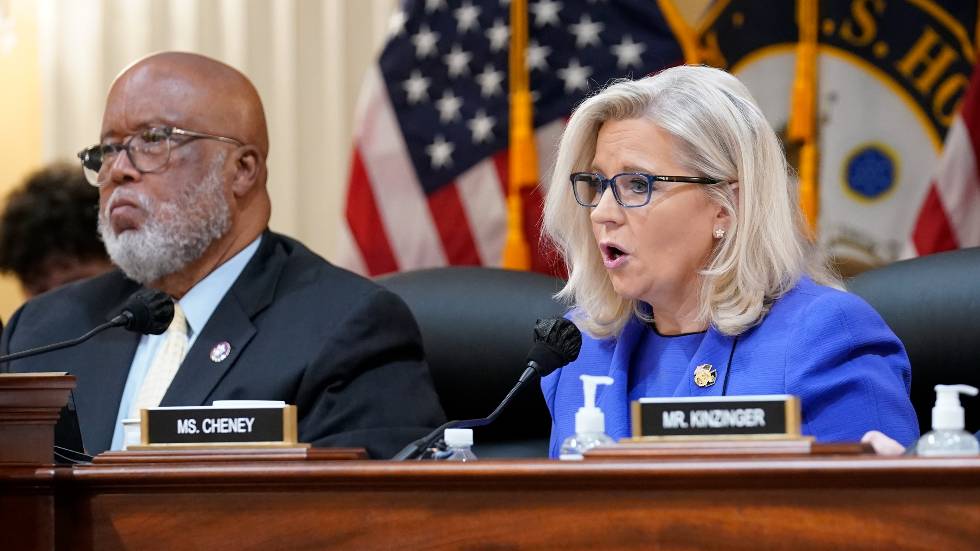
Vice Chair Liz Cheney (R-Wyo.), daughter of a former vice president and a staunch conservative who invited Trump’s ire when she joined Democrats to impeach Trump in 2021, previewed the committee’s detailed indictment of the former president (The Hill).
She and Thompson made the case for nearly two hours using video excerpts of witness testimony, texts, phone calls and tweets, that Trump encouraged others, including former Vice President Mike Pence, to participate in a web of what they assert were “illegal” acts and knowing lies.
Pence did not testify to the panel, but the committee used his own words from a recent Federalist Society speech to underscore that the former vice president rejected Trump’s plan to try to get him to overturn election results in swing states. “President Trump is wrong. I had no right to overturn the election,” Pence said.
Cheney joined Thompson in stating the committee has already been working with the Department of Justice to share evidence it has gathered, and she hinted that the committee views some current and former House members as Trump allies who abetted an attempted coup (The Hill).
“As Americans, we all have a duty to make sure that what happened on Jan. 6 never happens again,” she said.
▪ Niall Stanage: The five most dramatic moments from the Jan. 6 hearing.
▪ Politico: Jan. 6 panel lets Trump allies narrate the case against him.

The Wyoming Republican mentioned at one point that Rep. Scott Perry (R-Pa.), who aided in Trump’s push to overturn the election, and other GOP members contacted the White House about possible pardons in the weeks after the Capitol attack (a Perry spokesman denied the claim) (The Hill).
The committee referred to testimony from former Attorney General William Barr, Ivanka Trump and her husband, former White House aide Jared Kushner, as well as a powerfully constructed 10-minute video timeline of violent footage from the Capitol on Jan. 6, including views of members of the extremist groups Proud Boys and Oath Keepers, assembled from security cameras, social media communications, news coverage and police body cam footage.
Scenes of brutal hand-to-hand combat between the mob and police across the Capitol grounds were riveting as well as emotional, not just to viewers watching on television, but also to some who had been there on Jan. 6, and who were seated in the hearing room on Thursday.
British documentary filmmaker Nick Quested and Capitol Police officer Caroline Edwards, both witnesses to the Jan. 6 violence and what Edwards called “carnage,” testified live to the committee.
The Hill: Edwards describes Jan. 6 chaos like “a war scene.”
At one point, video showed a rioter with a bullhorn reading to the mob a Trump tweet on the afternoon of Jan. 6 stating that Pence “didn’t have the courage” not to certify the election results. The crowd chanted “Hang Mike Pence.” Additional footage showed protesters assaulting police officers, cascading into the Capitol and into locales such as Speaker Nancy Pelosi’s (D-Calif.) office, and staffers evacuating from House Minority Leader Kevin McCarthy’s (R-Calif.) office.
“We’ve lost the line. We’ve lost the line. All [Metropolitan Police Department officers] step back,” an officer says at 2:28 p.m.
Contrasting the clips showing protesters rushing Capitol doors and through windows and running down hallways inside the symbol of American democracy, the committee added a snippet from a Trump interview in July 2021.
“They were peaceful people. These were great people. The crowd was unbelievable, and I mention the word love — the love in the air, I’ve never seen anything like it,” Trump said.
Some former Trump administration officials, watching on TV like many Americans, found the committee’s video presentation impactful.
“That video was stunning … and more powerful than anything [Thompson or Cheney] said,” Mick Mulvaney, a former White House chief of staff under Trump, tweeted (The Hill).
Trump was watching, too.
“So the Unselect Committee of political HACKS refuses to play any of the many positive witnesses and statements, refuses to talk of the Election Fraud and Irregularities that took place on a massive scale, and decided to use a documentary maker from Fake News ABC to spin only negative footage. Our Country is in such trouble!” Trump wrote on TruthSocial.
The committee’s next round of hearings are set for Monday, Wednesday and Thursday. Thompson teased the hearing would center on examining “the lies that convinced” individuals to attack the Capitol.
Related Articles
▪ The New York Times: Jan. 6: The story so far.
▪ The Washington Post: Photos: The scene at the hearing.
▪ Department of Justice and PBS: DOJ has arrested and charged more than 800 people for crimes committed on Jan. 6. No one has been arrested for pipe bombs planted at Democratic and Republican National Committee headquarters in Washington the night before the insurrection.
▪NBC News: Trump’s super PAC says it bought $500,000 in TV and digital advertising to counter the Jan. 6 committee.
LEADING THE DAY
➤ MORE IN CONGRESS
Senate negotiators on Thursday said that they do not expect a deal on a gun violence package by the end of the week, but maintained that they are making steady progress as they push to reach an accord in the coming days or weeks.
Sens. Chris Murphy (D-Conn.), John Cornyn (R-Texas), Kyrsten Sinema (D-Ariz.) and Thom Tillis (R-N.C.) met once again on Thursday to nail down parameters of a potential framework proposal, but a final deal remains at large.
“We don’t have an agreement. We still have some work to do. I think it’s important that we have a framework and then draft text too. But we still haven’t gotten there,” Murphy said (CNN).
Further talks are set to take place today virtually as the Senate recessed for the weekend on Thursday. Cornyn told reporters “there is a possibility we will wrap up our remaining issues,” but cautioned there is “no guarantee.”
“We’re making good progress,” Cornyn told CNN, adding that he is optimistic a deal can reach the floor by month’s end despite opposition in some corners of the GOP. “Some people will not want to touch this with a 10 foot pole because they’re concerned about the politics of it. … But I think this is a time where hopefully we can transcend that personal political interest and do what we think will save lives.”
“You can’t let the perfect be the enemy of the good,” Cornyn added.
Alexander Bolton, The Hill: Senate leaves town without a deal on gun legislation.
Related Articles
▪ The Hill: Cornyn asks GOP colleagues to keep “powder dry” in gun talks.
▪ Politico: Conservatives lay off Senate gun negotiations.
▪ CNN: Sens. Joe Manchin (D-W.Va.) and Jon Tester (D-Mont.) pledge support for Biden’s nominee to run the Bureau of Alcohol, Tobacco, Firearms and Explosives.
▪ The New York Times: New documents show heavily armed Uvalde, Texas, police waited for over an hour to confront the gunman barricaded in a classroom with children because the school district police chief feared a risk to officers’ lives.

© Associated Press / Patrick Semansky | Sen. Chris Murphy (D-Conn.) talks to reporters on Thursday.
Across the Capitol complex, the House passed legislation on Thursday to nationalize red flag laws. The bill, known as the Federal Extreme Risk Protection Order, passed 224 to 202 (The Hill).
Five Republicans — Reps. Fred Upton (Mich.), Adam Kinzinger (Ill.), Anthony Gonzalez (Ohio), Brian Fitzpatrick (Pa.) and Chris Jacobs (N.Y.) — crossed party lines to vote for it, while Rep. Jared Golden (D-Maine) voted against it (The Hill).
Passage of the measure came one day after the lower chamber advanced a more comprehensive gun violence package that included provisions to raise the minimum age to purchase a semi-automatic weapon from 18 to 21 and to ban civilian use of high-capacity magazines. The same five House Republicans — four of whom are retiring — voted for that bill.
The Hill: Speaker Nancy Pelosi (D-Calif.): House will vote next week to boost security for Supreme Court families.
IN FOCUS/SHARP TAKES
➤ MORE IN POLITICS & PRIMARIES
Ryan Kelley, 40, a Michigan GOP candidate for governor and ardent Trump defender, was charged with misdemeanors Thursday for his role in the Jan. 6 attack at the U.S. Capitol, further complicating an already messy Republican primary (The Associated Press and The New York Times). Kelley’s campaign posted two words on Facebook: “political prisoner.”
🎙 In Miami, Cuban exiles object to Democratic operatives’ and donors’ efforts in an election year to purchase Spanish-language radio stations, arguing it’s a strategy to stifle conservative voices (The Associated Press). A deal reached in June, still awaiting Federal Communications Commission approval, has stirred controversy among Florida Republicans, from the Cuban American House delegation to Sen. Marco Rubio and Gov. Ron DeSantis. Opponents are exploring legal ways to contest the sale by Televisa/Univision of 18 AM and FM stations in 10 U.S. cities to the Latino Media Network, a startup founded by two political strategists with ties to former President Obama and former Secretary of State Hillary Clinton. Democrats have pointed to some shows on Radio Mambi and other Spanish-language radio stations when complaining about disinformation, especially following the Jan. 6 insurrection in Washington.
The Hill: Sen. Bernie Sanders (I-Vt.) wades into the Nevada House primary to back Amy Vilela, a former Nevada state co-chair during his 2020 presidential bid, who is challenging Rep. Dina Titus (D).
✔ A Trump endorsements tracker for the 2022 primaries is HERE, courtesy of Politico.
📚 Justices Amy Coney Barrett and Neil Gorsuch are among the Supreme Court colleagues who have recently profited from book deals, according to financial reports released on Thursday (The Associated Press). Barrett received $425,000 for a yet-to-be-released book and likely the first installment on a reported $2 million deal she signed soon after joining the court in 2020. Gorsuch received $250,000 in royalties last year from HarperCollins for a new book that has yet to be published. He previously reported $650,000 from Penguin Random House for his book, “A Republic, If You Can Keep It,” published in 2019. Justices Clarence Thomas and Sonia Sotomayor in the past each received more than $1 million each for book advances. Sotomayor has earned more than $3 million in advances and royalties for her memoir, “My Beloved World,” and other books. Justice Stephen Breyer, who is weeks away from retiring from the court, reported $7,800 in royalty income from Penguin Random House.
📝 Introducing NotedDC, The Hill’s curated commentary on the beat of the Beltway. Click here to subscribe to our latest newsletter.
OPINION
■ The boiling over of America, by Peggy Noonan, columnist, The Wall Street Journal. https://on.wsj.com/3xicPLK
■ Christian nationalism is thriving: Where is the religious left? by Bernard Driskell, opinion contributor, The Hill. https://bit.ly/3H9zhv6
WHERE AND WHEN
The House meets at noon on Monday.
The Senate convenes on Monday at 3 p.m. and resumes consideration of the Honoring our PACT Act of 2021.
The president is in Los Angeles. Biden will deliver remarks at the Port of Los Angeles from the Battleship Iowa. He will host a leaders retreat and working luncheon with counterparts as part of the Summit of the Americas. The president will headline two fundraising receptions for the Democratic National Committee. … On Saturday, Biden will be in New Mexico to meet with Gov. Michelle Lujan Grisham (D) to discuss wildfire response preparations among federal, state and local emergency personnel and first responders.
Vice President Harris will speak at the South Carolina Democratic Party Blue Palmetto dinner at 7:30 p.m. held at the Columbia Metropolitan Convention Center in Columbia, S.C.
Economic indicator: The Bureau of Labor Statistics at 8:30 a.m. reports the U.S. Consumer Price Index for May. Analysts are looking for any sign that prices might be easing, but forecasts are going in the other direction with anticipation of a large, 0.7 percent increase — more than double the rise seen in April (MarketWatch). The year-over-year inflation rate is expected to remain near a 40-year high. Wall Street worries that inflation is embedding in services, shifting from goods, which would be a negative omen and hard to reverse.
First lady Jill Biden is in Los Angeles. At noon local time, she will host a lunch at the Walt Disney Concert Hall for spouses attending the Summit of the Americas and she will give a speech.
Obama will deliver livestreamed closing remarks at 10 a.m. ET at the Copenhagen Democracy Summit hosted by the Alliance of Democracies and will join with participants of the Obama Foundation’s Europe Leaders program.
🖥 Hill.TV’s “Rising” program features news and interviews at http://thehill.com/hilltv, on YouTube and on Facebook at 10:30 a.m. ET. Also, check out the “Rising” podcast here.
ELSEWHERE
➤ INTERNATIONAL
Ukrainian Defense Minister Oleksiy Reznikov asked the West to speed up deliveries of sophisticated weapons systems to try to turn the tide against Russia’s military superiority in a grinding battle for Sievierodonetsk in the east. “Ukraine desperately needs heavy weapons, and very fast,” he said. “The situation at the front lines is difficult,” Reznikov said. “Every day, we have up to 100 of our soldiers killed and up to 500 wounded” (The New York Times). … The Ukrainian port city of Mariupol is at risk of a cholera outbreak, the British Defense Ministry said Friday (Reuters). … Russia appears intent on control over a vast and resource-rich swath of eastern Ukraine. The military defense goals of Ukrainian President Volodymyr Zelensky have varied during his recent public remarks. Ukrainian forces appeared last week to withdraw from Sievierodonetsk, only to mount a counterattack that has drawn Russian forces into close-quarters urban combat (The New York Times). … At least 4.8 million refugees from Ukraine have been recorded across Europe, the United Nations refugee agency said on Thursday. … In Russia, President Vladimir Putin on Thursday compared himself to Peter the Great, describing the land he conquered as rightfully Russian (The New York Times).
At a Summit of the Americas this week in Los Angeles focused on Central, South and North American nations, Biden sought consensus but struggled with a unifying vision for the Western Hemisphere. The president and other heads of state today will announce a regional partnership at the end of the event, which they call the Los Angeles Declaration on Migration and Protection, to address migration flows (The Hill). The United States is asking all governments along the migratory route “to establish and fortify asylum processing in each of their respective countries while more effectively enforcing their borders, conducting screenings and removing those individuals who do not qualify for asylum.”
The summit has been marked by divisions and absences, disparities in wealth, governance and national interests that make hemispheric partnerships a challenge (The Associated Press).
➤ PANDEMIC & POX
The possibility that the coronavirus could have escaped from a Chinese lab warrants “further investigations,” a group of World Health Organization scientists said in an inconclusive report released Thursday. The organization again urged all countries, particularly China, to be transparent and cooperative by sharing data and samples without governmental interference (The Hill).
Total U.S. coronavirus deaths reported as of this morning, according to Johns Hopkins University (trackers all vary slightly): 1,010,805. Current average U.S. COVID-19 daily deaths are 306, according to the Centers for Disease Control and Prevention.
➤ DEPARTMENT OF “OH COME ON” OR CHE COSA?!
Two American tourists caused $27,000 worth of damage to the famed Spanish Steps in Rome when the two inebriated individuals — one woman and one man — threw an electric scooter down them. The incident occured on June 3 in the wee hours of the morning when the two tourists were stopped by police for the scooter toss. Each was fined about $430, while the woman who physically threw the scooter may face additional charges. Both were barred from the site for six months (The New York Times).

© Associated Press / Karl Ritter | The Spanish Steps (Rome) in 2020.
➤ SWEET ESCAPE
🍫 Two workers were rescued on Thursday after falling into a chocolate tank at the Mars M&M factory in Elizabethtown, Pa. Each was extricated by first responders through an emergency hole cut in the tank. It was unclear on Thursday how they fell in or their conditions after being taken to local hospitals. According to The Philadelphia Inquirer, the chocolate is believed to have been up to waist high on the workers (The Hill).
THE CLOSER
And finally … 👏👏👏 Morning Report Quiz winners successfully sorted through recent news reports about things short and shrinking!
Skilled puzzlers taking a petite victory lap this morning: Richard Baznik, Tom Chabot, Ki Harvey, Lou Tisler, Pam Manges, Mary Anne McEnery, Patrick Kavanagh, John Donato, Joe Erdmann, Terry Pflaumer, Harry Strulovici, Steve James, Luther Berg, Lynn Gardner and Stephen Delano.
They knew that as inflation soars, size shrinkage (without lower prices, in most cases, a phenomenon known as “shrinkflation”) has occurred with a wide array of consumer products, including a few mentioned in the Quiz question. The correct answer was “all of the above” (The Daily Mail and The Associated Press).
A fossil expert from the University of Edinburgh said the physical size of humans could shrink over time in response to hotter temperatures and the climate crisis.
The Federal Reserve announced it is strategically shrinking its portfolio of $8.9 trillion.
A short film (see what we did there) shown during the recent Platinum Jubilee festivities in the U.K. featured Queen Elizabeth II with Paddington Bear in her first “acting” role. (Her Majesty reveals the yummy stash in her purse during tea time. See the full 2:29-minute video HERE.)
Stay Engaged
We want to hear from you! Email: Alexis Simendinger and Al Weaver. Follow us on Twitter (@alweaver22 & @asimendinger) and suggest this newsletter to friends!
Source: TEST FEED1
Share:
The Memo: Gun reform moves within reach
window.loadAnvato({“mcp”:”LIN”,”width”:”100%”,”height”:”100%”,”video”:”7749683″,”autoplay”:false,”expect_preroll”:true,”pInstance”:”p1″,”plugins”:{“comscore”:{“clientId”:”6036439″,”c3″:”thehill.com”,”version”:”5.2.0″,”useDerivedMetadata”:true,”mapping”:{“c3″:”thehill.com”,”ns_st_st”:”hill”,”ns_st_pu”:”Nexstar”,”ns_st_ge”:”TheHill.com”,”cs_ucfr”:””}},”dfp”:{“adTagUrl”:”https://pubads.g.doubleclick.net/gampad/ads?sz=1×1000&iu=/5678/nx.thehill/news/landing&ciu_szs=300×250&impl=s&gdfp_req=1&env=vp&output=vmap&unviewed_position_start=1&ad_rule=1&description_url=https://thehill.com/news/feed/&cust_params=vid%3D7749683%26pers_cid%3Dunknown%26vidcat%3D/news%26bob_ck%3D[bob_ck_val]%26d_code%3D1%26pagetype%3Dsubindex%26hlmeta%3Dnews”},”segmentCustom”:{“script”:”https://segment.psg.nexstardigital.net/anvato.js”,”writeKey”:”7pQqdpSKE8rc12w83fBiAoQVD4llInQJ”,”pluginsLoadingTimeout”:12}},”expectPrerollTimeout”:8,”accessKey”:”q261XAmOMdqqRf1p7eCo7IYmO1kyPmMB”,”token”:”eyJ0eXAiOiJKV1QiLCJhbGciOiJIUzI1NiJ9.eyJ2aWQiOiI3NzQ5NjgzIiwiaXNzIjoicTI2MVhBbU9NZHFxUmYxcDdlQ283SVltTzFreVBtTUIiLCJleHAiOjE2NTQ4NjI3MDl9.X9JyEjxv3j9JEGcx5nJyFm0XSz8OZZA9tVNXnM5rH6E”,”nxs”:{“mp4Url”:”https://tkx.mp.lura.live/rest/v2/mcp/video/7749683?anvack=q261XAmOMdqqRf1p7eCo7IYmO1kyPmMB&token=%7E6S%2B9eJUPbkS5PipUb1aqX7loGseZvo70MQ%3D%3D”,”enableFloatingPlayer”:true},”disableMutedAutoplay”:false,”recommendations”:{“items”:[{“mcpid”:”7734931″,”title”:”Former lieutenant colonel: New US aid unhelpful for Ukraine”,”image”:”https://h104216-fcdn.mp.lura.live/1/938892/pvw_lin/1B4/ABE/1B4ABEF975046797C557C760F062B2F2_1.jpg?aktaexp=2082787200&aktasgn=b991e2443ba415a56e377d3abdb6bd69″,”token”:”eyJ0eXAiOiJKV1QiLCJhbGciOiJIUzI1NiJ9.eyJ2aWQiOiI3NzM0OTMxIiwiaXNzIjoicTI2MVhBbU9NZHFxUmYxcDdlQ283SVltTzFreVBtTUIiLCJleHAiOjE2NTQ4NjI3MDl9.2RdS_F62BD5uk188zkDOwygywyf_NEWsGcfAKApWOJg”,”ad_unit_path”:”/5678/nx.thehill/hill_tv/rising”},{“mcpid”:”7571795″,”title”:”The drones airdropping medicine from the sky are coming to America”,”image”:”https://h104216-fcdn.mp.lura.live/1/938892/pvw_lin/8FD/97C/8FD97C9DF56C15D4EF70FDE1851460ED_8.jpg?aktaexp=2082787200&aktasgn=7502593630449db50faa11cdf4448126″,”token”:”eyJ0eXAiOiJKV1QiLCJhbGciOiJIUzI1NiJ9.eyJ2aWQiOiI3NTcxNzk1IiwiaXNzIjoicTI2MVhBbU9NZHFxUmYxcDdlQ283SVltTzFreVBtTUIiLCJleHAiOjE2NTQ4NjI3MDl9.Z_ZDhLFziI9BffLX0BKSgm-K9FSKxYaEYW6WlrsKZG0″,”ad_unit_path”:”/5678/nx.thehill/changing_america”},{“mcpid”:”7726143″,”title”:”Conservative researcher says Texas social media law won’t proliferate violence”,”image”:”https://h104216-fcdn.mp.lura.live/1/938892/pvw_lin/DAD/6C4/DAD6C428E9802521E417539CB27E784F_8.jpg?aktaexp=2082787200&aktasgn=bcc0fda9a330de42fc0e9c806d0d1369″,”token”:”eyJ0eXAiOiJKV1QiLCJhbGciOiJIUzI1NiJ9.eyJ2aWQiOiI3NzI2MTQzIiwiaXNzIjoicTI2MVhBbU9NZHFxUmYxcDdlQ283SVltTzFreVBtTUIiLCJleHAiOjE2NTQ4NjI3MDl9.7G70VGDJGlD_Jgf0jDF2I-CYwBPJJCFpkWPqiT8PgfE”,”ad_unit_path”:”/5678/nx.thehill/hill_tv/rising”},{“mcpid”:”7625676″,”title”:”Could you tell the difference between this plant-based egg and a traditional chicken egg?”,”image”:”https://h104216-fcdn.mp.lura.live/1/938892/pvw_lin/AF5/79E/AF579E2107F8B55EDE0CA01776DB12BB_5.jpg?aktaexp=2082787200&aktasgn=ea6899e4fa149f028b32a9ac5fb87e36″,”token”:”eyJ0eXAiOiJKV1QiLCJhbGciOiJIUzI1NiJ9.eyJ2aWQiOiI3NjI1Njc2IiwiaXNzIjoicTI2MVhBbU9NZHFxUmYxcDdlQ283SVltTzFreVBtTUIiLCJleHAiOjE2NTQ4NjI3MDl9.W8Vj9aQrjwIbOXTI7FwU2s1_VRT4dgh2wv0kvQjvess”,”ad_unit_path”:”/5678/nx.thehill/changing_america”},{“mcpid”:”7708222″,”title”:”Pfizer, Moderna IN THE WORKS on Omicron vaccine”,”image”:”https://m104216-ucdn.mp.lura.live/iupl_lin/D2E/E3D/D2EE3D3F89C5A7453B551430185CC930.png?Expires=2082758400&KeyName=mcpkey1&Signature=9-KLYwgNxxO92WBIdkeBfZTWTKU”,”token”:”eyJ0eXAiOiJKV1QiLCJhbGciOiJIUzI1NiJ9.eyJ2aWQiOiI3NzA4MjIyIiwiaXNzIjoicTI2MVhBbU9NZHFxUmYxcDdlQ283SVltTzFreVBtTUIiLCJleHAiOjE2NTQ4NjI3MDl9.1HNLPOOOw4-5erX2jYNmkBR4mjgIV3cUVYwVqEoGZAM”,”ad_unit_path”:”/5678/nx.thehill/hill_tv/rising”},{“mcpid”:”7678741″,”title”:”Revolutionary indoor farming method uses 90 percent less water and slashes food waste”,”image”:”https://h104216-fcdn.mp.lura.live/1/938892/pvw_lin/067/8D9/0678D9FE5F2B132BA2AD360292053BE0_6.jpg?aktaexp=2082787200&aktasgn=b10e94b780ca02ab666c47efa217f3e9″,”token”:”eyJ0eXAiOiJKV1QiLCJhbGciOiJIUzI1NiJ9.eyJ2aWQiOiI3Njc4NzQxIiwiaXNzIjoicTI2MVhBbU9NZHFxUmYxcDdlQ283SVltTzFreVBtTUIiLCJleHAiOjE2NTQ4NjI3MDl9.jGAV1_Wyncv99LUwQb5b1fBqTi91saBiaNvhFQzMQf8″,”ad_unit_path”:”/5678/nx.thehill/changing_america”},{“mcpid”:”7706528″,”title”:”Watchdog group leader urges FEC to take action against liberal donor”,”image”:”https://h104216-fcdn.mp.lura.live/1/938892/pvw_lin/BC2/8B4/BC28B49D28A66CBBFF55333080486BF2_2.jpg?aktaexp=2082787200&aktasgn=24a08d4194798349a672b21ba98c8147″,”token”:”eyJ0eXAiOiJKV1QiLCJhbGciOiJIUzI1NiJ9.eyJ2aWQiOiI3NzA2NTI4IiwiaXNzIjoicTI2MVhBbU9NZHFxUmYxcDdlQ283SVltTzFreVBtTUIiLCJleHAiOjE2NTQ4NjI3MDl9.nQESN9XpH5pLJasOgnXl1KZL0esYeRp-9vacENZMHnI”,”ad_unit_path”:”/5678/nx.thehill/hill_tv/rising”},{“mcpid”:”7698327″,”title”:”UC-Irvine scholar says Biden order redeploying troops to Somalia similar to existing military policy”,”image”:”https://h104216-fcdn.mp.lura.live/1/938892/pvw_lin/924/EB4/924EB4726307FB21B59A89353D7501A7_5.jpg?aktaexp=2082787200&aktasgn=6021ccdf338dfd53dcbae2049b6ca1c0″,”token”:”eyJ0eXAiOiJKV1QiLCJhbGciOiJIUzI1NiJ9.eyJ2aWQiOiI3Njk4MzI3IiwiaXNzIjoicTI2MVhBbU9NZHFxUmYxcDdlQ283SVltTzFreVBtTUIiLCJleHAiOjE2NTQ4NjI3MDl9.x9u8Fi7ida-BsJIEdGi08UNH6lKQLkBzDVxl3Gi5kXE”,”ad_unit_path”:”/5678/nx.thehill/hill_tv/rising”},{“mcpid”:”7691510″,”title”:”Former FDA official says parents should have warned sooner of baby formula shortage”,”image”:”https://h104216-fcdn.mp.lura.live/1/938892/pvw_lin/EB9/3E8/EB93E883C8CF777ED3ED06B7D165A01E_2.jpg?aktaexp=2082787200&aktasgn=855d40604d2bc000a9c649796da9a14c”,”token”:”eyJ0eXAiOiJKV1QiLCJhbGciOiJIUzI1NiJ9.eyJ2aWQiOiI3NjkxNTEwIiwiaXNzIjoicTI2MVhBbU9NZHFxUmYxcDdlQ283SVltTzFreVBtTUIiLCJleHAiOjE2NTQ4NjI3MDl9.SYlPU4QAcEOXTZWlN7_sH25PKt1zIC1iVpbngJQ7d6U”,”ad_unit_path”:”/5678/nx.thehill/hill_tv/rising”},{“mcpid”:”7686454″,”title”:”Rolling Stone dubs Buffalo MASS SHOOTER A ‘Mainstream Republican'”,”image”:”https://m104216-ucdn.mp.lura.live/iupl_lin/31E/145/31E1452F6D61F27CA9387DE274BA188E.png?Expires=2082758400&KeyName=mcpkey1&Signature=OGhHYA2xmLlUIPOmtW6RDF8b_To”,”token”:”eyJ0eXAiOiJKV1QiLCJhbGciOiJIUzI1NiJ9.eyJ2aWQiOiI3Njg2NDU0IiwiaXNzIjoicTI2MVhBbU9NZHFxUmYxcDdlQ283SVltTzFreVBtTUIiLCJleHAiOjE2NTQ4NjI3MDl9.cXe5ybxDSDOab7OAK2Z5u8It0x1DwLrwGFFgBk2WXGo”,”ad_unit_path”:”/5678/nx.thehill/hill_tv/rising”}],”duration”:5},”expectPreroll”:true,”titleVisible”:true,”pauseOnClick”:true,”trackTimePeriod”:60,”isPermutiveEnabled”:true});
Any change to the gun laws after mass shootings in Buffalo, N.Y., and Uvalde, Texas, looks sure to be modest. The fact that it might happen at all is giving hope to reformers.
Talks in the Senate — spearheaded by Sen’s. Chris Murphy (D-Conn.) and John Cornyn (R-Texas) — are focused on providing incentives for states to introduce red flag laws and expanding background checks.
The Hill’s Niall Stanage explores more in this week’s The Memo.
Source: TEST FEED1
Share:
Senate leaves town without a deal on gun legislation
Senators have wrapped up their work and left Washington, D.C., without reaching a deal on gun-violence legislation, disappointing Democrats who had hoped to issue a joint statement with Republicans on a framework.
Democrats say they are “very close” to an agreement with Sen. John Cornyn (D-Texas), the lead Republican negotiator, but Democratic and Republican staff still need to hammer out differences over language, according to Senate negotiators.
Senate sources say that Sen. Chris Murphy (Conn.), the lead Democratic negotiator, was “itching” to put out a joint statement with Cornyn before lawmakers left town but Cornyn declined to sign onto any public statement until there’s an agreement on the language of the core proposals.
“There’s not an agreement until we agree on everything,” Cornyn told reporters Thursday afternoon. “We’ve narrowed the issues considerably.”
Cornyn said the group had hoped to release a joint statement by week’s end but aren’t there yet.
“We were hopeful there might be something we could do today but we have this remaining issue we need to resolve,” he said.
Sources familiar with the negotiations said Cornyn, a former Texas Supreme Court justice, doesn’t want to sign off on any framework until the language of the core provisions are finalized.
“How outrageous is that?” Cornyn quipped about his insistence on knowing the details of the agreement before endorsing a framework for the legislation.
Senate Majority Leader Charles Schumer (D-N.Y.) said he wanted a deal by the end of this week and has come under pressure from progressives to force a Senate vote on gun-control legislation if Republicans don’t agree to a compromise bill soon.
Schumer received a briefing from Murphy Thursday afternoon, telling reporters afterward that the bipartisan group is making good progress and he hopes to get something from the group soon.
The core four negotiators — Cornyn, Murphy, Sen. Thom Tillis (R-N.C.) and Kyrsten Sinema (D-Ariz.) — are scheduled to hold a virtual meeting to continue the talks Friday afternoon.
They are looking for a deal that can bring along 10 Republican votes to overcome a filibuster in the 50-50 Senate. Every Democrat is expected to vote for the legislation.
The Republicans in the negotiating group also include Sens. Pat Toomey (R-Pa.), Lindsey Graham (R-S.C.), Susan Collins (R-Maine) and Bill Cassidy (R-La.).
If those four plus Cornyn and Tillis agree to vote “yes,” Democrats would still need to round up four more Republicans to overcome the 60-vote threshold for ending a filibuster.
Senior Democrats briefed on the negotiations say the two sides are “very close” to a deal and expect to see an agreement by sometime next week.
“I think we are very close,” said Senate Democratic Whip Dick Durbin (D-Ill.). “We have good vibrations. I think Schumer did the right thing by focusing on a date to complete the negotiations.”
Schumer said soon after a gunman killed 21 people in Uvalde that he would give Republicans only a short amount of time to work out compromise legislation before he would begin to force them on gun-control proposals.
Two of the sticking points in the negotiations are whether to mandate requirements for the safe storage of firearms at home and how to define commercial sellers of firearms.
Republicans want to create tax incentives for the sale of safe storage equipment while Democrats want to also add mandates for safe storage.
Another tricky issue is how to handle people who make a business of selling firearms online but are not required to conduct background checks because they don’t hold federal firearm licenses. Gun-control advocates view this as a loophole in the law requiring firearm dealers to conduct background checks.
Murphy said last year’s talks to expand background checks failed because Cornyn “wouldn’t budget enough on sharpening the definition of commercial gun seller.”
Cornyn on Thursday said significant progress has been made since then on classifying people who make a business of selling firearms, noting that he and Murphy have worked on the issue for more than a year.
Another potential landmine in the negotiations is a proposal to encourage states to set up red flag laws to remove firearms from people deemed a danger to the community.
Several Republican senators have already balked at the proposed reform, including Sens. Roger Marshall (R-Kan.) and Steve Daines (R-Mont.).
Marshall on Thursday said, “I don’t see how any red flag [law] passes” and called it a “poison pill.”
“I don’t think the red flags address the real issue,” he said. “I think it could sure be abused. I think it’s an infringement on the Second Amendment.”
Marshall said he is introducing legislation to repurpose unspent federal COVID-relief funding to improve school security.
Daines said he would oppose using taxpayer money to give states incentives to establish red flag laws.
Nineteen states and the District of Columbia already have such laws on the books.
Daines said he spoke up about his concerns during a lunch meeting Wednesday and urged colleague to instead focus on school security.
“What hasn’t been talked about a lot is the school resource officer at Uvalde was not at his post. Why are we not talking more about that? Imagine for a moment if you had a couple of Capitol police officers who weren’t at their post and someone came in the Capitol? There would be a lot of discussion about what do we do to keep the security hardened around the Capitol,” he said.
Blumenthal, who has negotiated a red flag law with Graham, however, said members of the bipartisan group should be able to reach agreement on that issue.
“We’re going to keep working on language. I’m enormously encouraged having worked on this for quite a few years,” he said of red flag legislation.
Murphy, the lead Democratic negotiator, declined to say whether he could support a package that doesn’t include incentives for states to set up red flag laws.
“I’m not drawing any lines in the sand at this point,” he said, though he added a red flag law “could have made a difference in Uvalde.”
Source: TEST FEED1
Share:
Cornyn asks GOP colleagues to keep 'powder dry' in gun talks
GOP senators, by and large, are holding off on taking public positions on the emerging Senate gun violence bill at the request of Sen. John Cornyn (Texas), the lead Republican negotiator.
Cornyn wants to keep his GOP colleagues on the sidelines for the moment so he has a chance to negotiate a bill before the effort gets ripped up by critics.
The senior Texas senator has the blessing of Senate Majority Leader Mitch McConnell (R-Ky.) who says wants to see a bipartisan deal on legislation to respond directly to the mass shooting in Uvalde.
Republicans in recent days have been quick to put support behind ideas centering on mental health treatment and bolstering school security. But they’ve largely avoided publicly commenting on proposals relating more directly to limiting access to firearms that have emerged in the talks.
Sen. Chuck Grassley (R-Iowa.) said Cornyn has asked him and others to keep their “powder dry” with the high stakes negotiations underway.
“He doesn’t want somebody saying, ‘I’m definitely for this’ or ‘I’m definitely against that,’ because it screws up their whole negotiation,” Grassley said.
Others have also insisted on staying quiet on proposals that have surfaced – ranging from incentivizing states to enact so-called red flag laws to expanding background checks – until negotiators have decided on a path forward.
Sen. Lisa Murkowski (R-Alaska) said on Thursday that she “wouldn’t be prepared to weigh in” on proposals until those involved in talks come up with “an agreed upon approach.”
Sen. Ted Cruz (R-Texas) also wouldn’t say if he opposed any of the floated measures, including the red flag proposal, saying instead that he “will examine any proposals that are put forward.”
The remarks come at a critical time in Congress and nationwide, with all eyes on Capitol Hill to see if senators can pull off a bipartisan deal on gun reform that even those heading discussions have characterized as close to impossible.
“It’ll be like we would be a miracle if we get a framework agreement, nevermind a final bill,” Sen. Chris Murphy (D-Conn.), who has been heading talks along with Cornyn, told reporters on Thursday. “But miracles sometimes happen.”
Many Senate Republicans were resistant to Democratic-led calls for gun reform last month, following a racist shooting at a store in a predominantly Black neighborhood in Buffalo, N.Y., that killed 10 people.
But more have signaled an openness to bipartisan talks following another massacre on May 24 at an elementary school in Uvalde, Texas, in which 19 children and two teachers were fatally shot.
The shift in the party comes as gun reform has dominated public interest in the weeks since, putting pressure on Congress to act. And at the same time, Democrats also seem prepared to accept a narrower deal on gun legislation in order to find compromise in a 50-50 split Senate, where legislation needs 60 votes to overcome a filibuster.
“Obviously, I would prefer to go much farther than Senator Cornyn and Republicans would. But I’m not going to let perfect be the enemy of the good,” Murphy said earlier this week. “I want to find a compromise.”
As negotiators try to reach an agreement, GOP leaders heading up talks have been working to lock down parameters for a framework on a gun deal that can win support from Republicans.
GOP members also say Cornyn gave a broad overview of negotiations during the party’s lunch earlier this week. And while some insist members are receptive to ideas, they say they need to see more.
“It’s clear to me from our lunch today that they’ve still got a long way to go,” Sen. John Kennedy (R-La.) said on Tuesday.
At the same time, Grassley said Republicans involved in talks have been trying to gauge just what legislation they could vote for.
“Is there anything that’s absolutely this way or that way? Or what could I vote for? What I couldn’t vote for?” recalled Grassley, who said he has “avoided making a determination” on proposals while the sensitive talks continue.
Sen. Pat Toomey (R-Pa.), who has been involved in bipartisan talks, says it’s up to individual members “to decide what they want to do.”
“But, as a general matter, if you think there’s any chance that you might possibly support something, then it may make sense to wait and see what it looks like before you characterize it,” Toomey added.
Democrats initially set sights on reaching an agreement on gun legislation this week, and while negotiators didn’t say they were at an agreement on Thursday, they say they’re close to nailing one down.
“I think that we’re pretty close on the broad framework,” Sen. Thom Tillis (R-N.C.), one of the negotiators, said on Thursday afternoon. “There’s still a lot of drafting, but we’re making good progress.”
Cornyn said this week he would like to see legislation moved “in the next couple of weeks.” But he’s said “nobody knows exactly what we’re going to do,” including him.
“We’ve got some foundational ideas. But we’re going to the long and arduous process of trying to build that out and give greater definition to it and then try to get the votes to pass it,” Cornyn said.
Source: TEST FEED1
Share:
Biden to sign declaration aimed at addressing migrant flows
President Biden on Friday will sign a declaration on migration alongside other leaders from the Western Hemisphere laying out a framework officials said will aim to manage flows of migrants and refugees in the region.
The Los Angeles Declaration, to be signed at the Summit of the Americas being held this week in the city, will have four main pillars: Ensuring stability, promoting legal pathways of migration, having humane border management and coordinating emergency response efforts.
The declaration will call for expanding temporary worker programs to improve the flow of migrants and address worker shortages in the U.S. and elsewhere, and for expanding other legal channels of migration like refugee resettlement and family reunification.
The document will also ask countries located along main migration routes to fortify their asylum processing, more effectively enforce their borders and remove individuals who do not qualify for asylum.
The declaration will call for surging support to countries in the hemisphere with larger migrant and refugee populations, and it will detail actions to combat irregular migration “in a humane and sustainable way,” a senior administration official said.
The official said the declaration will also include support for Haiti in light of its “deteriorating” humanitarian and security situation, but would not get into specifics.
It is unclear how many attendees of this week’s summit will sign onto the declaration, which is one of the main tangible deliverables the administration is touting as Biden is in Los Angeles.
“We don’t expect every country to sign, and as we were developing the declaration and engaging with countries in the hemisphere we were prioritizing countries most impacted by migration and refugee flows,” the senior administration official said.
Migration has been a longstanding issue in the Western Hemisphere, and the U.S. last year saw record numbers of people arriving at the southern border as they fled violence and lack of economic opportunity in their home countries.
Vice President Harris was tasked a year ago with working to address the root causes of migration in the Northern Triangle, which is made up of El Salvador, Honduras and Guatemala. But none of the leaders of those countries are attending this week’s summit amid a broader rift about who was invited and who chose to attend.
Harris announced $1.9 billion in additional private sector investments to boost economic opportunity in the Northern Triangle as part of a larger investment push to reduce poverty, improve quality of life and encourage residents in that region to stay.
Prior to Biden’s arrival in Los Angeles, more than 100 civil society groups called on the Biden administration to make a series of commitments on migration policy beyond any multilateral deal reached at the Summit of the Americas.
Source: TEST FEED1
Share:
Jan. 6 panel launches public case against Trump
The House committee investigating last year’s attack on the Capitol launched the opening salvo Thursday in its public case against Donald Trump, accusing the former president of masterminding an unprecedented scheme to retain power that was not only illegal, but also led directly to the deadly violence in Washington on Jan. 6, 2021.
In a prime-time hearing aimed directly at television viewers, the select committee presented never-before seen video testimony from some of the most powerful figures in Trump’s orbit harshly dismissing his claims of a stolen election.
Those video snippets were interspersed with emotional, in-person testimony from a Capitol Police officer gravely injured during the attack; an appearance from a filmmaker with unique insights into the white nationalist groups who stormed into the Capitol to overturn Trump’s defeat; and raw footage of violent clashes between police and rioters outside the building, which left more than 150 officers with injuries.
For all the ground it covered, however, the real purpose of the prime-time hearing was to entice the viewing public by teasing the coming series of more focused hearings — all of them scheduled for this month — which the panel promises will show Trump at the center of a multi-pronged battle to remain in power through illicit actions.
Making that argument most forcefully on Thursday night was Rep. Liz Cheney (R-Wyo.), who was booted from GOP leadership for challenging Trump and has since emerged as the face of opposition to the 45th president for his role in the riot.
“All Americans should keep this fact in mind: On the morning of Jan. 6, President Trump’s intention was to remain President of the United States despite the lawful outcome of the 2020 election and in violation of his Constitutional obligation to relinquish power,” Cheney, the vice chair of the select committee, said in a lengthy opening statement that offered slivers of coming testimony from those close to Trump.
Her featured role in walking through the evidence shows the panel is eager to use the Wyoming lawmaker, one of the panel’s two Republican members, to add bipartisan legitimacy to the investigation and appeal to those who may think there is little left to learn about an attack that occurred more than 17 months ago.
She laid the groundwork for a series of hearings that appear set to pit Trump against his former vice president, Mike Pence, whose refusal to reject state electors on Jan. 6 — as Trump had demanded — made him a top target of the mob that stormed the Capitol that day.
Cheney said testimony from multiple White House staffers showed Trump’s disdain for the vice president, even as aides alerted him of rioters chanting “hang Mike Pence.”
“The President responded with this sentiment: ‘Maybe our supporters have the right idea,’” Cheney recounted. “‘Mike Pence ‘deserves’ it.’”
Cheney also issued a stern warning to those Republicans who continue to defend Trump even as the evidence mounts of his improper efforts to subvert democracy — a group that includes the same House GOP leaders who kicked her out of leadership.
“Tonight, I say this to my Republican colleagues who are defending the indefensible: There will come a day when Donald Trump is gone, but your dishonor will remain,” she said.
Much of Thursday’s hearing covered details that were previously known. But sprinkled throughout the proceeding were new revelations uncovered by the committee’s year-long investigation.
It was known, for instance, that multiple members of the GOP caucus had sought presidential pardons for their roles in the Jan. 6 attack. Cheney made news when she said Rep. Scott Perry (R-Pa.) was among them — a claim Perry’s office has already denied.
In another revealing anecdote, Mark Milley, the chairman of the Joint Chiefs of Staff, told investigators that he spoke with Trump’s former chief of staff Mark Meadows on Jan. 6. Meadows, Milley said, had urged him “to kill the narrative that the vice president is making all the decisions” because Trump went silent for much of the day.
“We need to establish the narrative, you know, that the President is still in charge,” Meadows said, according to Milley.
Investigators also aired damning video testimony from members of the extremist group the Proud Boys, affirming that Trump’s advice to white nationalists — “stand back and stand by” — helped spike the group’s recruitment. One said membership “tripled” in the wake of Trump’s remark.
The hearing additionally revealed that multiple people close to Trump, including his daughter Ivanka, were well aware that President Biden had won the election, even as Trump was claiming otherwise.
The seven subsequent hearings planned by the committee are each dedicated to what Cheney described as “a sophisticated seven-part plan” to remain in power.
Each preview for a hearing was accompanied by a vignette of testimony to come, a rapid-fire overview of evidence the panel otherwise plans to lay out over hours-long daytime hearings.
Previewing Monday’s upcoming hearing, in which the panel will make the case Trump knew his claims of widespread election fraud were baseless, the committee showed Trump campaign spokesman Jason Miller saying that Trump had been told even before the election “in pretty blunt terms that he was going to lose.”
And it relied on clips from former Attorney General Bill Barr — one of the more recent witnesses to sit with the panel’s investigators — saying on tape that there was ”absolutely zero basis for the allegations” and that Trump’s claims were “complete nonsense.”
“I told him that it was crazy stuff and they were wasting their time on that and that it was doing great, great disservice to the country,” Barr said.
Other planned hearings will go into Trump’s efforts to weaponize the Department of Justice and his efforts to pressure Pence.
“I recall towards the end saying, what you’re proposing is nothing less than the United States Justice Department meddling in the outcome of a Presidential Election,” former acting Deputy Attorney General Richard Donoghue told the committee.
The public also heard from Capitol Police Officer Caroline Edwards, one of the first officers injured in the attack, who gave powerful testimony in describing the Capitol riot as a “war zone.”
“It was something like I’d seen out of the movies. I couldn’t believe my eyes. There were officers on the ground. They were bleeding. They were throwing up. They had, I mean, I saw friends with blood all over their faces. I was slipping in people’s blood. I was catching people as they fell. It was carnage. It was chaos. I can’t, I can’t even describe what I saw. Never in my wildest dreams did I think that as a police officer, as a law enforcement officer, I would find myself in the middle of a battle,” Edwards told lawmakers.
“It was just hours of hand to hand combat.”
Nick Quested, a documentary filmmaker who noted that he was appearing before the panel under subpoena, described his work following members of the extremist group the Proud Boys that day and watching as those who attended the march transformed from “protestors to rioters to insurrectionists.”
The hearing featured never before seen footage captured by Quested showing not just the violence of the riot but also the meeting between the Proud Boys and another far-right group, the Oath Keepers.
The filmmaker met them at 10:30 a.m. that day when they were walking down the Mall heading east toward the Capitol.
“I was confused to a certain extent why we were walking away from the president’s speech,” he said, “because that’s what I felt we were there to cover.”
Source: TEST FEED1
Share:
The five most dramatic moments from the Jan. 6 hearing
window.loadAnvato({“mcp”:”LIN”,”width”:”100%”,”height”:”100%”,”video”:”7750882″,”autoplay”:false,”expect_preroll”:true,”pInstance”:”p1″,”plugins”:{“comscore”:{“clientId”:”6036439″,”c3″:”thehill.com”,”version”:”5.2.0″,”useDerivedMetadata”:true,”mapping”:{“c3″:”thehill.com”,”ns_st_st”:”hill”,”ns_st_pu”:”Nexstar”,”ns_st_ge”:”TheHill.com”,”cs_ucfr”:””}},”dfp”:{“adTagUrl”:”https://pubads.g.doubleclick.net/gampad/ads?sz=1×1000&iu=/5678/nx.thehill/news/landing&ciu_szs=300×250&impl=s&gdfp_req=1&env=vp&output=vmap&unviewed_position_start=1&ad_rule=1&description_url=https://thehill.com/news/feed/&cust_params=vid%3D7750882%26pers_cid%3Dunknown%26vidcat%3D/news%26bob_ck%3D[bob_ck_val]%26d_code%3D1%26pagetype%3Dsubindex%26hlmeta%3Dnews”},”segmentCustom”:{“script”:”https://segment.psg.nexstardigital.net/anvato.js”,”writeKey”:”7pQqdpSKE8rc12w83fBiAoQVD4llInQJ”,”pluginsLoadingTimeout”:12}},”expectPrerollTimeout”:8,”accessKey”:”q261XAmOMdqqRf1p7eCo7IYmO1kyPmMB”,”token”:”eyJ0eXAiOiJKV1QiLCJhbGciOiJIUzI1NiJ9.eyJ2aWQiOiI3NzUwODgyIiwiaXNzIjoicTI2MVhBbU9NZHFxUmYxcDdlQ283SVltTzFreVBtTUIiLCJleHAiOjE2NTQ4Mzc3MTZ9.jUaQMMYVgQPcjG2KwVJW8V21caSwfTlpsm6y211svCk”,”nxs”:{“mp4Url”:”https://tkx.mp.lura.live/rest/v2/mcp/video/7750882?anvack=q261XAmOMdqqRf1p7eCo7IYmO1kyPmMB&token=%7E6S%2B8cZsPb0S5PipTblulVbloGseZvo70MQ%3D%3D”,”enableFloatingPlayer”:true},”disableMutedAutoplay”:false,”recommendations”:{“items”:[{“mcpid”:”7734931″,”title”:”Former lieutenant colonel: New US aid unhelpful for Ukraine”,”image”:”https://h104216-fcdn.mp.lura.live/1/938892/pvw_lin/1B4/ABE/1B4ABEF975046797C557C760F062B2F2_1.jpg?aktaexp=2082787200&aktasgn=b991e2443ba415a56e377d3abdb6bd69″,”token”:”eyJ0eXAiOiJKV1QiLCJhbGciOiJIUzI1NiJ9.eyJ2aWQiOiI3NzM0OTMxIiwiaXNzIjoicTI2MVhBbU9NZHFxUmYxcDdlQ283SVltTzFreVBtTUIiLCJleHAiOjE2NTQ4Mzc3MTZ9.6i5lmsrmTU4_hMb0PMC8eN6Niqx5Y0OiOfLYxPL44Cc”,”ad_unit_path”:”/5678/nx.thehill/hill_tv/rising”},{“mcpid”:”7571795″,”title”:”The drones airdropping medicine from the sky are coming to America”,”image”:”https://h104216-fcdn.mp.lura.live/1/938892/pvw_lin/8FD/97C/8FD97C9DF56C15D4EF70FDE1851460ED_8.jpg?aktaexp=2082787200&aktasgn=7502593630449db50faa11cdf4448126″,”token”:”eyJ0eXAiOiJKV1QiLCJhbGciOiJIUzI1NiJ9.eyJ2aWQiOiI3NTcxNzk1IiwiaXNzIjoicTI2MVhBbU9NZHFxUmYxcDdlQ283SVltTzFreVBtTUIiLCJleHAiOjE2NTQ4Mzc3MTZ9.1N3wyTq5T1tsc8FhPuEIvhpq8ZuVDIwHaWm6U_tClSQ”,”ad_unit_path”:”/5678/nx.thehill/changing_america”},{“mcpid”:”7726143″,”title”:”Conservative researcher says Texas social media law won’t proliferate violence”,”image”:”https://h104216-fcdn.mp.lura.live/1/938892/pvw_lin/DAD/6C4/DAD6C428E9802521E417539CB27E784F_8.jpg?aktaexp=2082787200&aktasgn=bcc0fda9a330de42fc0e9c806d0d1369″,”token”:”eyJ0eXAiOiJKV1QiLCJhbGciOiJIUzI1NiJ9.eyJ2aWQiOiI3NzI2MTQzIiwiaXNzIjoicTI2MVhBbU9NZHFxUmYxcDdlQ283SVltTzFreVBtTUIiLCJleHAiOjE2NTQ4Mzc3MTZ9.ggoGSfTsEOlEhGEJbS_IpPlwzu3P65g6yamlb1OjUDE”,”ad_unit_path”:”/5678/nx.thehill/hill_tv/rising”},{“mcpid”:”7625676″,”title”:”Could you tell the difference between this plant-based egg and a traditional chicken egg?”,”image”:”https://h104216-fcdn.mp.lura.live/1/938892/pvw_lin/AF5/79E/AF579E2107F8B55EDE0CA01776DB12BB_5.jpg?aktaexp=2082787200&aktasgn=ea6899e4fa149f028b32a9ac5fb87e36″,”token”:”eyJ0eXAiOiJKV1QiLCJhbGciOiJIUzI1NiJ9.eyJ2aWQiOiI3NjI1Njc2IiwiaXNzIjoicTI2MVhBbU9NZHFxUmYxcDdlQ283SVltTzFreVBtTUIiLCJleHAiOjE2NTQ4Mzc3MTZ9.AitKxTp3kXXgkDkYb0yZpcTmfJf7rFs7DFSJNTVvb7s”,”ad_unit_path”:”/5678/nx.thehill/changing_america”},{“mcpid”:”7708222″,”title”:”Pfizer, Moderna IN THE WORKS on Omicron vaccine”,”image”:”https://m104216-ucdn.mp.lura.live/iupl_lin/D2E/E3D/D2EE3D3F89C5A7453B551430185CC930.png?Expires=2082758400&KeyName=mcpkey1&Signature=9-KLYwgNxxO92WBIdkeBfZTWTKU”,”token”:”eyJ0eXAiOiJKV1QiLCJhbGciOiJIUzI1NiJ9.eyJ2aWQiOiI3NzA4MjIyIiwiaXNzIjoicTI2MVhBbU9NZHFxUmYxcDdlQ283SVltTzFreVBtTUIiLCJleHAiOjE2NTQ4Mzc3MTZ9.SZIDoxuDJGx-g8oXw6csFbex1nFumy2BKVjn7M_4B-8″,”ad_unit_path”:”/5678/nx.thehill/hill_tv/rising”},{“mcpid”:”7678741″,”title”:”Revolutionary indoor farming method uses 90 percent less water and slashes food waste”,”image”:”https://h104216-fcdn.mp.lura.live/1/938892/pvw_lin/067/8D9/0678D9FE5F2B132BA2AD360292053BE0_6.jpg?aktaexp=2082787200&aktasgn=b10e94b780ca02ab666c47efa217f3e9″,”token”:”eyJ0eXAiOiJKV1QiLCJhbGciOiJIUzI1NiJ9.eyJ2aWQiOiI3Njc4NzQxIiwiaXNzIjoicTI2MVhBbU9NZHFxUmYxcDdlQ283SVltTzFreVBtTUIiLCJleHAiOjE2NTQ4Mzc3MTZ9.CE4xo7Obsbho2QmJwXAbUarHKN1zVKk4zakpzT5d-eA”,”ad_unit_path”:”/5678/nx.thehill/changing_america”},{“mcpid”:”7706528″,”title”:”Watchdog group leader urges FEC to take action against liberal donor”,”image”:”https://h104216-fcdn.mp.lura.live/1/938892/pvw_lin/BC2/8B4/BC28B49D28A66CBBFF55333080486BF2_2.jpg?aktaexp=2082787200&aktasgn=24a08d4194798349a672b21ba98c8147″,”token”:”eyJ0eXAiOiJKV1QiLCJhbGciOiJIUzI1NiJ9.eyJ2aWQiOiI3NzA2NTI4IiwiaXNzIjoicTI2MVhBbU9NZHFxUmYxcDdlQ283SVltTzFreVBtTUIiLCJleHAiOjE2NTQ4Mzc3MTZ9._xejDwNMkQn9wPurkQ5gSwjJEypHAoc532bsEML6UxE”,”ad_unit_path”:”/5678/nx.thehill/hill_tv/rising”},{“mcpid”:”7698327″,”title”:”UC-Irvine scholar says Biden order redeploying troops to Somalia similar to existing military policy”,”image”:”https://h104216-fcdn.mp.lura.live/1/938892/pvw_lin/924/EB4/924EB4726307FB21B59A89353D7501A7_5.jpg?aktaexp=2082787200&aktasgn=6021ccdf338dfd53dcbae2049b6ca1c0″,”token”:”eyJ0eXAiOiJKV1QiLCJhbGciOiJIUzI1NiJ9.eyJ2aWQiOiI3Njk4MzI3IiwiaXNzIjoicTI2MVhBbU9NZHFxUmYxcDdlQ283SVltTzFreVBtTUIiLCJleHAiOjE2NTQ4Mzc3MTZ9.PfciXeK0JsUaBzKo7IqELn472u0coXg36mCH8NidV5s”,”ad_unit_path”:”/5678/nx.thehill/hill_tv/rising”},{“mcpid”:”7691510″,”title”:”Former FDA official says parents should have warned sooner of baby formula shortage”,”image”:”https://h104216-fcdn.mp.lura.live/1/938892/pvw_lin/EB9/3E8/EB93E883C8CF777ED3ED06B7D165A01E_2.jpg?aktaexp=2082787200&aktasgn=855d40604d2bc000a9c649796da9a14c”,”token”:”eyJ0eXAiOiJKV1QiLCJhbGciOiJIUzI1NiJ9.eyJ2aWQiOiI3NjkxNTEwIiwiaXNzIjoicTI2MVhBbU9NZHFxUmYxcDdlQ283SVltTzFreVBtTUIiLCJleHAiOjE2NTQ4Mzc3MTZ9.YSrMmJGcx6Newk5c1jDJjq0bg4oLGEnFHfDSl8Xu1Zg”,”ad_unit_path”:”/5678/nx.thehill/hill_tv/rising”},{“mcpid”:”7686454″,”title”:”Rolling Stone dubs Buffalo MASS SHOOTER A ‘Mainstream Republican'”,”image”:”https://m104216-ucdn.mp.lura.live/iupl_lin/31E/145/31E1452F6D61F27CA9387DE274BA188E.png?Expires=2082758400&KeyName=mcpkey1&Signature=OGhHYA2xmLlUIPOmtW6RDF8b_To”,”token”:”eyJ0eXAiOiJKV1QiLCJhbGciOiJIUzI1NiJ9.eyJ2aWQiOiI3Njg2NDU0IiwiaXNzIjoicTI2MVhBbU9NZHFxUmYxcDdlQ283SVltTzFreVBtTUIiLCJleHAiOjE2NTQ4Mzc3MTZ9.qje5OhLa1fWVduVsYVt6NIOmukVige5wZtWp9DyQa20″,”ad_unit_path”:”/5678/nx.thehill/hill_tv/rising”}],”duration”:5},”expectPreroll”:true,”titleVisible”:true,”pauseOnClick”:true,”trackTimePeriod”:60,”isPermutiveEnabled”:true});
The first televised hearing of the House Select Committee investigating Jan. 6 took place Thursday evening.
The event, carried live on most broadcast networks and cable news channels, lasted almost two hours.
The testimony was powerful and often raw.
Here are five of the most dramatic moments.
Liz Cheney’s remarks
Rep. Liz Cheney (R-Wyo.) has become the GOP’s leading Trump critic since the insurrection.
Her willingness to take on the former president has cost her a senior leadership position within the party. She is also in danger of losing her House primary in August.
Cheney has blasted Trump’s behavior on numerous occasions, but she has rarely done so with such power and precision as on Thursday evening.
The staunch conservative, the daughter of former Vice President Dick Cheney, asserted that Trump’s culpability for the attack on the Capitol was crystal-clear.
“Those who invaded our Capitol and battled law enforcement for hours were motivated by what President Trump had told them: that the election was stolen and that he was the rightful president,” she said.
Trump, she added, had “summoned the mob, assembled the mob and lit the flame of this attack.”
Cheney is one of only two Republicans to serve on the committee, alongside another Trump critic, Rep. Adam Kinzinger (R-Ill.).
House Minority Leader Kevin McCarthy (R-Calif.) pulled his nominees from the panel after Speaker Nancy Pelosi (D-Calif.) rejected two staunch Trump allies that McCarthy proposed, Reps. Jim Banks (R-Ind.) and Jim Jordan (R-Ohio).
McCarthy earlier Thursday gave evasive answers when pressed by a reporter on whether he accepted President Biden as the legitimate victor of the 2020 election.
Cheney aimed one of her sharpest barbs at those in the GOP who retain allegiance to Trump despite the events of Jan. 6.
“There will come a day when Donald Trump is gone,” she said. “Your dishonor will remain.”
Capitol Police Officer Caroline Edwards’ testimony
Edwards, one of approximately 140 police officers injured during the insurrection, recounted her experiences to a rapt hearing room.
Some details of the earlier stages of the riot were powerful because, in retrospect, they seem so incongruously casual.
Edwards laughed as she recalled her comment to a superior when she realized how badly the police were outnumbered.
“Sarge, I think we’re going to need a few more people down here,” she said.
From there on, things turned far more bleak.
Edwards recalled seeing fellow officer Brian Sicknick in distress, which Edwards assumed was the result of having been sprayed by rioters.
“He was ghostly pale…He turned just about as pale as this sheet of paper,” Edwards said, holding a piece of white paper in front of her.
Sicknick died the next day, aged 42, having suffered two strokes — though the District of Columbia chief medical examiner classified his passing as having natural causes.
Edwards’ testimony reached its emotional apex toward its end.
“I can just remember my breath catching in my throat because what I saw was just a war scene,” she said. “I saw friends with blood all over their faces. I was slipping in people’s blood.”
She added, “It was carnage. It was chaos.”
Comments from Ivanka Trump and former Attorney General Bill Barr
The hearing’s early stages were punctuated by video clips of testimony from former Trump officials and aides.
Together, these made the case that Trump and his allies knew the election had been lost and was not fraudulent.
If that’s true, Trump and his inner circle perpetrated a conscious fraud upon his supporters, urging them to act on something that was known to be a lie.
The most striking moments of this phase of the hearing came with an unusual combination — former Attorney General Bill Barr and Ivanka Trump, the former president’s eldest daughter.
Barr was shown in an interview with committee officials reiterating his belief that Trump’s allegations of election fraud in 2020 were “bullshit.”
This was given added force by a short clip of Ivanka Trump saying that she found Barr’s failure to find fraud personally persuasive.
“It affected my perspective. I respect Attorney General Barr so I accepted what he was saying,” she said.
Video footage of the violence at the Capitol
Seventeen months after the attack on the Capitol, the once-searing images of that day may have faded from some Americans’ minds.
They were brought back with fierce power by a compilation of video footage that ended the first part of the hearing.
The chaos and pain of the scenes were undeniable.
The presentation closed with audio of Trump talking in a subsequent interview of “love in the air” on the day.
The footage showed just the opposite.
How Trump’s debate remark spiked Proud Boys’ recruitment
One of the more surprising moments dated back to before the 2020 election.
During a September 2020 presidential debate between Trump and Biden, Trump was asked by moderator Chris Wallace whether he was “willing to condemn, tonight, white supremacists and militia groups.”
Trump said he was willing to do so but insisted, “Give me a name.”
Biden interjected: “Proud Boys.”
“Proud Boys — stand back and standby,” Trump replied.
The comment was deeply controversial even at the time.
But Thursday’s hearing showed testimony from members of the group, affirming that Trump’s comment helped spike recruitment. One contended that membership “tripled” in the wake of Trump’s remark.
This single revelation won’t change many people’s minds about Trump or the events of that day.
But it did help the panel in its mission of drawing a direct line between the former president’s words and the violence of the insurrection.
Source: TEST FEED1