

Share:
Biden administration seeks additional funding for energy transition in Latin America
The Biden administration announced on Thursday that it is working to deliver more money to fight climate change in Latin American countries, but did not set specific goals for many of their new initiatives.
Administration officials told reporters Wednesday that the U.S. would work with regional development banks to try to mobilize climate financing for the regional countries.
The administration also announced that it would provide $12 million for Brazil, Colombia and Peru to help protect the Amazon rainforest and prevent deforestation.
And Vice President Harris is expected to launch a framework specifically directed at helping Caribbean nations by increasing access to financing and helping clean energy project development.
An official declined to say how much funding the U.S. would try to deliver to the Caribbean in a late Wednesday press call.
Climate finance has long been a sticking point between developed and developing countries, as developed countries have failed in the past to live up to their commitments to help the developing world pay for their energy transition.
Developing countries, meanwhile, have argued that they are owed more from developed countries because developed countries have contributed more to climate change over the years, and because many developing countries are likely to face worse impacts from heat waves, sea level rise and climate-fueled storms.
President Biden arrived in California on Wednesday for the Summit of the Americas, bringing together leaders from North America, Central America and South America for discussions about economic prosperity, climate change, the migration crisis and the COVID-19 pandemic.
Source: TEST FEED1
Share:
Democratic group launches 7-figure campaign highlighting efforts to cap insulin costs
The Democratic group House Majority Forward is launching a seven-figure digital and mail campaign in 17 congressional districts on Thursday highlighting efforts to cap insulin costs, The Hill has learned exclusively.
The buy lauds House Democratic lawmakers’ work to cap insulin prices at $35 a month and calls on the Senate to pass the Affordable Insulin Now Act.
The group is running the ad buy in a number of highly contested districts, the majority of which are on the National Republican Congressional Committee’s target list. The Democratic lawmakers that are being touted in the buy include Reps. Josh Harder (Calif.), Katie Porter (Calif.), Mike Levin (Calif.), Sanford Bishop (Ga.), Cindy Axne (Iowa), Jared Golden (Maine), Andy Kim (N.J.), Tom Malinowski (N.J.), Dina Titus (Nevada), Susie Lee (Nevada), Steven Horsford (Nevada), Joyce Beatty (Ohio), Shontel Brown (Ohio), Marcy Kaptur (Ohio), Susan Wild (Penn.), Susan Wild (Penn.) and Joaquin Castro (Texas.).
In March, the House passed the Affordable Insulin Now Act along a mostly party-line vote, 232-193. In addition to Medicare beneficiaries not having to pay more than $35 for each 30-day insulin prescription, cost sharing for beneficiaries in private plans would be limited to the lesser of either $35, or 25 percent of the health plan’s negotiated price for a 30-day prescription.
Capping insulin prices was originally a part of President Biden’s sweeping Build Back Better legislation, but the plan was stalled after Sen. Joe Manchin (D-W.Va.) signaled he could not support the broader legislation.
The failure of Democrats to pass the Build Back Better bill in the Senate posed a major dilemma for Biden and Democrats down the ballot. Democrats, who are facing headwinds going into the midterms, could stand to benefit from a major legislative achievement.
Sen. Raphael Warnock (D-Ga.), who is facing a contentious reelection bid himself, pressed Senate Majority Leader Charles Schumer (D-N.Y.) to hold a vote on the bill.
“I am deeply disappointed the Senate was not able to vote on this critical legislation before Memorial Day,” Warnock wrote in a letter to Schumer dated Monday. “The time is now to finally act on this critical issue, and we can’t afford to wait any longer.”
Source: TEST FEED1
Share:
Made-for-TV Jan. 6 hearings won’t rescue Democrats
Democrats think voters will be so gob-smacked by the revelations of the House Select Committee on the January 6 Attack that they will forget about soaring gasoline and food prices, rising crime, a 15,000-person caravan of people about to cross our southern border, the baby formula shortage and power brownouts, which are likely to hit our country this summer.
Yup, they’re convinced that Americans being force-fed (every major network will broadcast the House hearings live during prime time) scenes of yahoos waving flags and storming our Capitol will rebuild President Biden’s dismal approval ratings and put his fellow Democrats on the road to victory just in time for the midterms.
Fat chance.
Americans agree: the January 6 riots were a terrible event, and that those who broke the law should be punished.
They also agree: It is time to move on.
A recent NBC poll shows a dwindling number of Americans blaming Trump for the attack on the Capitol; 45 percent now say he is “solely” or “mainly” responsible, down from 52 percent the month Joe Biden took office. Moreover, 55 percent say he is “only somewhat” or “not really” to blame for the riots, up from 47 percent in January 2021.
That suggests that some of the millions who voted for Joe Biden because he wasn’t Donald Trump are suffering buyers’ remorse, and who can blame them? It’s hard to find any one issue important to voters that is going better today than during Trump’s presidency.
On the contrary, people are way more pessimistic, inflation is devouring moderating wage gains, our border has collapsed, drug deaths are soaring and major crimes in our big cities are out of control.
Democrats will counter that our stature on the world stage is much improved; don’t believe it. Biden has undermined what had been improving relations with the important Gulf Arab states including the United Arab Emirates and Saudi Arabia. As a result, those countries – which uniquely could bring oil prices down – have rebuffed calls for higher output.
Meanwhile, as Biden attempts to convene a gathering of the Americas, Andres Manuel Lopez Obrador, president of our formerly cooperative southern neighbor, Mexico, has refused to attend, embarrassing the White House.
At the same time, Biden takes credit for having united NATO in opposing Russian President Vladimir Putin’s invasion of Ukraine. Some might wonder: to what end? NATO countries have sent billions in aid to Ukraine and yet that valiant country is being obliterated step by grisly step.
Americans are unhappy. That same NBC poll shows only 16 percent of the country thinks we’re headed in the right direction; 75 percent says we’re on the wrong track, and only 39 percent says Biden is doing a good job. Numerous other polls show similar findings.
This level of discontent can drive “wave elections,” when the party in power suffers a shellacking, to use Barack Obama’s word to describe Democrats’ huge losses in the 2010 midterms. Indeed, many are predicting that Republicans will take back control of the House. And despite defending more seats than Democrats, the GOP may also reclaim a majority in the Senate.
To counter ominous signs like lagging voter turnout in recent primary contests and a pronounced “enthusiasm gap,” Democrats have lined up the prime time special on the Jan. 6 hearings.
To make sure it is riveting TV, they have hired a production pro — the former head of ABC News, James Goldston. To make sure it is a failure, Democrats have scheduled a “carefully choreographed rollout of revelations over the course of six hearings to remind the public of the magnitude of Mr. Trump’s effort to overturn the election, and to persuade voters that the coming midterm elections are a chance to hold Republicans accountable for it,” according to the New York Times.
Six hearings? This isn’t The Crown, or Ted Lasso; this will be, at best, a stultifying partisan show trial that follows, please remember, two impeachments and numerous Russia-gate hearings that featured Democrats undermining whatever confidence Americans still have in Congress.
Remember, too, that the supposed blockbuster TV airing of Trump’s first impeachment trial pulled in only 13 million viewers, fewer than re-runs of “Friends.”
Democrats always go too far, and so it is with the Jan. 6 hearings. From the start, House Speaker Nancy Pelosi (D-Calif.) lost half the country when she rejected representatives put forward to serve on the committee by GOP head Kevin McCarthy (R-Calif.) and instead stacked the deck with never-Trumpers Reps. Liz Cheney (R-Wyo.) and Adam Kinzinger (R-Ill.).
Today, on the cusp of their big reveal, Democrats are blowing their credibility further by making it clear these hearings are all about political gain.
They will, according to the Times, use the broadcasts to tie Republicans to “violent extremists.” But Americans remember the riots and actual murders that resulted from the Black Lives Matter protests in 2020; they connect those destructive events with Democrats, whom they also blame for dumbed-down policing in our violence-prone cities.
The recall of San Francisco’s soft-on-crime district attorney is a reminder that our citizens will not tolerate a breakdown of law and order — from either side of the aisle.
Most likely, instead of convincing independent voters that Republicans should be frog-marched to political Siberia, the hearings will further divide the nation. A nation, importantly, that elected Joe Biden largely because he promised to bring the country together. He has not done that, and this bitterly partisan dog-and-pony show will surely remind voters of that failure.
Liz Peek is a former partner of major bracket Wall Street firm Wertheim & Company. Follow her on Twitter @lizpeek.
Source: TEST FEED1
Share:
US increases production to catch China in global battery race
As battery-powered electric vehicles become a mainstay on the nation’s highways — and a key piece of President Biden’s environmental policy — the U.S. is facing a formidable challenge in its efforts to compete in the global battery race.
“The problem is, we’re just pretty far behind here,” Ethan Elkind, director of the climate program at Berkeley Law’s Center for Law, Energy & the Environment, told The Hill.
“We should have been planning for this a decade ago,” he added. “But I think we can get things moving, now that there’s bipartisan support for it.”
Some of that support was evident in November’s passage of the bipartisan infrastructure bill, which allocated $7.5 billion toward a national network of electric vehicle (EV) chargers — and followed the Biden administration’s August declaration that half of new cars sold in the U.S. would be zero-emission by 2030.
Just last month, the U.S. Department of Energy announced that it would be allocating $3.16 billion in funding from the infrastructure bill to produce more batteries and associated components in America, while bolstering related supply chains.
To compete with China, the world’s leading player, the U.S. needs to determine precisely where its dollars will be most effective and then streamline the permit process for mining and manufacturing facilities.
Despite the fact that lithium-ion battery technology was invented in the U.S. in the 1970s, China has been able to control the supply chain thus far.
“The Chinese Communist Party for over 30 years has been thinking very strategically about, as we shift from a fossil fuel-based economy to a minerals, clean energy-based economy, how can they leapfrog ahead of the rest of the world, I think, and become sort of the global powerhouse in this new energy economy,” said Abigail Wulf, director of critical minerals strategy at the think tank Securing America’s Energy Future.
Wulf called the announcement of the $3 billion for batteries under the bipartisan infrastructure law a “huge” step toward addressing the imbalance.
“Is it going to solve all our problems? No,” she said. “But it’s the first time that our government has ever really gotten to this in any major way, which I think is really exciting.”
George Crabtree, a senior scientist at the Department of Energy’s Argonne National Laboratory, noted the U.S. is also “way behind” Europe in battery production. He said that China’s dominance went beyond the mining of materials.
“They traveled the world and made deals with the foreign suppliers. And they dominate a lot of the refining of the materials that they don’t mine themselves. So there’s really a two-level lock on the supply chain,” he said.
Crabtree said, however, that as the global EV demand continues to grow over the next decade, China will no longer “be able to handle the entire market.”
“So in a sense, there’s a challenge for every would-be supplier of EVs, where you’re going to get the batteries, and that applies to China as well,” Crabtree said.
“They have a head start, but they haven’t solved the problem yet,” he added.
As the U.S. likewise attempts to solve this problem, the Department of Energy said it will be investing in the creation of new, retrofitted and expanded commercial plants, as well as demonstration and battery recycling facilities. Accompanying these investments will be an additional $60 million to support second-life applications for batteries, according to the agency.
“Positioning the United States front and center in meeting the growing demand for advanced batteries is how we boost our competitiveness and electrify our transportation system,” Energy Secretary Jennifer Granholm said in a statement.
Domestic sourcing of critical materials used to produce lithium-ion batteries could help mitigate supply chain disruptions and bolster battery production in the U.S., the Energy Department stated. While lithium itself is known throughout the sector as “white gold” due to its value and hue, these batteries also contain other key materials, such as cobalt, nickel and graphite.
Beijing leads the world in the mining and refining of many of these minerals, and they maintain particular dominance in cobalt, according to Elkind.
“China recognized smartly, very early on, that these lithium-ion batteries using cobalt were going to be the wave of the future — obviously for consumer electronics, but also now for electric vehicles,” Elkind said.
On the other hand, he explained, some car manufacturers, including Tesla, are starting to phase out cobalt and move toward different battery chemistries.
“There’s going to be demand for cobalt, no question about it,” Elkind said. “But I don’t know if that’s necessarily going to be the sort of the linchpin mineral here going forward.”
What exactly will be that linchpin “may depend on geopolitics,” he said, stressing that lithium will remain the battery’s core.
Crabtree likewise recognized lithium for its superior performance, noting that despite some other existing alternatives — such as less expensive iron phosphate cathodes — the EV supply chain is “probably never going to get rid of lithium-ion.”
Although Beijing maintains a stronghold over lithium refining and processing, Elkind described the mineral as “basically ubiquitous” and said that “the U.S. has plenty of opportunities to diversify the lithium supply chain.”
The country’s biggest prospective mining project is located in Nevada’s Thacker Pass, along the state’s border with Oregon.
Sen. Catherine Cortez Masto (D-Nev.), who helped secure the EV battery funding in the infrastructure deal, said Nevada’s rich mineral and manufacturing industries will help the U.S. compete with China in the global battery supply chain.
“Nevada’s critical minerals and battery manufacturing industries help us create good-paying jobs, compete with the Chinese government, and boost our innovation economy,” Cortez Masto wrote in a statement to The Hill.
Cortez Masto also secured a provision in the bipartisan infrastructure bill promoting battery manufacturing and mining industries in her state, according to the Department of Energy. That provision will help keep raw materials mined in Nevada at home for processing, rather than shipping them overseas.
With a robust domestic mining sector, the U.S. could decrease its dependence on inefficient and expensive imports and would also no longer need to rely on other governments to enforce transparent mining standards, according to Elkind.
Elkind acknowledged that, thus far, domestic mining initiatives have faced pushback from those who live adjacent to prospective mining sites.
At the center of such a debate is Nevada’s Thacker Pass, which has garnered fierce opposition from certain tribal members who have ancestral roots in the region.
The People of Red Mountain movement are demanding that the Department of the Interior rescind the project’s permits, arguing that the mine will increase greenhouse gas emissions and deplete water resources in one of the country’s driest regions.
The activists contend that the mine will bring “irreversible harm to the Fort McDermitt Paiute and Shoshone Tribe, ancestral massacre sites, water, air, medicines, and culturally important wildlife.”
In response, the company behind the mine — Lithium Americas — said that members of the Fort McDermitt Tribe are on site for all cultural treatment processes during the excavation.
Jonathan Evans, CEO of Lithium Americas, stressed that the company would “create a local workforce and [is] developing one of the most environmentally sound lithium projects in the world.”
Elkind, meanwhile, contended that there are sustainable ways of conducting that mining without “steamrolling over these rural areas and turning them into sacrifice zones.”
With the proper standards, outreach and consultation with local communities, as well as transparent action and guarantees around environmental protection, Elkind said he believes the government could help accelerate mining timelines.
“The problem is, if it doesn’t happen here, it’s going to happen internationally where there are many fewer protections,” he said.
In addition to the executive actions the Biden administration has taken on critical minerals in general, both policymakers and the industry have more specific items on their wish list to improve American competitiveness on battery production, said Morgan Bazilian, director of the Payne Institute at the Colorado School of Mines.
These include “an expedited process or some kind of process with policy attention on it towards actually siting new mines or enhanced mines in the United States,” Bazilian said. “As well as starting to put up some processing [and] turning those ores into chemicals, which are the things that everybody wants.”
As domestic manufacturing continues to take on electric vehicle batteries, the industry should keep in mind that “there isn’t necessarily a silver bullet,” Wulf said.
“You can’t just focus on mining. You can’t just focus on processing. You can’t just focus on EV tax credits,” she said. “It’s all of it, all at once, and trying to bring everyone along.”
Source: TEST FEED1
Share:
The Hill's Morning Report — High drama expected at first Jan. 6 committee hearing
The House select panel on Jan. 6 has prepared a prime-time narrative tonight that asserts that American democracy and the Constitution were nearly goners in the hands of elected officials and a large band of fantasists and facilitators.
Amid the committee’s deep dive into what transpired, and former President Trump’s role, some of the same elected officials who said the 2020 presidential election was rigged (it wasn’t) and that President Biden was not a legitimate president (he is), are debating whether tougher background checks, red flag laws and a hike in the age to 21 to buy assault weapons would reduce mass shootings in America. It is unclear whether modest legislation will pass the Senate to respond to the recent murders at a New York grocery store, Texas elementary school and Oklahoma hospital.
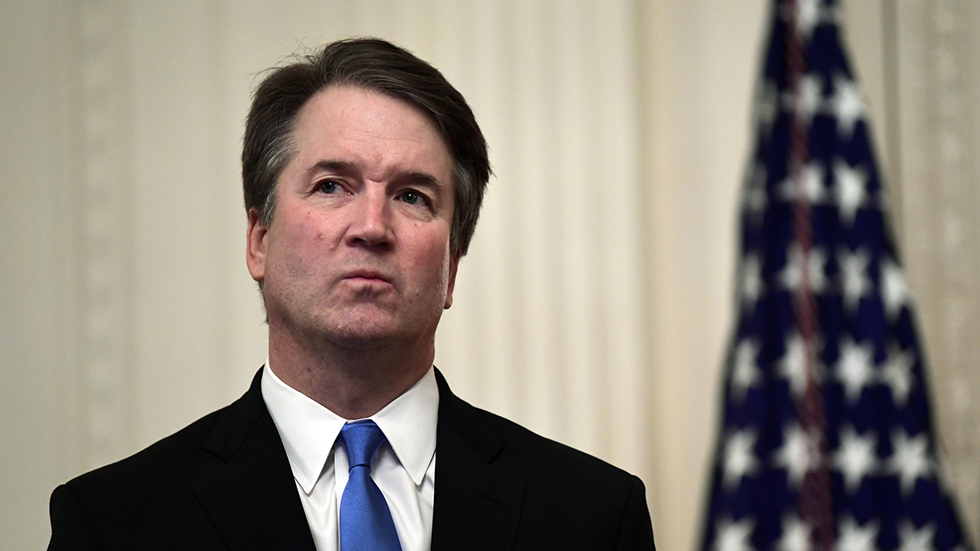
On Wednesday, just a day after the government issued a new domestic terror watch alert because of disinformation and security threats circulating on the web, a 26-year-old California man armed with a Glock 17 pistol, knife, duct tape and zip ties was arrested for attempted murder near the home of Supreme Court Justice Brett Kavanaugh after calling 911 to describe his intentions.The would-beattacker, who was dressed in black and toting satchels of gear, told police he intended to kill the conservative justice because he was upset that Roe v. Wade, the landmark abortion decision, might soon be overturned. The suspect also said he believed Kavanaugh would vote from the bench to loosen gun control laws.
Kavanaugh and his family are protected by recently beefed-up security around his Maryland home, including from U.S. marshals.
The arrest also led congressional Republicans to re-up calls for the House to pass legislation that would boost security for Supreme Court justices and their families (The Hill). The proposal already passed the Senate unanimously. House Majority Leader Steny Hoyer (D) said on Wednesday he is “hopeful” the House can pass it soon but is seeking changes in further talks with Sens. John Cornyn (R-Texas) and Chris Coons (D-Del.) (Bloomberg News).
NBC News: Senate Democrats press Biden for executive actions on abortion.

© Associated Press / Susan Walsh | Justice Brett Kavanaugh, 2018.
Americans who might not have thought twice about their safety while in stores, churches, schools, doctors’ offices, inside the Capitol and at their offices are telling members of Congress this week that they are deeply, deeply worried about mass shootings and lone gunmen and want to see officials take action.
During a taped appearance Wednesday night on ABC’s “Jimmy Kimmel Live!,” Biden blamed the National Rifle Association and Republican candidates’ fear of election defeat for a lack of progress on proposed gun safety laws. He urged Americans to make gun safety a top voting issue this fall.
Biden said the GOP has undergone “a radical shift” while moving “hard right” since Trump was elected, meaning its members often vote against what many call “common sense” gun control because they’re afraid of being voted out of office.
“This is not your father’s Republican Party,” Biden said. “This is a MAGA party, a very different Republican Party and you find people who are worried, I believe, that if they vote for rational gun policy, they’re gonna be primaried and they’re going to lose in a hard-right Republican primary” (New York Post).
NBC News: Biden tells Kimmel he has no new plans to issue an executive order on guns.
Tonight’s Jan. 6 hearing in the House will be carried live by most broadcast outlets, the exception being Fox News. Hearing witnesses will include a documentary filmmaker who embedded with the right-wing, pro-Trump Proud Boys group (The Hill).
The Hill: House Republicans are prepared to rebut the Jan. 6 committee’s evidence and conclusions. For Democrats in Congress, the idea of victory tied to the Jan. 6 committee is not uniform, The Hill’s Mike Lillis reports.
Meanwhile, the House on Wednesday voted to advance a wide-ranging gun violence package, dubbed the Protecting Our Kids Act. The legislation, which is expected to die in the House, passed in a 223-204 vote. Two Democrats — Reps. Jared Golden (Maine) and Kurt Schrader (Ore.) — opposed the measure, while five Republicans — Reps. Adam Kinzinger (Ill.), Anthony Gonzalez (Ohio), Brian Fitzpatrick (Pa.), Chris Jacobs (N.Y.) and Fred Upton (Mich.) — backed it (The Hill). All of the Republicans, sans Fitzpatrick, are retiring at year’s end.
The package included seven separate provisions aimed at addressing gun violence, including ones that would raise the minimum age for buying a semi-automatic weapon from 18 to 21, bar civilians from using bump stocks and ammunition magazines with more than 15 rounds, to name a few. Lawmakers voted separately on each one, all of which cleared the chamber in mainly party-line votes.
Of course, the House’s proposal will go nowhere and was meant as a messaging vote in response to the spate of mass shootings that have cropped up across the country, headlined by those in Uvalde, Texas, and Buffalo, N.Y.
The New York Times: As survivors demand action, House passes gun bill doomed in the Senate.
Across the Capitol, senators continued to motor toward a possible deal on a more modest gun violence bill. As The Hill’s Alexander Bolton reports, negotiators have cobbled together the outlines of legislation, focusing it on encouraging states to pass red flag laws, greenlighting funds to deal with mental health treatment and school safety, and strengthening background checks. A final bill could also include language concerning safe storage of firearms.
Senators involved in talks were optimistic that the outline could lead to an agreed-to framework by the end of the week.
“It was a constructive conversation. I’m optimistic we have a path forward,” Coonssaid.
Cornyn, the lead negotiator for the GOP, said from the Senate floor that discussions are “making steady progress.” He also told reporters that he is hopeful to have an agreement in hand by the time senators break for the July 4 recess (CNN).
“I sense a feeling of urgency and a desire to actually get things done,” Cornyn said from the floor.
However, the number of Senate Republicans who will throw their support behind the final bill remains unclear. According to CNN, several Senate GOP members spoke out against the emerging bill during a party lunch on Wednesday, arguing that lawmakers are going too far.
Related Articles
▪ The Wall Street Journal: Uvalde shooting survivor, age 11, tells Congress, “I don’t want it to happen again.”
▪The Hill: Attorney General Merrick Garland names team to investigate Texas school shooting.
Virtual Event Invite
America’s Unfinished Business: LGBTQ+ Summit, today at 1 p.m. ET
Though LGBTQ+ Americans have unquestionably seen major legal and social advancements in recent years, leaders and advocates are still fighting biases and discrimination for these groups to achieve true equality. Equality Caucus co-chair Rep. Mondaire Jones (D-N.Y.), Lamba Legal’s Kevin Jennings, NCAA national champion CeCé Telfer and more join.
RSVP and watch live today.
LEADING THE DAY
➤ ADMINISTRATION
There is no question that Biden, faced with record low job approval numbers and a long list of politically sensitive policy challenges, is often playing defense. Immigration and border security have been used by Republican candidates to criticize the administration, often in concert with concerns about crime, use of public benefits for noncitizens and public health.
NBC News reported on Wednesday that the Department of Homeland Security plans to transport migrants awaiting immigration proceedings from U.S. cities along the southern border farther into the interior of the country, beginning with Los Angeles in the coming weeks. Federal funds would be used for bus tickets and other travel to cities on the list, including Albuquerque, N.M., Houston and Dallas. The administration says it wants to alleviate overcrowding along the border where record high numbers of border crossers have overwhelmed the capacity of local shelters in some cities, at times leading Customs and Border Protection to release migrants on the street to fend for themselves.
New inflation data to be released Friday is expected to show another jump in monthly price growth, posing a serious threat to the U.S. economy and Biden’s political prospects, reports The Hill’s Sylvan Lane.
Treasury Secretary Janet Yellen on Wednesday testified to the House about inflation, which she says she underappreciated in her earlier forecasts and now expects to remain high (The Hill). Many economists made similar inflation assessments, not fully understanding supply chain bottlenecks, among other COVID-19-related impacts to the economy.
👉 The average pump price of a gallon of gasoline in the United States today is close to exceeding $5. AAA reports $4.970 is the average price this morning.
IN FOCUS/SHARP TAKES
➤ POLITICS
Tuesday night’s results in California only compounded problems for progressives, whose hopes to make inroads with electoral victories were flattened once again, headlined by the recall of San Francisco District Attorney Chesa Boudin (D) as the country spurns their laissez faire attitude of policing.
As The Hill’s Hanna Trudo points out, the lack of victories didn’t end there. Rick Caruso, a longtime Republican-turned-Democrat, had a surprisingly strong showing in the Los Angeles mayoral race, having spent $41 million on his campaign that is focused on crime. Caruso will face Rep. Karen Bass (D-Calif.), a Congressional Black Caucus stalwart, in a runoff election.
The news hasn’t been any better in other parts of the country, including in Texas, where Rep. Henry Cuellar, considered the most conservative House Democrat, defeated progressive activist Jessica Cisneros by fewer than 300 votes to propel him to the general election.
The Hill: Biden: Tuesday primaries sent “clear message” voters want tough-on-crime policies.
Max Greenwood, The Hill: Five takeaways from primaries in California and beyond.

© Associated Press / Noah Berger | Recalled San Francisco District Attorney Chesa Boudin on Tuesday.
On the GOP side, Mehmet Oz officially defeated rival David McCormick in the Pennsylvania Senate primary on Wednesday. According to the state’s official recount, Oz topped McCormick — who is already looking into a bid against Sen. Bob Casey (D-Pa.) in 2024 — by 951 votes, taking 31.1 percent to 31 percent for the ex-Treasury official, who conceded the race on Friday (The Washington Post).
CNBC: Trump and his kids, Donald Trump Jr. and Ivanka Trump, are set to testify in a New York attorney general investigation starting July 15.
➤ UKRAINE CRISIS
Ukrainian President Volodymyr Zelensky on Wednesday said that the nation’s “brutal” battle for the eastern town of Sievierodonetsk will determine whether the Donbas region will fall completely into Russian hands as Moscow pushes to control all of eastern Ukraine.
As Reuters notes, the Kremlin has said it wants to “liberate” Donbas territory, one-third of which was held by Russian separatists prior to Moscow’s invasion in late February.
“This is a very brutal battle, very tough, perhaps one of the most difficult throughout this war,” Zelensky said in his nightly video statement on Wednesday. “Sievierodonetsk remains the epicenter of the encounter in Donbas. … Largely, that is where the fate of our Donbas is being decided now.”
The New York Times: The U.S. lacks a clear picture of Ukraine’s war strategy. It knows more about Russia’s.
📝 Introducing NotedDC, The Hill’s curated commentary on the beat of the Beltway. Click here to subscribe to our latest newsletter.
OPINION
■ How San Francisco became a failed city, by Nellie Bowles, opinion contributor, The Atlantic. https://bit.ly/3NCCAgD
■ When golfers ignore who signs the checks, they miss what’s being bought, by Barry Svrluga, columnist, The Washington Post. https://wapo.st/3O5HzpU
WHERE AND WHEN
The House meets at 9 a.m. The House Select Committee on the Jan. 6 attack on the Capitol will hold a televised hearing at 8 p.m. EDT. It can be viewed live on CBS, ABC, NBC, CNN, MSNBC, Fox Business and C-SPAN.
The Senate convenes at 10 a.m. and resumes consideration of H.R. 3697, the Honoring our PACT Act.
The president and first lady Jill Biden are in Los Angeles. Biden will attend and deliver remarks at both a CEO summit and the opening plenary of the Summit of the Americas today. He and the first lady will welcome heads of state and government and their spouses for a dinner as part of the summit. Biden will hold a bilateral meeting with Canadian Prime Minister Justin Trudeau at 11:45 a.m. PDT. Biden will meet with leaders of Caribbean nations on climate change, accompanied by the vice president. Biden will have a bilateral meeting at 3:30 p.m. PDT with President Jair Bolsonaro of Brazil. The president and first lady will host a dinner for summit guests at the Getty Villa in Los Angeles.
Vice President Harris is in Los Angeles. This afternoon, she will join Biden in meeting with leaders of Caribbean nations to launch a new partnership to be led by Harris to address the climate crisis. At 2 p.m. PDT, the vice president will join Biden at the opening plenary session of the Summit of the Americas at the Los Angeles Convention Center.
Health and Human Services Secretary Xavier Becerra will travel to Dallas-Fort Worth International Airport in Texas to meet a charter aircraft at midday bringing 110,000 pounds of Nestlé infant formula, or approximately 1.6 million 8-ounce bottles (63,504 cans), flown from Germany to try to alleviate the ongoing U.S. infant formula shortage.
🖥 Hill.TV’s “Rising” program features news and interviews at http://thehill.com/hilltv, on YouTube and on Facebook at 10:30 a.m. ET. Also, check out the “Rising” podcast here.
ELSEWHERE
➤ SUPREME COURT
The Supreme Court in a 6-3 ruling on Wednesday said that Border Patrol agents are generally shielded from lawsuits that allege the use of excessive force, the latest in a series of decisions narrowing the legal avenue for alleged victims of abuse by federal officers (The Hill). Justices still have 29 rulings to unveil this term.
➤ SEXUAL ASSAULT
More than 90 women who say they were sexually assaulted by Larry Nassar, the former doctor for USA Gymnastics who was convicted on state sexual abuse charges, are seeking more than $1 billion from the FBI in a lawsuit for its failure to investigate Nassar when it received credible information about his crimes (ESPN).
➤ PANDEMIC & POX
For many parents, this news may be timely: The White House today unveiled its operational plan to roll out COVID-19 vaccines for children ages 5 and younger before the end of June, if authorized by the Food and Drug Administration and recommended by the Centers for Disease Control and Prevention. Vaccines will be distributed across thousands of different sites, but the administration will put a focus on frontline providers such as pediatricians and primary care doctors, as that is where they expect many families will want to go. Officials estimate that 85 percent of children age 5 and younger live within five miles of a potential vaccination site (The Hill).
💉 Moderna updated its booster vaccine to take omicron into account and says the result is more effective. The updated booster contains Moderna’s original vaccine and a vaccine candidate that targets omicron (CNN).
🦠 BA.4 and BA.5 cousins of the omicron variant are becoming the most prominent in the U.S. and a wave of infections is a possibility this summer. Generally, BA.4 and BA.5 cause mild disease but spread easily. As with other omicron variants, BA.4 and BA.5 symptoms are generally mild, and may include fever, malaise and loss of smell. The prevalence of long-term symptoms (long COVID-19) is still being evaluated (MedPageToday and Yahoo Finance).
Airline industry officials are pressing the Biden administration to drop the pre-departure COVID-19 testing requirements for vaccinated international travelers, saying it is costing the sector billions of dollars in revenue per month and that it is the greatest inhibitor of international travel. Officials noted at a Senate transportation subcommittee hearing that many other countries have dropped such requirements. The U.S. policy has been in place since January 2021 (The Hill).
Total U.S. coronavirus deaths reported as of this morning, according to Johns Hopkins University (trackers all vary slightly): 1,010,520. Current average U.S. COVID-19 daily deaths are 291, according to the Centers for Disease Control and Prevention.
Monkeypox can be airborne, but only for short distances, according to scientists. The route of transmission is causing public confusion, especially after the CDC recommended wearing masks to avoid catching monkeypox. That advice was erased from the website on Monday (The New York Times). As of Tuesday, the United States recorded 31 cases in 12 states and the District of Columbia (The Hill).
THE CLOSER
Take the Morning Report Quiz

© Associated Press / Matt Rourke | “Shrinkflation” product sizes pictured on Monday.
And finally … It’s Thursday, which means it’s time for this week’s Morning Report Quiz! Inspired by recent headlines, we’re eager for smart guesses about things short or shrinking.
Email your responses to asimendinger@thehill.com and/or aweaver@thehill.com, and please add “Quiz” to subject lines. Winners who submit correct answers will enjoy some richly deserved newsletter fame on Friday.
As inflation soars and consumers adjust, size shrinkage (without lower prices, in most cases) has been reported in which product(s)?
- Fritos Scoops party size
- Honey Bunches of Oats
- Folgers instant coffee
- Charmin
- All of the above
A fossil expert from the University of Edinburgh said what could shrink over time in response to hotter temperatures and the climate crisis?
- Cities
- Physical size of humans
- Ant populations
- The sun
Which of these recently announced it is strategically shrinking its portfolio?
- Museum of Modern Art
- NATO
- Federal Reserve
- Airbnb
A short film shown during the recent Platinum Jubilee festivities in the U.K. featured Queen Elizabeth II in her first “acting” role. Who is her co-star who accidentally sprays chocolate éclair cream on a Buckingham Palace footman?
- 007’s Daniel Craig
- “Downton Abbey” cast
- Mick Jagger
- Paddington Bear
Stay Engaged
We want to hear from you! Email: Alexis Simendinger and Al Weaver. Follow us on Twitter (@alweaver22 & @asimendinger) and suggest this newsletter to friends!
Source: TEST FEED1
Share:
Free college: How do you pay for it?
Story at a glance
- It could cost around $680 billion annually to provide free college at public institutions in the U.S.
- Many states, like California and New York, already offer free college tuition programs to eligible residents.
- As tuition rises alongside housing and food costs, some experts argue the federal government has a bigger role to play in supporting higher education costs.
Advocates for free public colleges and universities face a problem: who is going to pay for it. The cost of providing free college at public institutions in the U.S. is estimated at around $680 billion a year, or about 1 percent of last year’s $6.82 trillion in federal spending. That’s compared to $782 billion spent on defense and $829 billion spent on Medicare. It’s a large number, and one that observers say will be difficult to find political support for.
Brian Powell, a professor of sociology at Indiana University, previously told Changing America that although public opinion on loan forgiveness varies, his research shows strong support for free tuition.
“If we think about the future, if we think about providing opportunities for more Americans to go to college, one of the first steps would be, making it affordable and free tuition at the public level,” said Powell, who authored “Who Should Pay: Higher Education, Responsibility and the Public,” alongside Natasha Quadlin, an assistant professor of sociology at the University of California at Los Angeles.
A 2019 survey conducted by the authors and published in their book found that 71 percent agreed with the statement “tuition at public colleges and universities should be free for anyone who is qualified to attend.”
California, New Mexico, and New York are among the states that currently offer free college tuition programs to eligible residents. These efforts, experts say, could be expanded through strategic partnerships with the federal government, potentially giving more Americans a chance at free college — at least in states that participate.
Some experts believe that by partnering with states, federal agencies could establish targeted grants that could only be used to fund tuition — eliminating the need to create entirely new mechanisms to fund free college.
Higher education funding has historically been handled by individual states who are beholden to an annual budget. An analysis by the Urban Institute found that in 2019, states collectively spent $311 billion on higher education—about 9 percent of general spending.
Typically, the federal government only offers help in paying for higher education to students directly, in the form of financial aid packages, including the Pell Grant, and student loan options.
Some experts believe there’s room for the federal government to play a bigger role in higher education, especially as the student debt crisis has ballooned in the past decade and resulted in $1.7 trillion in outstanding debt owed to the federal government.
“One of the reasons that the federal government is an important partner in these things is that the federal government can spend more than it takes in in taxes. Most states have to run a balanced budget,” said Kevin Miller, associate director for higher education at the Bipartisan Policy Center.
Miller also noted that states are more restricted with how much money they can allocate to higher education affordability before having to turn to increasing taxes.
One idea popular among experts is developing block grants, which could supplement states’ existing higher education budgets and would be tailored to address tuition fees. This could ensure states focus their education budgets on affordability.
“We think that a flexible grant program that allows states to sort of support their existing affordability programs, the scholarship programs or College Promise Programs, makes a lot of sense, in that we could support the mechanisms that are already there rather than building an entirely new mechanism,” Miller added.
America is changing faster than ever! Add Changing America to your Facebook or Twitter feed to stay on top of the news.
Another more immediate option—expand the Pell Grant.
The Education Department issues Pell Grants to eligible, low-income students and in most cases the funds do not need to be repaid. In the 2019-2020 academic year, about 34 percent of students received one.
President Biden did manage to increase the maximum award amount by $400 in his latest $1.5 trillion omnibus funding package.
Currently, eligible students can receive a maximum of $6,895 in Pell Grants per academic year. However, the average in-state student attending a public four-year institution spends about $25,000 per academic year on tuition, housing and other expenses, according to the Education Data Initiative.
That cost more than doubles for students attending private institutions, who pay close to $53,000 per academic year on those same expenses. These increases have occurred alongside soaring cost-of-living expenses.
“Especially for low-income students, it’s important to look at making sure their financial aid is covering all their actual costs,” Miller continued. “If you want low-income students to be able to attend college, either zero cost or debt free – or however you define that kind of expense sensibilities – you need to make sure that their financial aid is meeting all those needs.”
However, the reality of the federal government taking up free college proposals anytime soon appears bleak. First Lady Jill Biden confirmed in February that the president’s proposal to make two years of community college free for eligible students did not garner enough Democratic votes to pass through the Senate.
Moving forward with a free college plan means Congress would need to make big structural changes to its existing education policy, and Iris Palmer, deputy director for community colleges with the Education Policy program at New America, told Changing America “there’s just not a political coalition that’s willing to put their money in this at the expense of some other things like climate change mitigation, early childhood education, childcare.
“We have a lot of problems in this country. And if you’re going to spend a ton of money and totally change the way we fund higher education, it needs to be behind some of these other really, really pressing priorities,” Palmer added.
Though free college is enticing to many Americans, it’s no longer a key focus of the Biden Administration. Currently, the president is zeroing in on student loan forgiveness and considering forgiving up to $10,000 per borrower.
Source: TEST FEED1
Share:
Biden, economy imperiled by predicted May inflation spike
Another spike in monthly price growth is posing a serious threat to the U.S. economy — and President Biden’s political prospects.
New consumer price index (CPI) inflation data to be released Friday is expected to show consumer prices rising at a faster rate between April and May, due largely to surging oil prices and their ripple effects throughout the economy. Shocks to the global food supply driven by the war in Ukraine and a sharp increase in summer travel and energy usage are other factors likely to push inflation even higher.
After months of downplaying inflation, inaccurately predicting its decline and blaming price growth on a wide range of outside forces, Biden and his top economic officials are coming to terms with the challenge in front of them.
Treasury Secretary Janet Yellen, one of the first Biden officials to admit she misread inflation, told lawmakers Wednesday that price growth was at “unacceptable levels” and called bringing inflation down the nation’s top priority.
But Yellen admitted Tuesday it would be “virtually impossible” for the U.S. to shield itself from one of the main forces behind high inflation: skyrocketing oil prices.
Yellen also broke from other administration officials and scores of Democratic lawmakers by saying high inflation had little to do with corporate greediness, a common refrain from lawmakers eager to deflect blame for inflation from the administration.
While the annual inflation rate is likely to hold even at 8.3 percent, according to consensus projections from economists, that’s still the fastest yearly increase in prices since the early 1980s. And even if inflation has peaked, Americans will still be dealing with quickly rising prices for months — if not years — without a sudden and potentially damaging shift in the economy.
“There’s always that debate: ‘Are we at peak? Are we past peak? Is it 8.5 [percent]? Is it going to be 8.6?’ ” said Gregory Daco, chief economist at EY-Parthenon, in a Wednesday interview.
“The average household, the average business doesn’t care whether the peak was 8.6 or 8.5 or whatever it may end up being. What they care about is what inflation is going to be in six months, a year’s time.”
There is little time for inflation to fall significantly before the midterm elections in November, when Democrats are predicted to lose their House and Senate majorities amid widespread voter dissatisfaction with the economy.
As inflation has risen, Biden’s approval ratings have fallen despite the addition of more than 10 million jobs since he took office in January 2021, steady consumer spending and rapid wage growth.
Daco said there are encouraging signs of some price pressures fading, particularly for consumer electronics, appliances, furniture and other goods that were in short supply and high demand for much of the past two years.
After scrambling to build up inventories, retailers such as Walmart and Target have begun discounting goods now too expensive and overbought to be sold at inflated prices.
Even so, he said prices for food, oil, travel, shelter and medical services — categories where many Americans may struggle to cut back on spending — show no signs of slowing down.
“You only notice car price inflation if you buy a car, right? You’re only going to notice the increase in furniture if you’re buying a new couch or if you’re buying a new dishwasher,” Daco said.
That dynamic doesn’t hold up when prices for staples such as groceries and gasoline keep rising.
Daco added that rising oil prices trickle through the economy by raising the costs of transportation and manufacturing — two energy-intensive forces boosting prices for suppliers and the consumers they’re scrambling to serve.
“Everyone uses a form of refined petroleum, whether it’s gas or diesel, or any other type of fuel. As a result, prices for most services actually embed some form of energy costs,” he said.
“The rise in fuel prices tends to have this insidious effect across a lot of consumer goods and services and prices, and as a result it’s much more visible.”
Higher inflation could also force the Federal Reserve to take much more drastic action to slow the pace of price growth. The Fed is already implementing a series of interest rate hikes meant to slow the economy into lower inflation, but economists fear the bank may need to raise rates high enough to cause a recession if inflation does not begin to fade quickly.
The Fed is also set to begin allowing trillions of dollars of bonds, which it purchased to stimulate the economy, to expire off its balance sheet, which has the practical effect of pulling money out of lending markets.
“The economy and the financial system have become accustomed to large Fed balance sheets and extremely low rates. Many investments and business decisions are made under the assumption that interest rates are going to be low for long. As a result, it is extremely difficult to tighten monetary policy without affecting the financial markets and the real economy,” said Kairong Xiao, an associate professor of finance at Columbia University, in a Wednesday email.
Source: TEST FEED1
Share:
The Memo: Democrats raise the stakes before first Jan. 6 hearing
Democrats have ramped up expectations for the first televised hearing of the Jan. 6 committee — and now they have to deliver.
The stakes could hardly be higher when the House select committee’s proceedings get underway at 8 p.m. Thursday.
Rep. Jamie Raskin (D-Md.), a member of the committee, promised in April that there would be revelations that “will really blow the roof off the House.”
In a more recent interview, with The Washington Post, Raskin said that the panel had discovered evidence encompassing “a lot more than incitement” by former President Trump.
House Democratic Caucus Chairman Hakeem Jeffries (N.Y.) has tweeted that the hearings will “fully expose the cult’s extreme effort to overthrow the U.S. government.”
Rep. Steve Cohen (D-Tenn.) has also insisted there is going to be new information about Trump’s role in one of the darkest days in American democracy.
“We’re going to see how much Trump was involved,” Cohen recently told CNN. “Trump ran this show.”
The sizzling rhetoric means the pressure is on the committee to show real substance. But Democrats are confident they have the goods.
They will certainly have an audience.
The big three broadcast networks, ABC, CBS and NBC, will preempt their regular programming to show the first hearing live, as will cable networks CNN and MSNBC. Fox News has stirred a media furor by declining to do the same, though its lower-profile sister network Fox Business will do so.
The panel has recruited former ABC News executive James Goldston to help fashion a compelling TV narrative out of an enormous mountain of information. The panel has testimony from more than 1,000 interviews and has reviewed around 140,000 records.
The Democrats have one sizable advantage going into the hearing: They will get to tell a story largely of their own choosing.
There are only two Republicans on the panel, Reps. Liz Cheney (Wyo.) and Adam Kinzinger (Ill.), both of whom are strong Trump critics.
The makeup of the committee is the result of a squabble from almost a year ago between Speaker Nancy Pelosi (D-Calif.) and House Minority Leader Kevin McCarthy (R-Calif.).
As the panel was being formed, McCarthy nominated five Republicans to join it, including two of Trump’s most ardent backers on Capitol Hill, Reps. Jim Jordan (Ohio) and Jim Banks (Ind.).
Both Jordan and Banks had voted against certifying the result of the 2020 election on the day of the insurrection, and Pelosi refused to accept their nominations. McCarthy responded by yanking all his choices off the committee, blasting its work as a “sham process.”
At the time, Republicans thought they could paint the panel as partisan theatrics. Many Trump supporters still hew to that view. However, come Thursday evening, there will be no defenders of the former president in the room to disrupt or dilute the accusations likely to be pressed by the panel.
Meanwhile, Cheney and Kinzinger’s presence gives a semblance of bipartisanship to the endeavor.
Cheney has joined the Democrats in predicting explosive revelations to come.
Asked by CBS News’s Robert Costa in an interview broadcast Sunday whether she was “confident that what you have found as a committee will somehow grab the American people by the lapels,” the Wyoming congresswoman replied, “I am.”
She also said that “people must watch” the hearings in order to “understand how easily our democratic system can unravel if we don’t defend it.”
But Democrats and Trump critics have been disappointed before when they have believed the former president would finally be consigned to ignominy. The Mueller report, and its relative lack of impact on Trump’s political standing, is the most obvious example. More recently, the impetus of a criminal probe into Trump in New York has seemed to peter out.
And while Congress can marshal some old-school drama to its proceedings, that in itself doesn’t mean much — as the GOP knows.
In 2015, House Republicans investigating the deaths of four Americans in Benghazi, Libya, three years previously were at fever pitch about a scheduled appearance by former Secretary of State Hillary Clinton.
But the GOP drew virtually no new information or incriminating details from Clinton in 11 hours of questioning. The hearing was widely considered a bust.
This time around, the Biden White House is remaining circumspect.
White House press secretary Karine Jean-Pierre was asked Tuesday whether the president saw the hearings as something that would “move the needle” in terms of public perception.
Jean-Pierre responded in mild terms, noting that Biden would “be following the news from the hearing” and that he supports the “vital work” undertaken by the panel.
From an electoral standpoint, moving the electoral needle is doubtful.
The reasons are plain. Most Democratic voters believe Trump’s culpability and the GOP’s complicity has already been proven. Likewise, the former president’s most fervent supporters show no sign of caring what the panel uncovers, one way or another.
But for the political world writ large, Thursday’s hearing will be the biggest political event since Trump left office all the same.
The biggest question of all still looms.
What has the panel found?
We’ll soon know the answer.
The Memo is a reported column by Niall Stanage.
Source: TEST FEED1
Share:
What does a Jan. 6 hearing victory look like for Democrats?
Democrats cheering the congressional investigation into last year’s violent attack on the Capitol face a tricky question as they make their case against former President Trump: What does a victory look like?
The answer seems to be as diverse as the House Democratic Caucus itself.
A number of lawmakers said they want the open proceedings, which begin in prime time on Thursday, to provide a high-stakes history lesson of sorts, revealing not only what happened on Jan. 6, 2021, when a pro-Trump mob tried to block the peaceful transfer of power, but why the threat to democracy remains real.
“If we reach people with an open mind and inform the public of how close we came to losing our democracy, and provide a sense of urgency about how we’re not out of the woods, I think we’ll have succeeded,” said Rep. Adam Schiff (D-Calif.), who sits on the select committee investigating the attack.
Another group is voicing hopes that the public airing of new revelations about the deadly riot will lead to greater accountability for those who executed it.
“Those people who perpetuated this insurrection should be punished, some should go to jail, and we should follow the chain to see where it started — not just from the bottom, but go to the top all the way down,” Rep. Gregory Meeks (D-N.Y.) said.
Taking that sentiment a step further, some want the investigators’ findings to amp up the pressure on the Justice Department to prosecute more members of Trump’s inner circle — or even the former president himself — for their role in orchestrating the attack.
“I think there will be an increasing demand that something has to happen,” Rep. Jan Schakowsky (D-Ill.) said. “This may be a turning point; the hearings may prompt a kind of response I think many Americans would like to see.”
Others said much of the objective is to highlight the discrepancy between the two parties when it comes to protecting the nation’s institutions from violent insurrection.
“This was not some peaceful protest; this was not what the Republican National Committee referred to as ‘legitimate political discourse,’ ” said House Majority Leader Steny Hoyer (D-Md.). “This is a way to have the American people make their own judgment.”
Still others stressed the importance of preserving America’s role as a global example of how to protect democratic governance, particularly in an age of Russian aggression in Europe and rising autocracies around the world. Victory in this sense, said Rep. Jamie Raskin (D-Md.), another member of the Jan. 6 committee, hinges on the long-term durability of America’s democratic traditions and institutions.
“It’s a long-term test,” Raskin said.
“You know that the autocrats and the bullies and the dictators and despots all over Earth have gotten together to try to overthrow democracy, from Moscow to Mar-a-Lago,” he continued. “The truth has a way of getting out there. And we’re determined to say that every American has access to the facts about what took place.”
The debate is happening at a crucial point in the select committee’s yearlong investigation into the 2021 attack on the U.S. Capitol, where hundreds of Trump supporters, animated by the former president’s baseless claims that President Biden’s election victory was fraudulent, stormed into the building in an effort to prevent Congress from certifying the results. Seven people died in connection to the rampage, and roughly 150 police officers were injured while sparring with the rioters.
The initial response from House GOP leaders was to condemn Trump for his role in the unprecedented rampage. House Minority Leader Kevin McCarthy (R-Calif.) said publicly that Trump “bears responsibility” for the violence, while privately the Republican leader was even more harsh, saying he would urge Trump to resign just days before his presidential term was to end.
Since then, however, the tone from Republicans has changed drastically.
Although banned from Twitter and self-exiled in Florida, Trump remains the most popular Republican figure in the country, raising tens of millions of dollars for campaigns and playing kingmaker in dozens of primary contests from coast to coast. His staying power has forced most GOP leaders to rush to his defense as the select committee has spent months digging into the events surrounding the Capitol riot.
One notable exception, Rep. Liz Cheney (R-Wyo.), was kicked out of her spot in GOP leadership for challenging Trump’s lie about a stolen election. She is now the vice chair of the select committee investigating Jan. 6.
McCarthy, who is actively seeking the Speaker’s gavel if Republicans flip control of the House in November, has led Trump’s defense, opposing an independent commission to investigate the attack and refusing to cooperate in the probe, even under subpoena.
An earlier dispute over the Republican picks for the select committee prompted McCarthy to pull all his selections from the panel. The Republicans have characterized the investigation as a political witch hunt aimed solely at hurting Trump and the GOP politically — a message they’re amplifying this week ahead of Thursday’s prime-time hearing.
“They are scrambling to change the headlines, praying that the nation will focus on their partisan witch hunt instead of our pocketbooks. It will not work,” Rep. Elise Stefanik (N.Y.), who replaced Cheney last year as the No. 3 House Republican, said Wednesday.
The members of the bipartisan panel are pressing on, saying the decision by Trump’s GOP allies to downplay the events of Jan. 6 is only more reason to get to the bottom of what happened that day — and air those findings to the country.
“They saw on television, and they’ll see again, they’ll be reminded of the fact that this was a violent insurrection; this was not some peaceful protest,” said Hoyer. “Was this legitimate political discourse? Is this the way you think democracy ought to be carried out? Is this the way you think citizens ought to make their point? If it is, we’re in real trouble as a nation.”
The select committee’s decision to stage the hearing at 8 p.m. on Thursday is designed to help the panel disseminate the results of its investigation. But in a sign of the uphill trek the committee is facing, Fox News announced this week that it will not air the event live, as other networks have scheduled.
“All we can control is what’s in front of us, and that’s to tell that story,” Rep. Pete Aguilar (D-Calif.), a member of the select committee, said. “I hope that people pay attention.”
Source: TEST FEED1