VIENNA — Nuclear experts are warning that Russian President Vladimir Putin’s threats to deploy a nuclear weapon in Ukraine has put the world at its most dangerous precipice of nuclear confrontation since the Cold War.
“The nuclear risk, is it as bad as during the Cold War? The answer is yes,” said Alexander Kmentt, director for disarmament, arms control and non-proliferation with the Austrian Foreign Ministry.
“In the Cold War we had essentially two nuclear interests trying to deter one another. We have several potential nuclear flashpoints now… the latest iteration of those risks, issued by Russia, are just completely beyond the pale.”
While U.S. officials have stressed they have yet to see Russian movements pointing to a nuclear escalation, Austrian officials provide a unique perspective on Putin’s Russia given the distinct space the country occupies.
While Austria is a member of the European Union and party to the sanctions placed on Russia, it has not provided any military support to Ukraine and the country is constitutionally-bound to its position of neutrality.
This, in part, has prevented it from joining NATO even as traditionally neutral Finland and Sweden are on the brink of ascension to the organization.
Moscow and Vienna have long held strategic and deep economic ties. Austria serves as a major energy transit center for natural gas traveling from Russia to Europe, in particular to Italy. The country also gives reverence to the Soviet Union for helping Austria establish its independence after World War II.
In April, Austrian Chancellor Karl Nehammer became the first European leader to meet face-to-face with Putin after he ordered his military to invade Ukraine on February 24.
The meeting failed to pull Putin back, however, and Austria has pushed the boundaries of its neutrality to more firmly join the international community in supporting Ukraine.
“We are for Ukraine,” said an Austrian diplomat, who declined to be named in order to speak candidly, but added that Vienna stands ready to host – however unlikely – de-escalation talks.
Emil Brix, who served as Austria’s ambassador to Russia from 2015 to 2017, said it is important for the international community to state clearly that any nuclear deployment by Putin would be completely unacceptable.
Brix, who said he met Putin on numerous occasions, describes the Russian leader as someone who is well-informed in things that are “mainly strategically important to him,” who works hard to rationalize his every action, but is “not open to many opinions.”
“He only understands strength,” Brix said, though he added that international condemnation may factor into Putin’s “rational thinking.”
Austria has long made nuclear disarmament a major foreign policy priority and Kmentt, the nonproliferation official, said the goal is a radical change to the current paradigm – where mutually-assured, nuclear destruction was thought to be the best way to prevent the use of nuclear weapons.
That risk now is immediately grave, suggesting that paradigm may no longer be workable.
Hard-line partners of Putin are calling for the use of “low-yield nuclear weapons,” as proposed by head of Russia’s region of Chechnya, Ramzan Kadyrov. This suggests Putin’s threats may not be a bluff.
The debate around the potential use of a “tactical” or “low-grade” nuclear weapon is likely to lead to “all out nuclear war,” Kmentt said.
“Nobody knows how you can contain escalation once this threshold is crossed,” he said.
U.S. Deputy Assistant Secretary of Defense Laura Cooper said on Tuesday that she had “nothing to corroborate” in response to a question on whether Russia is moving tactical nuclear weapons to Ukraine’s border.
Kmentt credited the U.S., Europe and NATO for reinforcing unity, coordinating sanctions on Russia and working to rally global condemnation of Putin’s actions.
“You can also make the argument that what the West has been trying” to do is break the paradigm, Kmentt said, but that “we haven’t been as successful as we would have liked on that.”
Ksenyia Karchenko, a Ukrainian refugee in Austria, is putting fears of a Russian nuclear strike out of her mind. As a researcher working with the Institute for Human Sciences in Vienna, she is documenting Ukrainian’s lived experience during the war.
Ukraine is fighting for its survival, she explained, to finally put an end to Putin’s best attempts to destroy the country and calls for the world to stay united and not capitulate to the Russian leader’s threats.
“This is a huge bloody history we’re sharing [with Russia], it is important for Ukrainians to have this final battle. There’s no other way for us but to win,” she said.
“If we would say what Ukrainians need, we need to be seen as a real, and democratic and independent country… we need weapons.”
The reporter was a guest of the Vienna School of International Studies.
Bad news for petroleum and energy prices in the West.
The Organization of the Petroleum Exporting Countries (OPEC) on Wednesday agreed to steep cuts in oil production, which means less supply in an already tight market. That, in turn, means customers are likely to pay more.
Saudi Arabia, the group’s de facto leader, said the cut of 2 million barrels per day — which equals 2 percent of the global oil supply — was “necessary to respond to rising interest rates in the West and a weaker global economy” (Reuters).
The Saudi government denied any collusion with petroleum ally Russia when deciding on the cuts, an amount that could drive oil and gas prices back up after weeks of decline and thereby buoy Russia’s oil market amid the West’s punishing sanctions.
President Biden and his team on Wednesday challenged big oil companies, OPEC, Russia and just about any entity seen as contributing to higher energy costs at a time when U.S. inflation is both an economic problem and a political weapon (The Hill). The White House issued a statement criticizing OPEC’s decision and voicing Biden’s “disappointment.”
In July after a controversial meeting with Saudi Crown Prince Mohammed bin Salman, the president boasted that Saudi Arabia “shared” the urgency of the United States to increase oil supply, “which I expect will happen,” Biden said at the time. He attracted criticism for the trip and failed to get what he wanted.
White House national security adviser Jake Sullivan, joined by Biden economic adviser Brian Deese, modified a message on Wednesday.
“At a time when maintaining a global supply of energy is of paramount importance, this decision will have the most negative impact on lower- and middle-income countries that are already reeling from elevated energy prices,” they said (The Hill).
Biden’s eagerness to see the global cartel’s production of fossil fuels rise stirs political friction among progressives who want to curb reliance on oil and natural gas as a way to battle climate change.
U.S. options to respond to OPEC’s decision are shrinking (Bloomberg News); more releases from the Strategic Petroleum Reserve, already at its lowest level since 1984, are expected (Reuters).
Recognizing that high U.S. gasoline prices contributed to Biden’s shaky job approval ratings, administration officials had been eagerly calling attention to the number of consecutive days during which U.S. gasoline prices dropped. Officials have worried that higher energy prices this winter in Europe could contribute to recession risks and weaken Western resolve against Moscow amid the war with Ukraine.
Biden said Wednesday he will continue to direct releases from the reserve “as necessary,” a shift from the White House’s previous comments that it would soon end the drawdown.
The administration early this year announced the sale of 180 million barrels for six months beginning in May. Last month it extended that historic sale because only about 155 million barrels had been sold. It now aims to sell 165 million barrels through November, according to Reuters.
▪ The Hill: Democrats excoriate Saudis over OPEC decision to cut oil production.
▪ NPR: Russia and Saudi Arabia agree to massive cuts to oil output. Here’s why it matters.
Europe, meanwhile, is gearing up for an even starker natural gas crisis next year, according to the head of the International Energy Agency. After Russia cut off gas supplies to the continent as a response to sanctions following the February invasion of Ukraine, European countries have filled up 90 percent of their gas storage tanks to deal with winter demand (Reuters).
“With gas storages almost at 90 percent, Europe will survive the coming winter with just some bruises as long as there are no political or technical surprises,”Fatih Birol, the executive director of the agency, said Wednesday.
Related Articles
▪ The Wall Street Journal: European Union likely to approve Group of Seven cap on Russian oil price in two steps.
▪The New York Times: Western effort to drain funding from Russian President Vladimir Putin’s war machine faces global oil producers now making Russia’s crude more valuable on the world market.
▪ The New York Times: A strong dollar is wreaking havoc on emerging markets. A debt crisis could be next.
LEADING THE DAY
➤ POLITICS & INVESTIGATIONS
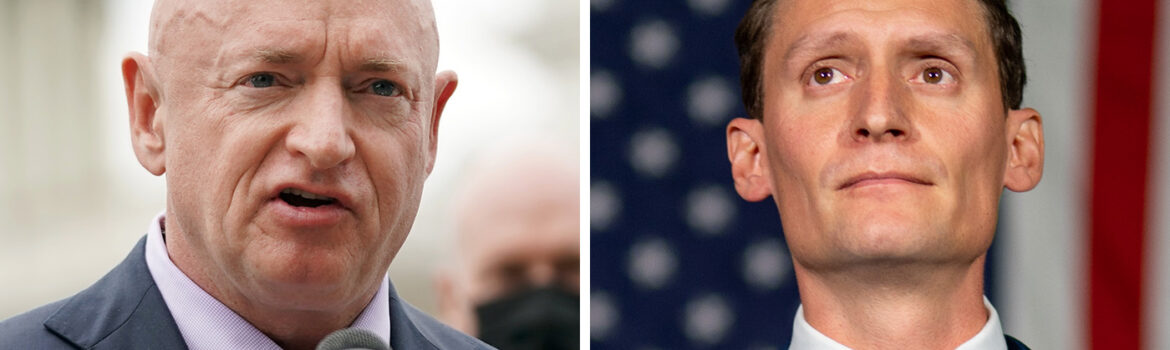
Arizona Republican Senate hopeful Blake Masters faces a critical moment in tonight’s televised debate against Sen. Mark Kelly (D-Ariz.), writes The Hill’s Caroline Vakil. Masters’ prospects have dimmed in the past few weeks as his hard-right views have raised concerns. A super PAC with ties to Minority Leader Mitch McConnell (R-Ky.) recently yanked millions of dollars from the race.
With five weeks remaining before the midterms, Republicans are banking on Masters — endorsed by former President Trump — to use the debate as an opportunity to appeal to a broader swath of voters in a crucial race.
Masters will debate Kelly and Libertarian Marc Victor on Arizona PBS at 9 p.m. ET.
▪ The Hill: Kelly leads Masters by 3 points in Arizona Senate poll.
▪ CBS News: Kelly has edge in Arizona Senate race that hinges on abortion, economy, immigration.
▪ CNBC: GOP megadonor Peter Thiel signals he is done helping Ohio Senate hopeful J.D. Vance and will fundraise for Arizona’s Masters.
Following a report earlier this week that he’d paid for an ex-girlfriend’s abortion in 2009, Georgia Senate candidate Herschel Walker’s campaign has been in turrmoil. The Republican — who has positioned himself as staunchly anti-abortion — denied the allegations, telling interviewers that he doesn’t know the woman he allegedly supported over a decade ago. But the woman has now told The Daily Beast that she’s not only Walker’s ex-girlfriend, she also had another child with him — one he’s publicly claimed as his own. Walker denied these allegations as well (Bloomberg News).
CNBC: Herschel Walker campaign says it raised over $500,000 after report Georgia GOP Senate hopeful paid for an abortion.
In the Senate, McConnell has been facing regular attacks from Trump, who once praised him as one of his staunchest allies in the Senate. Now the former president is calling on Republicans to oust him as leader, The Hill’s Alexander Bolton reports. Details from Trump’s first impeachment trial in 2020 show just how much his relationship with the minority leader changed.
McConnell led a coordinated defense of Trump during the 2020 impeachment proceedings, including encouraging Sen. Lisa Murkowski (R-Alaska) to vote against a push to prolong the trial by hearing from more witnesses, according to an excerpt from the new book “Unchecked” by Washington Post journalists Rachael Bade and Karoun Demirjian. Murkowski subsequently criticized McConnell for pledging to work in close coordination with the Trump White House during the trial, the book reveals, which didn’t sit well with McConnell, who scolded the Alaska senator by email and requested that she call him.
But, fast forward more than 2-1/2 years, and a McConnell-affiliated super PAC is now pouring money into Alaska to support Murkowski against her Trump-backed challenger Kelly Tshibaka.
Meanwhile, in the House, the hostility between Speaker Nancy Pelosi (D-Calif.) and Minority Leader Kevin McCarthy (R-Calif.), the man likely to succeed her should the GOP regain the chamber, has intensified.
As The New York Times reports, “She has called him a ‘moron.’ He has mused publicly — purely in jest, his aides later insisted — about wanting to hit her with the oversized wooden gavel used to keep order in the House.” Rivalries between lawmakers are nothing new, but rarely have feuds between the Speaker — who is elected by the whole House, as per the Constitution — and another member of Congress reached this level of disdain.
Progressives love Sens. Bernie Sanders (I-Vt.) and Elizabeth Warren (D-Mass.), but they are increasingly realizing the two senators, who are 81 and 73 years old respectively, aren’t going to be their leaders forever. The Hill’s Hanna Trudo reports on debates within the left about who might succeed them as leaders of the progressive movement.
The Hill: Here are 10 of the potential 2024 presidential contenders with big stakes in the midterms.
📉 The Hill’s Data Deep Dive: When it comes to political views, a growing gender gap divides young men and women, The Hill’s Daniel de Visé reports. Women increasingly identify as liberal but men do not. Gallup poll data analyzed by the Survey Center on American Life in 2021 found 44 percent of young females described themselves as liberal, compared with 25 percent of young males. A decade earlier, roughly similar numbers of young men (27 percent) and young women (30 percent) identified as liberal. The gap widened in the 2000s during the George W. Bush administration. Trump’s presidential election in 2016 blew the gap wide open, in part because more young women than men said they disliked Trump. Also a factor: the #MeToo movement.
📚 Book bans are on the rise in the U.S., writes The Hill’s Alejandra O’Connell-Domenech. According to PEN America, more than 1,600 individual titles have been removed from classrooms this past year. And while book bans have been commonplace in libraries and schools over the decades, authors of recently banned books believe the attacks on their work are different in organization and intent.
“This is a more organized effort,” said Ellen Hopkins, who is the most frequently banned author in the U.S. according to PEN America. “The ultimate goal is to dismantle public school education.”
Experts are bracing for renewed discussions of civil war, as the Nov. 8 midterm elections approach and political talk grows more urgent and heated. Social media mentions of the phrase skyrocketed after the FBI’s search of Mar-a-Lago, and again when Biden made a speech calling out “MAGA Republicans.” With the midterms on the horizon, some experts worry about an increase in threats of violence online (The New York Times).
First reported by Bloomberg News, the thousands of documents seized from Trump’s Florida home “included a mix of government, business and personal affairs, including analysis about who should get a pardon, call notes marked with a presidential seal, retainer agreements for lawyers and accountants, and legal bills, according to newly disclosed logs created by federal investigators.”
The logs, apparently unsealed in error, are part of a filing that has since been removed from the court docket (The Hill).
▪ The Washington Post: What the FBI took from Trump, according to an accidentally unsealed list.
▪ Bloomberg News: Trump says a U.S. agency packed top-secret documents. These emails suggest otherwise.
▪ The Hill: Court agrees to fast-track DOJ’s appeal in Trump special master case.
IN FOCUS/SHARP TAKES
➤ADMINISTRATION
Biden on Wednesday met with Gov. Ron DeSantis (R) in Florida to survey the damage caused by Hurricane Ian, which swept through the state last week and left 109 dead and countless with destroyed and flooded houses, and no electricity (CNN).
Biden and DeSantis put their political rivalry on hold as they toured Fort Myers, one of the cities impacted by the storm, write The Hill’s Alex Gantigano and Brett Samuels, projecting unity in Ian’s aftermath.
“Today we have one job and only one job. That is to make sure the people of Florida get everything they need to fully recover,” Biden said in prepared remarks, flanked by DeSantis. Biden said the governor has “done a good job” responding to the storm, adding, “We have very different political philosophies, but we’ve worked hand in glove.”
Before arriving, Biden issued an amended disaster declaration for Florida that doubled the eligibility window for fully covered federal aid from 30 to 60 days. In Fort Myers, he spoke about using aid to provide temporary housing, insurance assistance, food, water and other critical supplies. DeSantis repeatedly thanked the whole federal government for cutting through red tape to expedite assistance before, during and after Hurricane Ian made landfall.
▪ CNN: Biden and DeSantis put political rivalry aside — for now — as president toured hurricane damage.
▪ The Guardian: Hurricane Ian “ends discussion” on climate crisis, Biden says on Florida visit.
▪ The Washington Post: Ian is probably Florida’s deadliest hurricane since 1935. Most victims drowned.
▪ The New York Times: During Biden’s visit to Florida, he and DeSantis put politics (largely) on hold.
A federal appeals court on Wednesday ruled that the Obama-era Deferred Action for Childhood Arrivals policy violates U.S. immigration law. It left intact the program created in 2012 to cover some 600,000 immigrants who came illegally to the United States as children through no fault of their own.
A three-judge panel for the 5th Circuit Court of Appeals affirmed a 2021 ruling that prevented the Biden administration from enrolling new immigrants in the program, but left the enforcement waiver policy in place for current beneficiaries (CBS News).
Biden on Wednesday expressed his disappointment about the ruling.
“The court’s stay provides a temporary reprieve for DACA recipients but one thing remains clear: the lives of Dreamers remain in limbo,” the president said in a statement. “Today’s decision is the result of continued efforts by Republican state officials to strip DACA recipients of the protections and work authorization that many have now held for over a decade… It is long past time for Congress to pass permanent protections for Dreamers, including a pathway to citizenship.”
The Washington Post: Vice President Harris, driven in Washington by the Secret Service on Monday, had to switch vehicles after a minor accident immobilized the SUV when the driver hit a curb. The Secret Service initially described the accident as a “mechanical failure” before correcting the details.
🚀 NASA and SpaceX on Wednesday sent four astronauts on a journey to the International Space Station with a schedule to dock this evening close to 5 p.m. ET. Roughly an hour and 45 minutes later, the space station’s hatch will open ahead of a welcome ceremony.
The crew of four includes two American astronauts, one astronaut from Japan and a Russian cosmonaut. Despite tensions between the U.S. and Russia over Ukraine, cooperation continues between NASA and Roscosmos, the Russian space agency (The New York Times).
At 8:15 p.m. the seven astronauts already aboard the space station will help the new crew settle in before a separate spacecraft will bring four of the seven back to Earth. Crew-5, the current group heading into orbit, is expected to return home in about five months (CNN).
OPINION
■ IMF-World Bank meetings are the last stop before a coming economic storm, by Larry H. Summers and Masood Ahmed, opinion contributors, The Washington Post. https://wapo.st/3SXQrAy
■ There are two Americas now: One with a B.A. and one without, by Thomas Edsall, columnist, The New York Times. https://nyti.ms/3CxEXhU
■ Russia’s nuclear threat: Who’s bluffing who? by Melanie Amann, editorial writer, Der Spiegel. https://bit.ly/3e7y6Cr
WHERE AND WHEN
The House meets Friday at 1:30 p.m. for a pro forma session. Members are scheduled to return to the Capitol on Nov. 14.
The Senate convenes Friday at 10 a.m. for a pro forma session. Senators also are scheduled to return for work on Nov. 14.
The president will arrive in Poughkeepsie, N.Y., at 11:40 a.m. to tour IBM at 1:20 p.m. ahead of a 2 p.m. speech focused on semiconductors and technology. (IBM will announce it will invest $20 billion in tech over the next decade in the Hudson Valley region). Biden will fly from Poughkeepsie to Red Bank, N.J., for a Democratic National Committee fundraiser at 5 p.m. The president will fly from New Jersey to New York City for a political reception at 8 p.m. to benefit the Democratic Senatorial Campaign Committee. He will depart New York to arrive back at the White House shortly before 11 p.m.
The vice president at 4 p.m. will ceremonially swear in Arati Prabhakar to be director of the White House Office of Science and Technology Policy (OSTP).
Secretary of State Antony Blinken is in Lima, Peru, to lead a U.S. delegation at the General Assembly of the Organization of American States.
Treasury Secretary Janet Yellen will speak at 11 a.m. at the Center for Global Development ahead of the International Monetary Fund and the World Bank Group meeting about challenges in the global economy and the role of multilateral development banks.
First lady Jill Biden arrives in San Francisco at 5:15 pm. PT for events today and Friday (SFist).
Economic indicator: The Labor Department at 8:30 a.m. will report on filings for unemployment insurance during the week ending on Oct. 1.
The Zaporizhzhia nuclear power plant in Ukraine is caught in a diplomatic seesaw between Putin and opponents in Kyiv, with the International Atomic Energy Agency occupying a risky middle ground. On Wednesday Putin issued a decree nationalizing the plant with intentions that Russia control it, while the head of Ukraine’s state nuclear energy company said that he was taking charge, The New York Times reported.
Today, Rafael Mariano Grossi, the director of the International Atomic Energy group, which is under the umbrella of the United Nations, headed to Kyiv to continue advocating for a nuclear safety zone around the plant (The New York Times).
Meanwhile, in the southern city of Zaporizhzhia Thursday, a Russian missile demolished a five-story apartment block and left one woman dead while trapping other residents (Reuters).
The Ministry of Foreign Affairs of Ukraine condemned Russia’s attempt to take control of the plant in the southern city and urged that the European Union, the Group of Seven industrialized countries “and other partners” impose sanctions against Russia’s state nuclear power corporation, Rosatom. The ministry also called on member countries of the International Atomic Energy Agency to limit cooperation with Russia. Energoatom, Ukraine’s state energy company, said on Wednesday that Putin’s decree nationalizing the plant has no practical significance.
▪ The New York Times: New Russian recruits will not be ready for months, according to a NATO official.
▪ The New York Times: Russia capitalized Wednesday on flatbed truck-launched “kamikaze” drones supplied by Iran to break through Ukrainian defenses near Kyiv.
Putin appeared to concede Russia’s military setbacks in Ukraine during a televised video call on Wednesday with Russian teachers. “We are working on the assumption that the situation in the new territories will stabilize,” he told them. Ukraine has advanced in the east and south against Russian forces, and Putin’s troops have been retreating under pressure on both fronts, confronted by fast moving and nimble Ukrainian forces supplied with advanced Western-supplied artillery systems (The Guardian and The Moscow Times).
In a twist of international intrigue, the U.S. intelligence community says it believes Ukraine was behind a car bomb assassination plot in Russia that killed the daughter of ultranationalist Alexander Dugin in August. American officials said they were not aware of the plan that killed Daria Dugina, adding that the U.S. subsequently admonished Ukraine for the bombing. Some U.S. officials believe the operatives who carried out the plot targeted Dugin and thought, mistakenly, as it turned out, that he would be in a vehicle with his daughter. U.S. officials would not say who in the Biden administration delivered the admonishments or to whom in the Ukrainian government they were delivered. It was not known what Ukraine’s response was. It is unclear if Ukrainian President Volodymyr Zelensky signed off on the operation, The New York Times reported.
The 44-nation European Political Community meets for the first time today in Prague as the brainchild of French President Emmanuel Macron, who envisions a unifying alternative to the 27-nation European Union (The New York Times).
North Korea on Thursday launched two short-range ballistic missiles after the United States redeployed an aircraft carrier near the Korean Peninsula in response to Pyongyang’s previous launch of a nuclear-capable missile over Japan. Upshot interpretation: North Korean leader Kim Jong Un is determined to continue with weapons tests aimed at boosting his nuclear arsenal in defiance of international sanctions (News Wires).
➤ PANDEMIC & HEALTH
One in 7 Americans are diagnosed with Type 2 diabetes and experts say medical care alone isn’t enough to treat and prevent the disease. Improving people’s environments and communities, including walkability, housing, access to better food and health care, and “reframing the epidemic as a social, economic and environmental problem” help address the disease’s causes, they say (The New York Times).
“Our entire society is perfectly designed to create Type 2 diabetes,”Dean Schillinger, a professor of medicine at the University of California, San Francisco, told the Times. “We have to disrupt that.”
Insurance prices are likely to increase next year at faster rates than medical costs, according to some Wall Street analysts, Bloomberg News reports. According to a survey by Bank of America Global Research, health insurance benefits brokers expect rate increases of 6 to 12 percent.
Politico: Biden’s Operation Warp Speed revival for vaccines and treatments stumbles out of the gate.
And finally … 🏛️ It’s Thursday, which means it’s time for this week’s Morning Report Quiz! Alert to the lineup of high court justices, we’re eager for some smart guesses about the Supreme Court’s new term, which began Monday.
Email your responses to asimendinger@thehill.com and/or kkarisch@thehill.com, and please add “Quiz” to subject lines. Winners who submit correct answers will enjoy some richly deserved newsletter fame on Friday.
Justice Ketanji Brown Jackson made her debut and reporters noted she did which of these during oral arguments about a wetlands case?
Remained silent throughout
Posed pointed questions about Congress’s intent
Interrupted the chief justice
Winked with a thumbs-up for her family members
The Onion filed a 23-page petition to the Supreme Court in a particular case on behalf of what?
Vegetables
Gerrymandered congressional districts
Third grade
Parody (and humorists)
Something disappeared outside the court ahead of the new term. News reports this week recounted Chief Justice John Roberts’s comment last month that seeing _____ when arriving at the court was “gut-wrenching every morning”?
Demonstrators with megaphones
Barricades
Overflowing garbage bins
Flocks of geese
Gallup reported last week that Americans’ opinions of the Supreme Court are ____?
Young women are more likely to identify as liberal now than at any time in the past two decades, a trend that puts them squarely at odds with young men.
Forty-four percent of young women counted themselves liberal in 2021, compared to 25 percent of young men, according to Gallup Poll data analyzed by the Survey Center on American Life. The gender gap is the largest recorded in 24 years of polling. The finding culminates years of rising liberalism among women ages 18 to 29, without any increase among their male peers.
Several societal forces have conspired to push young women to the left in recent years, including the #MeToo movement, former President Trump, rising LGBTQ identification and, most recently, abortion policy. Slower-cooking trends in marital status and educational attainment have also nudged the needle.
“I think there is a big generational shift that happened with Generation Z women who were really coming of age in the last five years,” said Kelsy Kretschmer, a sociologist at Oregon State University who studies gender politics.
The rift between young men and women may widen further. Earlier this year, the Supreme Court overturned Roe v. Wade, a precedent that had protected abortion as a constitutional right for nearly half a century. The ruling has energized young women. New survey data, released this week, shows that 61 percent of young women consider abortion a critical issue, compared with 36 percent of all Americans.
“I would always choose a candidate that’s pro-abortion,” said Rose Merjos, 21, a government major at Wesleyan University in Connecticut who is an avowed liberal. “Almost everyone either knows someone who has had an abortion or has had one themselves. This is something everyone can relate to.”
The share of men who identify as liberal has held fairly steady for almost 25 years, according to annual Gallup surveys. Roughly one-quarter of men ages 18 to 29 term themselves liberal, year after year.
Meanwhile, among young women, liberalism has exploded. In the late 1990s and early 2000s, fewer than 30 percent of women identified as liberal. The liberal camp grew through the second term of former President George W. Bush. It expanded further during the tenure of former President Obama. It reached 39 percent in 2017 with the inauguration of Trump. In the last two years, liberalism surged anew.
“Young women today are much more liberal than young men,” Daniel Cox wrote in a June newsletter of the Survey Center on American Life, a project of the American Enterprise Institute. His work documents “a growing political rift” between young women and men.
Merjos attends a university long associated with both liberalism and activism. These days, though, she senses more of both among the women.
“In all of my government classes, there are probably two men out of 18 people,” she said. “ACLU [American Civil Liberties Union], that’s mostly women. I’m wondering if women are maybe just more inclined to be involved in the community, engaged in the community. And that liberalizes them.”
Ezra Meyer, 22, is a senior at the George Washington (GW) University who leads the College Republicans. He is a conservative on a campus that is overwhelmingly liberal and largely female. In conversations with classmates about politics, he treads lightly.
“My metric for deciding if I’m going to be friends with someone really does not come down to what their politics are,” he said. “It comes down to how tolerant they are.”
Meyer doesn’t know whether the men at GW skew more liberal or conservative than the women. But he has noticed a distinct trend among campus conservatives this fall.
“We’ve been doing a lot of recruiting of freshmen on campus,” he said. “And I would say, overwhelmingly, it has been male. The conservative females that do get involved, there’s fewer of them, but they tend to be way more passionate and way more involved.”
Several factors have liberalized the nation’s 20-something women. The most recent, and perhaps the most powerful, is #MeToo, an uprising against sexual assault, abuse and harassment that caught fire in 2017, empowering millions of women to come forward and seek justice.
The inauguration of Trump in the same year pushed more young women into the liberal column. The 45th president battled his own #MeToo allegations and proved uniquely unpopular among young, female voters. Polling in 2016 showed that only 25 percent of women ages 18 to 34 favored Trump, compared with 40 percent of same-aged men.
The rise of liberalism among young women has also marched apace with a dramatic increase in young people identifying as lesbian, gay, bisexual, transgender or queer. In a recent survey, 56 percent of young women reported exclusive attraction to men, while three-quarters of young men said they were solely attracted to women. Prior research suggests LGBTQ Americans of all ages tend toward liberalism.
Several longer-term trends have fed the liberalization of young women as well. One is marriage. The share of women ages 18-29 who are married has fallen by half in twenty years, from 31 percent in 2000 to 15 percent in 2021, according to the National Opinion Research Center.
The growing ranks of single, 20-something women feel a sense of “linked fate,” researchers say. They gravitate toward female friends in political views, whereas married women more often mirror the politics of their spouses.
“The correlation between women’s sense of linked fate and liberal political preferences suggests that the Democratic Party will benefit” from declining marriage rates among young women, Kretschmer and two co-authors wrote in a 2017 paper for the journal Political Research Quarterly. They noted that “women make up the majority of the population and vote at high rates.”
Women also outpace men in educational attainment, a trend that dates to the 1980s. The ratio of women to men in college enrollment now stands at roughly 60 to 40, and it continues to grow. Americans who complete college are more liberal than those who do not.
“Putting off marriage, going to college, entering the workforce, women are doing that at much higher rates than they used to,” said Marc Hetherington, a professor of political science at the University of North Carolina at Chapel Hill. “And all of those things are going to make conservatism and the Republicans significantly less attractive to women.”
In 1998, the first year of data collected by Gallup in its Social Series surveys, 28 percent of young men and 29 percent of young women identified as liberal. The gender gap in liberalism grew steadily wider in the 2000s, wider still in the 2010s. The 2021 poll yielded a 19-point spread between young men and young women, the largest on record.
“I do have some male friends that are moderate,” said Luci Paczkowski, 20, a California liberal. “And it annoys the hell out of me.”
What bothers Paczkowski about her nonliberal friends is not their centrism but her suspicion that they “do not have any clue why they are moderate. They just do not want to pick a side and, therefore, they are apathetic.”
President Biden and the White House are taking on big oil companies, the Organization of the Petroleum Exporting Countries (OPEC), Russia and anyone else who might be to blame for high gas prices in the U.S.
With the midterms fast approaching, rising gas prices pose a major threat to Democratic efforts to hold onto majorities in the House and Senate, and Biden and his team have repeatedly argued outside influences are to blame for the increases – a sentiment they revisited Wednesday on an issue that has stubbornly plagued the White House and Democrats for much of this year.
As Hurricane Ian slammed into Florida last week, Biden’s focus was squarely on big oil companies, warning them not to use the storm to raise prices for customers.
But on Wednesday, OPEC became the center of his ire when its oil-exporting allies announced plans to slash oil production by 2 million barrels per day, which the president and his top aides ripped as “shortsighted.”
Underlying it all has been a consistent effort to place the blame for high gas prices on Russian President Vladimir Putin, whose invasion of Ukraine rattled global markets and has had a particularly concentrated effect on energy supply since Russia is one of the top exporters in the world.
Each of the lines of criticism was on display on Wednesday as the OPEC+ decision sparked worry among Democrats about a potential ripple effect with just one month until the midterm elections.
“It’s clear that OPEC+ is aligning with Russia with today’s announcement. We’re dealing with a time where… the global economy is responding to Putin’s war. So by making this decision it is going to have an effect on low- and middle-economic income countries,” White House press secretary Karine Jean-Pierre told reporters.
Exxon Mobil this week signaled strong earnings in the third quarter, after it hit an all-time high in earnings last quarter. The White House stressed that oil producers need to close the gap between wholesale and retail prices in order for customers to see lower prices at the pump.
“These companies need to focus on passing through savings to their customers. The gap between wholesale and retail price of gasoline is too wide, energy companies need to bring down their retail price,” Jean-Pierre said on Wednesday.
Asked about steps the White House will take to keep gas prices from spiking, Jean-Pierre pointed to calls for refiners to quickly come back online and for U.S. energy companies to keep bringing prices down.
Last week, with Hurricane Ian bearing down on Florida, Biden pleaded with gas companies not to raise their prices.
“I also want to say again to the oil and gas executives: Do not, do not, do not use this storm as an excuse to raise gasoline prices or gouge the American public,” Biden said last week, noting that the price of oil had dropped in recent weeks.
“If gas station companies try to use this storm to raise prices, I’m going to ask…officials to look into whether or not price gouging is going on,” he added. “America is watching, and the industry should do the right thing. And I expect them to do the right thing.”
The president had also made a concerted effort to avoid decreased production by OPEC+, traveling to Saudi Arabia in July to directly appeal to its leaders to increase oil production, despite his administration’s frequent criticism of the kingdom’s human rights record.
The White House again reached out to OPEC+ members ahead of Wednesday’s announcement to lobby the coalition against production cuts at a time when the global economy is teetering and prices have been rising.
“We are always in touch with partners, both producers and consumers,” Jean-Pierre said. “It’s no secret that the president believes energy supply should meet energy demand, and it is important for the global economy as it faces global challenges.”
Alex McDonough, who was co-chair for Clean Energy for Biden during the 2020 presidential campaign and is now a partner at Pioneer Public affairs, said the global energy issues caused in part by the Russia-Ukraine war, are proving to be a prime opportunity to pivot to clean energy domestically – and consider it a national emergency.
“President Biden inherited a world in which OPEC+, including Russia, sets oil prices, and the U.S. can’t drill enough to make that untrue,” McDonough said.
It was just a few weeks ago when White House chief of staff Ron Klain and others were highlighting daily declines in prices at the pump as the cost dipped to close to $3 per gallon in mid-September in parts of the country.
But prices have started to tick up once again, with AAA reporting an average price per gallon of $3.83 nationally, up from an average of $3.76 one week ago.
The OPEC+ decision, paired with existing concern about gas prices, has provided an opening for Republicans to go on the attack and blame Biden for increased costs with a particular focus on his energy policies.
“The Biden administration is treating an expected OPEC+ cut of foreign oil production as a ‘total disaster’ and ‘hostile act’ and working hard to stop it—yet, cutting domestic production has been their explicit goal in federal areas here at home,” tweeted Sen. Lisa Murkowski (R-Alaska), a moderate Republican up for re-election next month.
Jean-Pierre, asked Tuesday about Biden taking credit for gas prices coming down and whether he should shoulder some blame for prices going up, called the situation “nuanced,” pointing to the pandemic and the war in Ukraine as reasons for uncertainty.
“There have been global challenges that we have all have dealt with,” Jean-Pierre said. “When I say ‘all,’ meaning other countries as well have dealt with since the pandemic. There’s been pandemic and there’s been Putin’s war. And Putin’s war has increased gas prices at the pump. We have seen that over the past several months.”
Tensions flared between Senate Republican Leader Mitch McConnell (R-Ky.) and swing Sen. Lisa Murkowski (R-Alaska) during then-President Trump’s first impeachment trial in the Winter of 2020, according to an exclusively obtained excerpt from a new book.
New revelations about what McConnell did behind the scenes to help Trump during his first impeachment trial shows the minority leader was one of Trump’s most effective Senate allies before their dramatic falling out after the Jan. 6 attack on the Capitol.
They also show that while McConnell is now supporting Murkowski’s re-election bid against a Trump-backed challenger, Kelly Tshibaka, just two years ago the two senators were at loggerheads over how to respond to questions about Trump’s conduct and fitness for office.
The forthcoming book, “Unchecked: The Untold Story Behind Congress’s Botched Impeachments of Donald Trump,” reveals that McConnell leaned hard on Murkowski to vote against calling more witnesses at Trump’s impeachment trial on charges of abuse of power and obstruction of Congress.
Murkowski at the time said publicly she “was disturbed” by McConnell’s pledge to work in “total coordination” with Trump’s legal team and “take my cues from the president’s lawyers.”
Murkowski saw senators more as members of an impartial jury, not an extension of the defense team, and told a reporter in Alaska shortly before Christmas 2019 that McConnell had “further confused the process.”
Murkowski’s criticism of McConnell started trending on Twitter. When she woke up the next morning after a late night of wrapping Christmas presents at her cabin outside of Anchorage, she found a “snarky” message from McConnell in her email inbox.
It was “a missive that would zap all the holiday cheer out of her for two days. The leader was not happy with her comments. And he wanted to talk to her,” longtime Washington reporters Rachael Bade and Karoun Demirjian write in “Unchecked,” which will go on sale Oct. 18.
McConnell later tried to mend fences with Murkowski, whom he knew would be a key Republican vote. If she defected, the charges against Trump would have posed a huge political liability for the president and his party heading into the 2020 election.
After returning to Washington after the recess, McConnell summoned Murkowski to walk over to him on the Senate floor and told her: “You and I are on the same page.”
He signaled he didn’t have lingering hard feelings by recalling how in the same interview in which Murkowski criticized him, she also criticized Speaker Nancy Pelosi (D-Calif.) for rushing the impeachment investigation.
And he tried to defend his statement that he would coordinate closely with the White House legal team by arguing that Democrats had done the same thing during Bill Clinton’s 1999 impeachment trial.
But it still was a sore subject for Murkowski.
“Well don’t advertise it!” she had snapped back.
Bade, the co-author of Politico Playbook, and Demirjian, a member of The Washington Post’s national security team, write that Murkowski also struggled with herself over how to handle the trial, and how to vote on the crucial question of allowing House Democratic prosecutors to call additional witnesses, which would have extended the trial for weeks or even months.
McConnell worked behind the scenes to persuade her not to defect and vote with Democrats.
He knew he couldn’t bully her so he had to use the tactic he had deployed so effectively over his years as leader to convince wayward Republican colleagues to toe the party line.
“McConnell never threatened. He never bullied. And though he often left her space to follow her own intuition, he was an expert at laying the guilt on thick and backing her into a corner,” the authors write.
Murkowski was a critical player in the 2020 impeachment trial because she turned out to be the deciding swing vote on the question of calling more witnesses.
Unlike the vote on convicting the president and removing him from office, which requires two-thirds of the Senate — which was never a real possibility in January of 2020 — the procedural vote on calling more witnesses only needed a simple majority.
Republicans controlled 53 seats, but moderate Sens. Susan Collins (R), who was up for re-election in Maine, a Democratic-leaning state, and Mitt Romney (R-Utah), an outspoken Trump critic, were expected to vote for additional witnesses. If Murkowski joined them, there would be a 50-50 tie on the question and it would have fallen to Supreme Court Chief Justice John Roberts to decide or punt on the crucial question.
McConnell knew that Murkowski respected Roberts, who was presiding over the Senate trial, and exploited that to his full advantage. He warned that if she voted with Democrats to call witnesses, Roberts would be thrown into a political maelstrom along with other judges who would be forced to rule on Trump’s legal appeals.
“The most consequential vote during this impeachment is not about whether to convict or acquit,” McConnell told Murkowski carefully, according to the book. “It’s about how to vote on witnesses—and what position that will put the courts in.”
He told Murkowski that it would be up to her to protect the integrity of the judicial branch and stop what he viewed as a politically motivated impeachment trial from damaging the federal judiciary’s reputation as standing above politics.
“If you don’t want to do this for the presidency, if you don’t want to do it for the Senate, if you don’t want to do this for 2020 colleagues, do it to save the courts,” he said.
This and other anecdotes in “Unchecked” are gathered from interviews the authors conducted with the key players in Trump’s impeachment trial. The sources were granted anonymity to protect them from political and personal recriminations.
Though Murkowski was torn over the question of witnesses, she felt sure that Trump had acted improperly by using his power as president to pressure Ukrainian President Volodymyr Zelensky to dig up dirt on then-former Vice President Joe Biden and his son Hunter on a July phone call.
Yet the Alaska senator thought House Democrats had rushed the impeachment investigation and had dumped an incomplete case in senators’ laps, asking them to finish their work by taking on the burden of fact finding.
Murkowski wondered why the House had not handled the case with more care and concern. She thought that Democrats were just as guilty of playing politics as her Senate Republican colleagues who reflexively circled around Trump to defend him, even though his conduct raised serious ethical and legal questions.
“Republican leaders, much to her frustration, were constantly telling their rank and file: ‘You gotta circle. You gotta circle together and protect one another here’ — which meant, of course, circling to protect Trump. Just like musk ox, Murkowski thought,” imagining the hulking creatures, who circle around their young with their horns turned out and their rears tucked in during times of danger, according to “Unchecked.”
She ultimately decided the House impeachment investigation and Senate trial were flawed, but she felt there wasn’t anything she could do to rectify the situation or alter the outcome that Trump would be acquitted on the final vote.
She and then-Sen. Lamar Alexander (R-Tenn.), the other Republican swing vote, ultimately decided they would not support calling new witnesses, putting the trial on the path for a speedy conclusion and giving McConnell the political win he wanted.
As Murkowski deliberated over what to do, she concluded: “Republicans were too afraid to actually check this president, and Democrats didn’t really care about putting him away—just about getting impeachment over with and using it to do maximum damage to the GOP in the 2020 election.”
“Because of that, she thought sourly, Trump would get away with everything. And she had no choice but to be complicit,” the authors write.
This year’s midterm elections are destined to shape the 2024 hopes of several leading figures in both parties.
For some, the results will put a dent in their future ambitions. For others, they will be fuel for the quest ahead.
Here are 10 of the big names with a lot to win or lose in November — whether or not they are candidates themselves.
Republicans
Florida Gov. Ron DeSantis
DeSantis wants not just a win but a big win over his Democratic opponent, Charlie Crist.
DeSantis is second only to former President Trump in the 2024 presidential stakes for the GOP.
If Trump were to decline to run, DeSantis would be the undisputed favorite. Even if Trump does run, DeSantis’s backers think he is the only person in the party who could conceivably beat the former president.
But to help make that case, DeSantis — in the national spotlight after Hurricane Ian — needs the widest possible margin over Crist, himself a former governor.
In 2018, DeSantis shaded Democrat Andrew Gillum by less than a percentage point. A Wednesday poll had him leading Crist by 11 points.
An actual result like that in a battleground state — albeit an increasingly Republican-leaning one — would demonstrate that the Florida governor has wider appeal than his many critics would like to acknowledge.
Texas Gov. Greg Abbott
Abbott Is in many ways a similar figure to DeSantis — a big-state governor who has thrilled conservatives and appalled liberals with his stances on hot-button issues such as immigration and abortion.
Abbott is thought to entertain 2024 ambitions of his own, though he has failed to draw the grassroots enthusiasm garnered by DeSantis.
Abbott can get his due share of attention if he defeats his high-profile Democratic challenger, former Rep. Beto O’Rourke, by an emphatic margin.
Abbott looks to be ahead comfortably. The RealClearPolitics polling average puts him up almost 9 points.
However, O’Rourke was widely perceived to win the only debate between the two men, in Edinburg, on Friday.
The Democrat is banking on turning out young voters, as well as women who support abortion rights, in unexpectedly large numbers.
If O’Rourke even runs Abbott close, it will be damaging to the Texas governor’s electoral standing.
Former President Trump
Trump has made the midterms about himself, as he is prone to do about most things.
His endorsement lifted candidates to primary victories in a number of crucial races — but some of them have struggled in their general election campaigns.
Among the most closely watched Trump nominees on Nov. 8 will be Mehmet Oz, J.D. Vance, Herschel Walker and Blake Masters, the GOP Senate nominees in Pennsylvania, Ohio, Georgia and Arizona, respectively.
These victories or defeats will be seen as verdicts by proxy on Trump himself.
The former president has hit the campaign trail for several of his candidates in recent weeks, though his rallies often seem like unofficial Trump 2024 events rather than being especially midterms-focused.
Some in the GOP fret about Trump’s influence on the party. A comment from Senate Minority Leader Mitch McConnell (R-Ky.) expressing worry about “candidate quality” was widely seen as a jab at Trump.
But wins for his candidates on Nov. 8 could tighten Trump’s grip on the party — and the 2024 nomination if he wants it.
Sen. Rick Scott (Fla.)
Scott is not a candidate in this year’s midterms, but his fortunes will be tied to the result because of his leadership of the National Republican Senatorial Committee, the campaign fundraising arm of the Senate GOP.
November’s outcome is personal to Scott for more specific reasons too.
Back in February, Scott announced an 11-point plan to “Rescue America.”
But Democrats seized on the road map, which includes deeply controversial proposals such as making all federal legislation — which would include Social Security and Medicare — subject to congressional reauthorization or cancellation every five years.
McConnell soon distanced himself from Scott’s plan, and relations between the two men appear frosty. Scott, in a recent op-ed, appeared to take a veiled shot at McConnell for being insufficiently supportive of GOP candidates.
In any event, the Florida senator might end up as a scapegoat if the GOP underperforms in the battle for the Senate.
South Dakota Gov. Kristi Noem
Noem is in no danger at all in her own race. She is all but guaranteed to win reelection by a wide margin in her deeply conservative state over Democratic challenger Jamie Smith.
But Noem has generated some buzz as a possible 2024 contender.
Her opposition to COVID-19-related lockdowns appealed to many in the populist GOP base, as does her strong support for Trump — she hit out at the “un-American” FBI raid of his Mar-a-Lago estate in August, for example.
Noem will surely be watching the results from other governors and senators, including the likes of DeSantis, to see if there might be room for a bid of her own two years from now.
Democrats
President Biden
Biden has an enormous amount riding on the outcome on Nov. 8.
A big win for Republicans, such as a scenario in which they take the Senate and clinch a large majority in the House, would amount to a public repudiation of Biden’s first two years.
On a practical level, even GOP control of the House would probably stymie Biden from major action, at least on the domestic front, for the final half of his first term. Investigations into Biden’s administration, and into his family, are almost certain in this scenario.
More to the point, a heavy defeat for Democrats would surely raise questions about whether the 79-year-old Biden should seek a second term.
On the other hand, if Democrats were to perform at the upper end of expectations, saving the Senate and at least limiting the GOP to a narrow House majority, Biden could easily make the argument that he is positioned to come back to win in 2024.
After all, former Presidents Clinton and Obama each won a second term after savage midterm defeats for Democrats in 1994 and 2010, respectively.
Vice President Harris
Harris is in an odd spot, politically speaking.
As vice president to a president more than two decades her senior, she is the heir apparent to the White House if Biden does not run again. But she can’t position herself too blatantly for that eventuality — or be seen to be critical of her boss — since doing so would be disloyal.
Harris has never quite shaken the perception that she has underperformed as vice president. An early overseas trip that went badly haunted perceptions of her for months, and topics on which she was supposed to be the administration’s point figure — migration and voting rights — have seen little progress.
To the extent that the midterms are a referendum on the Biden-Harris administration, it is to her benefit that Democrats do as well as possible.
But she will be keeping an eye on whether would-be rivals emerge strengthened or wounded on election night.
California Gov. Gavin Newsom
Newsom is a shoo-in for reelection.
Polling has been fairly scant in his race against Republican Brian Dahle because the outcome is seen as such a foregone conclusion. A new survey this week from the Berkeley Institute of Governmental Studies showed Newsom up by 21 points.
But Newsom has bigger fish to fry.
He has been more aggressive than any other leading Democrat in positioning himself as a possible 2024 contender.
Newsom has boosted his profile by picking fights with DeSantis in particular, even going so far as to buy TV ad time in Florida. His overarching argument is that Democrats should be more pugnacious in making their case against Republicans.
To that extent, Newsom could be a political beneficiary of a bad election for his party.
If Democrats are looking for an alternative possible leader when dawn breaks on Nov. 9, Newsom would be right there in the frame.
Michigan Gov. Gretchen Whitmer
Whitmer looks like one of the big successes of this election cycle for Democrats.
Not so long ago, she was a top target of Republicans, in part because of her handling of the COVID-19 pandemic.
But the GOP vastly underestimated Whitmer, who has led her Trump-backed GOP challenger Tudor Dixon by double digits in several recent polls.
Whitmer has presented herself as a political pragmatist and has raised far more money than Dixon.
Whitmer is also a vigorous defender of abortion rights — and she could get an assist because of an abortion-related measure that is also on the ballot on Election Day.
Whitmer was talked about as a possible vice presidential choice for Biden in 2020.
A big win for the Michigan governor in November would elevate her standing even more.
Illinois Gov. J.B. Pritzker
Pritzker raised plenty of eyebrows during the summer when he first traveled to the key early state of New Hampshire and later told NBC News that he believed it was “certainly possible” that Biden would face a primary challenge.
Pritzker, like Newsom and Whitmer, looks safe for reelection. He was up by 15 points over Republican challenger and state Sen. Darren Bailey in a late September poll from The Hill, Emerson College and WGN-TV.
For Pritzker, Election Day is likely all about what happens elsewhere across the nation — and whether it broadens his window of opportunity for 2024.
Over 1,600 individual book titles have been banned from school classrooms or libraries over the past year, according to PEN America, a nonprofit that advocates for freedom of expression.
While book bans are nothing new in the United States some authors worry about the most recent wave of censorship.
Authors of banned books say the efforts to contest their books have never been more organized before.
Book bans are nothing new in the United States but authors of some of the country’s most contested books worry about the newest push to censor what literature children have access to in schools.
“I’m an old pro at this,” said Sherman Alexie, author of the young adult novel “The Absolutely True Diary of a Part-Time Indian.” The novel tells the story of Arnold Spirit Jr., a 14-year-old aspiring cartoonist who lives on the Spokane Indian Reservation while attending an all-white high school.
The book has faced pushback since it was published in 2007 and has been contested for its use of profanity, racist language including the N-word, and references to sexual acts. Over the past 15 years, the novel has earned a spot on the American Library Association’s banned books list six times.
The novel is currently banned in 16 different school districts across a handful of states including Florida, Georgia, Iowa and Kansas, according to PEN America’s Index of School Book Bans.
But this year’s efforts to ban Sherman’s work were different.
One example of how pushback against Alexie’s National Book Award-winning work has changed shape is how the novel was contested in Nebraska earlier this year.
America is changing faster than ever!Add Changing America to your Facebook or Twitter feed to stay on top of the news.
Several members of a group called the Protect Nebraska Children Coalition showed up to a Wauneta-Pallisade Public Schools board meeting in January demanding that a number of books be removed from elementary and high school libraries in part due to sexual content. “The Absolutely True Diary of a Part-Time Indian,” happened to be one of those books on the list.
“The difference this time is it’s never been this organized. It was usually one or two parents in one school district,” Alexie said. “But this organizational effort has far more power and influence.”
The group’s mission is to “protect the health and innocence of children and the fundamental rights of parents to direct the education, healthcare and upbringing of their children,” according to the Protect Nebraska Children Coalition Facebook page.
The link to the group’s website listed on the Facebook page directs users to a page outlining the dangers of comprehensive sexuality education and features a step-by-step guide to remove CSE from schools by using a tactic called the “Tsunami Strategy.”
There are four main parts to the “Tsunami Strategy,” according to the site. The first is to decide on a long-term policy goal, the second is to figure out “the oppositions” policy goals, followed by a short-term decision on what to address in the next school board public meeting and the last step is to “craft 30 statements all asking for the same action to be taken.”
Some groups pushing for the removal or investigation of certain books for their content argue that they are doing so for the safety of children. But some like Ellen Hopkins, who is the most frequently banned author in the United States, according to PEN America, don’t believe that concern is real.
“The current attacks are impersonal. No real concern for the welfare of the kids they claim to worry about,” said Hopkins.
Hopkins added that she believes the ultimate goal of many pushing for these book bans is to “dismantle public education and drive teachers away from teaching.”
According to PEN America, 14 individual books by Hopkins have been contested or outright banned in schools over the past year. The title with the most bans is the novel “Crank,” a story about addiction inspired by Hopkins’ daughter who went from being a straight-A student to battling a crystal meth addiction during her teen years.
Hopkins speculates that some parents contesting work like “Crank” believe that if children read about drug use it might make them want to try illicit substances. But thinking that children are only learning about certain parts of life through books is naïve, she said.
“I don’t know how they consider they wouldn’t know about it considering most of them have internet access,” Hopkins said. “Books are a safer space…if a kid has his nose in a book he’s not actually being courted by somebody or actually watching real people have sex.”
Hopkins told Changing America that the purpose of the book is to help give insight into some of the problems that young people face every day and to help them make better choices. Taking that information away only increases the odds children will make poor choices if placed in similar situations, Hopkins argued.
Hopkins said that she has even reached out to several groups contesting her books and asked to have a conversation and explain her motivation for writing on the topics that she does but none have taken her up on the offer.
“The hysterics don’t want that understanding or difficult conversations,” Hopkins said. “They want attention and get it through rehearsed talking points.”
When faced with an adult concerned about the content of her books, author Ashley Hope Perez will ask if their child has a cell phone or goes to the public library to use computers.
“Even if they don’t have a cell phone, do they play on a soccer team? Do they ride the bus? Are they ever in the locker room?… there is always access to content,” Perez said. “Why are we removing access to high quality content to frame difficult conversations and leaving kids with nothing but what they find on the internet?”
What is concerning about the newest wave of book bans is by using outrage over the contents of the books as a sort of “proxy war” against non-dominate identities like being queer or non-white, according to Perez.
Perez said that she has logged on to Facebook pages of groups that have contested her young adult novel “Out of Darkness,” and has been shocked to see members tell others to “not talk about race” or bring up homosexuality when trying to push for a ban and instead “just talk about sex and curse words.”
To her, comments like that reveal that targeting specific themes in books is just a pretext for targeting specific books that promote the inclusion of people of different races and sexual identities.
“These groups know they cannot send parents to school board meetings to say I don’t want queer kids in my kid’s school. I don’t want them sitting next to a Black kid,” said Perez. “They can’t say those things in 2022 but they can hold up a copy of ‘Out of Darkness’ with the Black and Mexican main characters on the front and say this is filth.”
Progressives love Sens. Bernie Sanders (I-Vt.) and Elizabeth Warren (D-Mass.). But they are increasingly realizing the two senators, who are 81 and 73 years old, aren’t going to be their leaders forever.
That’s intensified debates within the left about who might be the best faces to succeed them.
Sanders and Warren could both still run for president in 2024 if President Biden decides not to, but the president has been telling close allies in recent weeks that he will seek another term.
There are a lot of names being thrown around, but here are the top five young progressives people are talking about as the movement’s next standard-bearers.
Rep. Alexandria Ocasio-Cortez (D-N.Y.), 32
Rep. Alexandria Ocasio-Cortez, D-N.Y., at an event ahead of a House vote on the Women’s Health Protection Act and the Ensuring Women’s Right to Reproductive Freedom Act at the Capitol in Washington, July 15, 2022. (AP Photo/Andrew Harnik, File)
Many progressives really, really want Ocasio-Cortez to be president. The question is: does she?
“What I think is required for that is a desire to do it,” said a left-wing Democratic operative, who is close to the congresswoman. “You have to want to be president in a way to become president. If you’re super hesitant you’re just not going to do it.”
True. Unlike other liberal firebrands, the millennial lawmaker has stuck closely to Capitol Hill and her constituents in New York’s 14th Congressional District, as well as to her fan base of some 22 million followers on Instagram and Twitter.
But if she were to make a run for the White House, she’d have a considerable national launching pad.
Ocasio-Cortez is, other than Sanders and Warren, perhaps the most well-known progressive in the U.S. She would likely have Sanders’s endorsement and would potentially enjoy much of the support she helped build across generations and demographics, including among Latinos, a group whose support the Democratic Party continues to lose.
At just 32, she has time. She’s nearly five decades younger than Biden and Sanders, a literal lifetime in politics. As the presidential cycle is expected to kick off after the midterms, there’s likely to be talk about whether she would start making early moves, like heading to battleground states.
But some progressives say don’t get your hopes up just yet.
“It doesn’t sound like she’s even considered that,” the close ally said about a 2024 run.
Rep. Ro Khanna (D-Calif.), 46
Rep. Ro Khanna (D-Calif.) is seen during a press conference with climate activists on Wednesday, July 27, 2022 to call on President Biden to declare a climate emergency. (Greg Nash)
Khanna has quickly risen to the top of progressives’ preliminary draft lists as an appealing alternative to Sanders, whose presidential campaign he co-chaired and with whom he still enjoys a close relationship.
The California congressman has fine-tuned Sanders’s populist vision to address the nation’s income inequality as voters continue to rank the economy as their top concern. He has made the argument hit home by focusing on innovation in industrialized parts of the country that he believes don’t get enough attention, including in struggling areas of the Midwest and some cities.
“Sanders and Warren both had economic messages that resonated with voters and Ro is building and expanding on that progress,” a source close to Khanna told The Hill on Wednesday.
“Ro has a clear economic vision for the country centered on investing in the industries of the future and making things in America again,” the source said, who is familiar with the congressman’s thinking. “There aren’t enough Democrats making a strong argument on the economy right now.”
The midterms indicate there’s a desire for that kind of messaging. One Democratic Senate candidate, Pennsylvania Lt. Gov. John Fetterman, has led in polls much of the cycle against Republican challenger Mehmet Oz, a physician, while espousing a populist ideology — though the race appears to be tightening.
“Progressives are excited about him and battleground candidates like John Fetterman are inviting him to campaign with them,” the source close to Khanna said. “That’s a good place to be.”
Rep. Cori Bush (D-Mo.), 46
Rep. Cori Bush (D-Mo.) has broken into the national spotlight as the face of many social justice movements. (Greg Nash)
Bush emerged into the national spotlight after ousting longtime former Rep. Wm. Lacy Clay (D-Mo.) in 2020. An activist before joining Congress, she has since become the face of many social justice movements, sleeping on the steps of the Capitol to protest the end of an eviction moratorium during the COVID-19 pandemic and joining abortion rights protests in front of the Supreme Court.
Bush has won against unlikely odds. When she beat Clay, she was taking on what she and many on the left viewed as an ineffective establishment wing of Democrats unwilling to challenge the conventional wisdom in Washington.
Now, she seems to be expressing some skepticism about another traditional Democrat: Biden.
“He’s our president right now, he has experience, he has qualifications. I won’t say if he’s best or if he’s not,” Bush said in an interview with ABC’s “The View” this week when asked if Biden is the “best” candidate to run again in 2024. “I’ll just say this, he has the qualifications to run.”
Bush also has a new memoir out called, “The Forerunner,” which would allow her to tour early nominating states like New Hampshire and South Carolina, a blueprint many former presidential candidates have enjoyed before announcing bids.
“Cori Bush would excite the progressive base and bring real world life experiences to the main stage of American politics,” said Cullen Tiernan, a union leader and former Sanders delegate.
The Missouri congresswoman also has a background that stands out among a sea of elected officials. She has spoken openly about being homeless during one point in her life. And as a Black woman in politics, her legislative portfolio often combines her individual experiences with what she views as a more just system of governing the country.
“Her story would be transformative for people to hear and internalize,” Tiernan said. “Missouri deserves more attention and she would campaign with true grit and determination, just as she did to win her seat in Congress.”
One of the few figures who continues to defend the “defund the police” slogan that many Democrats have condemned, Bush’s progressivism puts her squarely in the left lane without compromising on rhetoric for the sake of electability.
Pennsylvania Lt. Gov. John Fetterman (D), 53
Pennsylvania Lt. Gov. John Fetterman, a Democratic candidate for U.S. Senate, meets with supporters as he leaves his event in Philadelphia, Saturday, Sept. 24, 2022. (Associated Press)
If Fetterman wants to have a shot at the Democratic presidential nomination, he’d have to win his nail-biter Senate race first.
Polls have tightened around Pennsylvania’s lieutenant governor. The Cook Political Report on Tuesday moved its rating to a “toss-up,” indicating the closeness of the race just weeks out from the midterms.
If Fetterman wins, he’ll likely secure a place on progressives’ short list for another Sanders-style populist.
“Personally, I love wearing my Fetterman hoodie whenever I can,” said Tiernan. “Pennsylvania is undoubtedly vital to winning the White House and his folksy charm will serve him and the progressive movement well throughout the heartland of America.”
Fetterman could be compelling for a few reasons: He’s progressive, backing things like legalizing marijuana as a criminal justice reform, but he’s walked a fine line on other issues like fracking, a move that would normally alienate him from climate hawks but has afforded him credibility with other constituencies.
An early Sanders backer who has in turn received the senator’s support, Fetterman is surrounded by Sanders World campaign hands who know how to build grassroots movements, a skill that could come in handy if he decides to aim higher than a potential U.S. Senate seat.
He’d be a first-term senator and a newbie in national politics. But there’s a path for that too. Just a couple of years ago, then-Sen. Kamala Harris (D-Calif.) leveraged her own first term Senate seat into a much-hyped presidential bid and eventual spot as Biden’s vice president.
California Gov. Gavin Newsom (D), 54
California Gov. Gavin Newsom speaks at the Clinton Global Initiative, Tuesday, Sept. 20, 2022, in New York. (Associated Press)
Newsom is not going away. If you turn on CNN or MSNBC, you might catch a glimpse of the California governor going hard against red-state Republicans.
He’s progressive on the social and cultural issues du jour, like sanctuary cities and transgender rights, and is carving out a lane as both a critic and momentum-builder for the Democratic Party.
On a personal level, “he’s easier to deal with,” than some other rising stars in the party, said the progressive operative close to several lawmakers.
Progressives, like many Americans more broadly, don’t know him that well, some concede, but what they do know, they don’t mind — yet.
“I’ve been excited to see him move in a good direction on labor issues, but people want that to be genuine too,” said Tiernan. “Acts done and bills signed not as political calculations, but because he’s the foremost diplomat for Californian values.”
Liberals like that he can inspire some in the party to kick up the rhetoric against the other side, especially around former President Trump’s style of politics, and many think he’s taken the right approach on things like COVID-19, where he implemented strong mask requirements.
The road from governor to president is well established. And for now, he would have the progressive state executive lane to himself. In 2020, a handful of governors like Jay Inslee of Washington state and John Hickenlooper, now a senator from Colorado, competed for the nomination but failed to catch on.
Newsom is taking a more national approach, getting out on television in the final leg of the midterms to acquaint himself with voters.
“As they say, as goes California, so goes the nation,” Tiernan said.
President Biden appeared to share a lighthearted, R-rated exchange while caught on a hot mic as he met with Florida officials and residents affected by Hurricane Ian.
“No one f—- with a Biden,” the president appeared to say with a laugh as he had a seemingly friendly conversation with Fort Myers Beach Mayor Ray Murphy on Wednesday.
Biden made the F-bomb comment after Murphy shook his hand, thanked him and told him to “keep the faith.”
While much of the conversation was inaudible, Biden was seemingly echoing words of wisdom he had been told over the years.
“You’re goddamn right,” Murphy chuckled in response as he took off his sunglasses during the brief discussion with Biden.
“And you can’t argue with your brothers outside the house,” Biden added.
The White House didn’t immediately return a request for comment about the remark.
The comment came as Biden appeared alongside Florida Gov. Ron DeSantis (R) to tour damage from last week’s deadly hurricane.
It’s not the first time that Biden’s had a profanity-filled hot mic episode as president. Earlier this year, the commander in chief was heard calling Peter Doocy a “stupid son of a bitch” after the Fox News reporter asked a question about inflation.
Doocy said Biden phoned him after the incident and the pair had a “nice call.”
President Biden and Florida Gov. Ron DeSantis (R) put their political rivalry on hold Wednesday as the two toured damage from Hurricane Ian and projected a sense of unity in vowing to help the hardest-hit parts of the state rebuild.
“Today we have one job and only one job. That is to make sure the people of Florida get everything they need to fully recover,” Biden said in prepared remarks as DeSantis stood behind him.
Asked about DeSantis’s response to the storm, Biden told reporters: “I think he’s done a good job. We have very different political philosophies, but we’ve worked hand in glove.”
Biden and DeSantis emphasized the cooperation between the federal government and state and local officials, highlighting emergency declarations and the allocation of federal resources that allowed for a prompt response to the storm before it even made landfall.
“We were very fortunate to have good coordination with the White House and FEMA [the Federal Emergency Management Agency] from the very beginning of this,” DeSantis said.
The two men were in Fort Myers, one of the areas that sustained the most damage when Hurricane Ian made landfall last week as a Category 4 storm that destroyed homes and left millions without power. State and local officials warned rebuilding would be a years-long process in some areas.
Biden received a briefing on the response and recovery efforts from DeSantis and FEMA Administrator Deanne Criswell and met with residents and small-business owners impacted by the storm. Biden also met with Florida Sens. Rick Scott (R) and Marco Rubio (R), as well as Rep. Byron Donalds (R).
Before arriving, Biden issued an amended disaster declaration that doubled the eligibility window for fully covered federal aid from 30 days to 60 days. In his remarks, he spoke about federal aid to provide temporary housing, insurance assistance, food, water and other critical supplies.
DeSantis, meanwhile, repeatedly thanked the federal government as a whole for cutting through red tape to expedite assistance before, during and after the storm made landfall.
The White House has downplayed any tension between Biden and DeSantis or whether other political disagreements would overshadow the meeting on Wednesday, wary of shifting attention away from the hurricane response. The president last week called their political rivalry “irrelevant” during the emergency.
The two leaders have spoken multiple times on the phone over the past week about Hurricane Ian. Wednesday was also not the first time the two leaders have been in person together. Biden and DeSantis met in July 2021 after the deadly condo collapse in Surfside, Fla., that killed roughly 100 people.
Biden and DeSantis could face one another in a potential 2024 presidential election. DeSantis is seen as a contender should he run for his party’s nomination, although former President Trump’s plans could be a factor in the Florida governor’s decision.
DeSantis, who is up for reelection to a second term in November, has raised his national profile recently and leaned into culture war issues last month by flying migrants from Texas to Martha’s Vineyard, Mass.
Scott and Rubio are two other Republicans who are at odds with the Biden administration. Scott, the chief of the Senate GOP’s campaign team, has been bashed by Biden over his tax plan and has been a consistent foil for Biden in speeches. Rubio, who is up for reelection this year, has criticized the administration on its handling of multiple issues, from immigration to abortion rights.
DeSantis, Biden, first lady Jill Biden, and Florida’s first lady Casey DeSantis all greeted each other with handshakes.
Former New Jersey Gov. Chris Christie (R) felt the ire of Republicans in 2012 after photographers captured pictures of him shaking hands with then-President Obama, who put his hand on the governor’s shoulder. The former governor was repeatedly put on the defensive during the 2016 GOP presidential primary for embracing Obama.
Biden earlier this week visited Puerto Rico in the wake of Hurricane Fiona, a visit that was compared with former President Trump’s visit to the U.S. territory after the devastation from Hurricane Maria in 2017.
The president sought to contrast his support for Puerto Rico with the Trump administration’s response and has emphasized that he has the plight of Puerto Rico in mind even as much of the nation’s attention has shifted to Florida and damage from Hurricane Ian.