President Biden and Chinese President Xi Jinping will speak by phone on Thursday morning, the White House said, a discussion that’s expected to touch on contentious topics like Taiwan and trade.
The White House said that the call will take place at 8:30 a.m. and represents the fifth call between the two leaders since Biden took office last year. The two last spoke in March after the Russian military invasion of Ukraine, during which Biden administration officials said the president warned Xi against providing support to Russia in its attack.
Thursday’s conversation will take place amid a fresh period of tension between the U.S. and China over plans by Speaker Nancy Pelosi (D-Calif) to visit Taiwan, a self-governed island that Beijing claims is part of China.
Biden told reporters last week that the U.S. military doesn’t believe it’s a good idea for Pelosi to visit Taiwan. Her trip plans have not been finalized and the White House has otherwise refused to comment beyond saying that the administration supplies her with assessments of any risks related to foreign travel.
“It’s routine for us when she travels overseas to provide her facts and analysis, context, geopolitical realties that she’s going to be facing wherever she goes,” White House national security spokesman John Kirby told reporters on Wednesday at a press briefing.
“And there’s always issues of security surrounded by her travel too that sometimes the Department of Defense participates in depending on where she goes and how long she’s going to stay and what the threats and challenges are,” Kirby added
It’s unclear to what degree the trip itself will come up on Thursday’s call between Biden and Xi, but the leaders are likely to discuss Taiwan, regardless. China reacted angrily to Biden’s pronouncement that the U.S. would defend Taiwan in the event of a Chinese invasion during a trip to Asia in May.
The White House has insisted the remarks did not represent a change in U.S. policy of maintaining “strategic ambiguity” over Taiwan.
“I don’t think that there is anything that President Biden can say in this call that is going to restore China’s confidence in our stated policy of not supporting Taiwan independence and having a ‘One China’ policy,” said Bonnie Glaser, director of the Asia Program at the German Marshall Fund.
“So, I hope that the conversation is productive, but I don’t think it’s going to solve anything,” she added.
Biden and Xi are also expected to discuss Beijing’s aggressive behavior and the Indo-Pacific economic relationship between the U.S. and China. Biden may soon make a decision on whether to lift some Trump-era tariffs on China in a bid to reduce domestic inflation, though the White House has been tightlipped about whether such a decision would come in timing with their call.
Kirby told reporters Wednesday that Biden wants to make sure that the lines of communication between the U.S. and China remain open.
“There’s issues where we can cooperate with China on and then there’s issues where obviously there’s friction and tension,” Kirby said. “All of that I would expect the president to bring up.”
When thinking about what I call the “tumultuous triad” – former President Trump’s 2020 defeat, the Jan. 6 Capitol attack and the House committee’s investigation – I recalled the book “All I Really Need to Know I Learned in Kindergarten.” That was a #1 New York Times bestseller by Robert Fulghum published in 1986. Its catchy, relatable title confirmed that adults needed a refresher course on basic human behaviors.
The book famously revisited such rudimentary rules as “Play fair,” “Don’t take things that aren’t yours,” “Share everything,” “Clean up your own mess,” “Don’t hit people” and “Say you’re sorry when you hurt somebody,” to name a few.
So how does the “tumultuous triad” relate to Fulghum’s long-forgotten book? The answer is a panoply of despicable behaviors exhibited by top-elected leaders, appointed officials, gangs of violent citizens and White House enablers — whose actions and inactions were testified to or revealed by the Jan. 6 committee.
For example, during the committee’s eight public hearings, Americans heard about possibly illegal activities of powerful presidential advisers before and during the explosive attack on the Capitol. Unfortunately, these men forgot their kindergarten lessons to “play fair” and “share everything.” Most notably, former White House chief of staff Mark Meadows, who cowardly has declined to testify.
Conversely, showcased on the national stage was the courageous and patriotic behavior of the only two Republican Jan. 6 House committee members. While seriously jeopardizing her congressional seat, co-chair Rep. Liz Cheney (R Wyo.) chose to put her oath of office first. She explained why on ABC News, “that we swear under God to the Constitution” means “we cannot embrace and enable a president as dangerous as Donald Trump is.”
Also, Rep. Adam Kinzinger (R-Ill.), a war veteran who was once considered a Republican rising star, declined to run for reelection but is dedicated to finding the truth.
The Jan. 6 hearings have showcased “courage” versus “cowardice” — behavioral choices and life lessons to discuss with your children.
Moreover, White House staff who chose courage have testified while potentially trashing promising careers and incurring threats to personal and family safety. Their lives will be impacted forever after working for a president who, then and now, rejects the kindergarten rule “clean up your own mess.” (Coincidentally, star witness Cassidy Hutchison also testified that she literally helped “clean up the mess” after an enraged President Trump had thrown his lunch against the wall.)
Then there is the golden kindergarten rule, “Don’t hit people,” — repeatedly violated when rioters attacked the Capitol police at the building that symbolizes peaceful democracy.
Fortuitously, pre-Jan. 6, numerous state and local officials opted to “play fair” and rejected bullying calls from Trump’s henchmen to change election results. Our nation is grateful for those Americans who played by the rules and did the right thing at tremendous personal and professional costs. So, parents, pass those lessons forward.
The more we learn how close our nation came to a breakdown in the orderly transfer of presidential power – a hallmark of any democracy – the more we must teach our children about the sacred nature of that transfer. They must learn that even if their preferred candidate loses an election, the office of the president must be respected and revered as fundamentally stronger than its temporary occupant.
Years ago, one of my college professors said, “In our nation, there are no tanks in the streets during presidential inaugurations.” I recalled that remark when former federal judge J. Michael Luttig testified before the Jan. 6 committee. Luttig said, “If [Vice President] Pence obeyed Trump’s plea, [to halt the certification of President Biden’s victory],” the U.S. “would immediately have been plunged into what would have been tantamount to a revolution within a paralyzing constitutional crisis.”
Thankfully, then-Vice President Pence remembered his kindergarten lessons or read Fulghum’s book because on Jan. 6 — while his life was threatened and with chants of hanging – Pence refused to “take things that aren’t yours.” And even though Pence was slated to lose his job, he stood up to the president of the United States, who never learned “don’t hit people” while they are doing their job adhering to the Constitution.
The Jan. 6 House hearings have provided robust evidence that Trump failed to learn another essential kindergarten lesson, “Say you’re sorry when you hurt somebody” (or a nation). At least not yet, though it’s doubtful he ever will.
Currently, it’s unknown whether the Department of Justice will charge the highest-level perpetrators who tried to overturn the 2020 election — but smoke signals have begun emanating from the roof. They started last week when Attorney General Merrick Garland emphatically stated, “no person is above the law in this country.”
Then, on July 26, during an NBC News interview, Lester Holt asked Garland, “The indictment of a former president, perhaps candidate for president, would arguably tear the country apart; is that your concern?”
Garland replied: “We intend to hold everyone, anyone who was criminally responsible for the events surrounding Jan. 6, for any attempt to interfere with the lawful transfer of power from one administration to another, accountable. That’s what we do. We don’t pay any attention to other issues with respect to that.”
And if Garland’s Justice Department finds enough evidence to indict any high-ranking officials who “interfered with the lawful transfer of power” – including a former president – our great nation will continue to stand firm on its constitutional foundation.
But the alternative is painful to fathom. The rule of law when “no person is above the law” will be negated if Donald Trump is not held accountable. It will mean he successfully shredded the Constitution. Consequently, our standing in the world as a beacon of democracy would be incinerated, along with our electoral process.
Then, expect tanks in the streets at future presidential inaugurations, and tell your children it’s time for a new founding document because the original 1788 version will be resting on shifting sand.
Myra Adams writes about politics and religion for numerous publications. She is a RealClearPolitics contributor and served on the creative team of two GOP presidential campaigns in 2004 and 2008. Follow her on Twitter @MyraKAdams.
Rep. Pramila Jayapal (D-Wash.), the chair of the Congressional Progressive Caucus, lauded a deal reached between Senate Majority Leader Charles Schumer (D-N.Y.) and centrist Sen. Joe Manchin (D-N.Y.) on climate, taxes and health, saying it is a “very, very major step forward.”
“If we can get it done, and I believe we can, I believe that there’s a real deal here,” Jayapal said on CNN’s “New Day” early Thursday.
“Every single one of the things that’s in this bill is actually a major accomplishment, will help Americans bring costs down, will ensure that we’re protecting the planet for our next generation. And we’ll make sure that people’s health care is covered instead of being cut off in the next, you know, 30 days, essentially when those subsidies expire from the American Rescue Plan,” she added.
Just weeks before, the West Virginia senator had appeared to pour cold water on hopes of passing legislation on tax reform and climate provisions amid concern over a report showing annual inflation had reached more than 9 percent.
“After many months of negotiations, we have finalized legislative text that will invest approximately $300 billion in deficit reduction and $369.75 billion in energy security and climate change programs over the next ten years,” Manchin and Schumer said in a joint statement on Wednesday.
“The investments will be fully paid for by closing tax loopholes on wealthy individuals and corporations.”
By 2030, the agreement would be expected to curb emissions by around 40 percent, according to the senators.
“New Day” co-anchor Brianna Keilar noted Jayapal’s previous criticism of Manchin, in which the progressive lawmaker insinuated that he was not a true member of the Democratic Party, and asked her if getting the package passed would make him a true member of the party.
“Well, look, I worked with Joe Manchin many times over the last year. I still think that had we done this back in December, had we done the entirety of the president’s agenda, we would be in better shape,” Jayapal answered.
“But am I happy that Joe Manchin is at the table right now? Absolutely. Welcome in, Joe Manchin. Delighted to work with you to get this done.”
In a recent Climate Action Tracker study, half of the corporations surveyed acknowledged that they had no concrete plan for realizing their net-zero carbon emissions pledges. Moreover, not a single country among the 187 that signed the Paris Climate Agreement is on track for emissions reductions. Houston, we have a problem.
With everyone jumping on the environmental, social and governance (ESG) bandwagon to meet the United Nations’ Sustainable Development Goals, it is important that countries do more than just sign international accords with lofty promises. And corporations need to do more than virtue-signal. Even the Securities and Exchange Commission has provided ESG disclosure rules, which are being opposed in court. Not surprisingly, the scramble to be “ESG compliant” has continued in earnest. And so has the greenwashing — the practice of faking credentials and fabricating goal achievement in meeting ESG standards. For example, Deutsche Bank has been accused of greenwashing. So have KLM Airlines and a number of others.
Greenwashing is not just companies passing off their ESG credibility. We must guard against competence greenwashing, too. It is time to jettison the inevitable opportunism and instead build a cadre of experts with real ESG chops — a much-needed step to help guide this journey towards ESG compliance. This means that we need to make sure our lawyers and legal advisers are green.
Law students, lawyers and judicial administrators are an important part of the solution, but they need to upskill. This is a great opportunity for law schools and continuing legal education programs to help fill in the gaps of knowledge. The marketplace is calling for these new competencies as law firms look for experts who understand ESG rules of engagement to help their clients. ESG-related litigation is expected to rise significantly. With increasing compliance requirements and consumer demands, there is much pressure on corporations. It is no surprise that Industry 4.0 is calling for Law 4.0-equipped lawyers to do its work. Moreover, it should not be about how much money big law can make from ESG, but what is its impact.
There are a number of ways that ESG is fast becoming important for the legal and investment sectors, not just industry. ESG regulations are coming down the pike, even if the recent Supreme Court ruling against the Environmental Protection Agency softens these. Corporations must lead by example, particularly if they want to meet their net-zero commitments concerning carbon emissions. They must include ESG clauses with their partners, suppliers and customers and ensure that their respective supply chains add value, not add to climate change. Examples of ESG-related clauses include energy efficiency, carbon emission targets, and fair and equitable labor practices.
Corporate lawyers also need to develop proper disclosures about a company’s ESG practices and credible monitoring mechanisms to best track their progress. Due diligence should involve practices beyond the environmental concerns that we face in areas like harassment prevention, protection of other essential labor rights, and enlightened corporate governance such as board diversity and reducing the gender wage gap. After all, ESG involves human rights, not shareholder rights.
Corporations use ESG criteria in their new breed of requests for proposals and the contracts that they execute. A newer corporate structure — the B Corporation, a for-profit corporation recognized by many U.S. states that is driven by both mission and profit — is a promising vehicle to promote ESG goals. Investment funds provide “social choice” options for their clients and they continue to introduce ESG filters into their investment decisions. These are good steps but corporations must do this as part of their core business strategy, rather than simply checking a box on a compliance form.
Finally, to train the ESG trainers and ensure quality across the board, there needs to be accreditation of ESG auditing and advising functions. It is not just lawyers or financial auditors, but also interdisciplinary teams made up of environmental scientists, labor relations advisers, data experts and ethicists who are required here.
Green lawyers and other professionals with rigorous ESG certifications must earn their seat at the table. A new social contract is being drafted for the 21st century at a legislature and corporate boardroom near you. It is neither the maligned Green New Deal, nor the polluted days of old, but a middle path. As Kermit the Frog once sang, “It’s Not Easy Being Green.”
James Cooper is a professor of law at California Western School of Law in San Diego. Kashyap Kompella, CFA, is president and CEO of RPA2AI Research and visiting faculty at the Institute of Directors.
Washington on Wednesday had a message for Americans looking for relief from inflated prices and economic hardship: We’re trying. The subtext: Pack your patience.
The Federal Reserve announced it was aggressively raising interest rates again, a mixed message because the aim is to slow the economy and cool consumer demand, even if unemployment rises.
Across town, Senate Democrats unveiled a surprise, pulled-from-the-ashes $670 billion spending plan that has the blessing of the mercurial centrist Sen. Joe Manchin (D-W.Va.). It’s an outline to help lower drug prices, give Americans more subsidized health coverage under ObamaCare and mitigate climate change (The Hill). It would be paid for with higher taxes on corporations and the wealthy, which sounded similar to proposals Manchin previously rejected.
To become law before the Senate escapes for its August break, the proposed reconciliation package needs all 50 Democrats and a tie-breaking vote from Vice President Harris as well as approval by the House. It would be a big win for President Biden, and Republicans have said they are opposed. (We get to the details in a minute).
“It’s like two brothers from different mothers, I guess. He gets pissed off, I get pissed off, and we’ll go back and forth. He basically put out statements, and the dogs came after me again,” Manchin told Politico in an interview about talks with Senate Majority Leader Charles Schumer (D-N.Y.). “We just worked through it.”
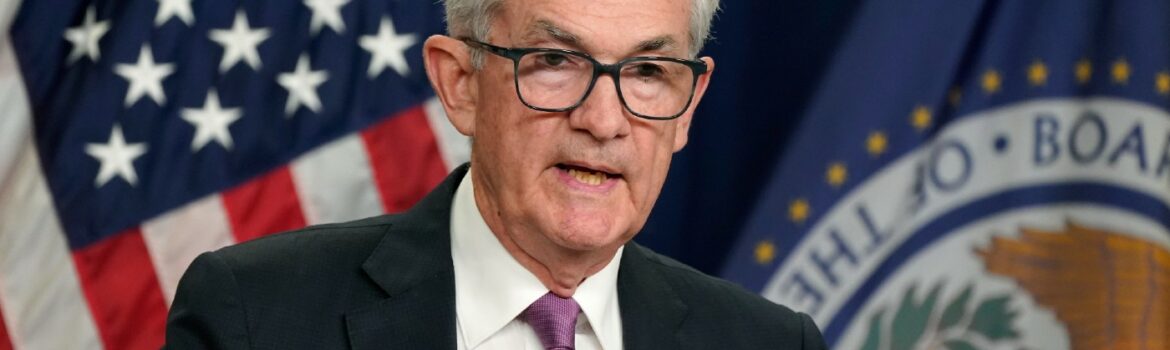
If Democratic deal-reveals in the Senate prompted some gasps and head-shaking, the uncertainties of monetary policy described by Federal Reserve Chairman Jerome Powell on Wednesdayunderscored how squishy the future looks to officials in charge of problem-solving, whether economic or political.
Powell said projections are based on shifting data.
“I do not think the U.S. is currently in recession,” he told reporters after the central bank announced for the fourth time this year that it raised its benchmark interest rate, mirroring its aggressive decision in June to try to tame inflation with another hike of three-quarters of a percentage point (The Hill).
What was clear in Powell’s remarks was the Fed’s belief that while it is the central bank’s “goal” to try to avert a recession, it’s better to be too aggressive with rate hikes than to throttle back too soon and fail to achieve the Fed’s “obligation” to achieve price stability.
“It’s gotten more challenging over recent months,” he noted. “We don’t want this to be bigger than it needs to be.”
The chairman expressed concern for people who are struggling to afford high prices for everyday necessities, including food, gasoline and rent. He said he understood why many say the country is in recession, no matter what yardstick economists use. “We know that inflation is too high, how painful it is,” Powell said.
Although the chairman was not specific about when the Fed might ratchet back on rate hikes, which affect mortgages, other loans and credit cards, he said U.S. consumer demand is easing, which in turn lowers prices, even as inflation remains a global problem.
“We think that demand is moderating. How much is it moderating? We’re not sure,” he added. “We do want to see demand running below potential for a sustained period.”
Part of the central bank’s backstop against recession, at least now, is what Powell called the economic “overhang” of a strong employment picture for jobs and wages, even as he conceded that “labor demand is slowing.” The outlook for jobs is the same upside insurance the president and his economic advisers have leaned on this month while they describe the economy as strong.
The government this morning reports on gross domestic product in the quarter that ended in June and economists estimate a meager expansion (The Wall Street Journal). Friday, it will describe consumer spending in June.
▪ Bloomberg News: Key takeaways from the Fed decision to raise rates 75 basis points.
▪ CNBC: Dow rallied 400 points on Wednesday as Powell hinted the Fed could slow its pace of rate hikes; Nasdaq jumped 4 percent.
▪ The Hill: Five ways the Fed interest rate hike will impact Americans’ wallets.
In a shocking development, Manchin struck a deal with Schumer after more than a year of hemming and hawing in talks over a number of proposals that had been unable to garner his backing.
Headlining the rejuvenated bill is $369 billion in funding for energy and climate programs over the next 10 years — with the goal of reducing emissions by roughly 40 percent by 2030 — and an additional $300 billion to reduce the deficit.
According to a summary released by the two senators, the blueprint would raise $739 billion in new revenue through a variety of proposals: $313 billion via a 15 percent corporate minimum tax, $288 billion from empowering Medicare to negotiate lower drug prices, $124 billion from strong IRS enforcement of tax law and $14 billion from closing the carried interest loophole for money managers.
The newly announced proposals will be tacked on to a bill that includes items that were expected to dominate as part of an even-slimmer package — a multiyear extension of Affordable Care Act subsidies aimed at preventing premium increases that is extended through the end of Biden’s first term and provisions aimed at lowering prescription drugs (The Hill).
According to the two Senate Democrats, the bill will be brought to the floor next week before the upper chamber recesses in August. The breakthrough hands the party a massive and a seemingly improbable victory that very few, if any, had anticipated. Even top Democrats were taken aback by the deal after being burned by Manchin time after time in the past year. Sen. Maria Cantwell (D-Wash.) told The Wall Street Journal that she only learned of the bill while on the way to the chamber to vote on Wednesday evening.
“Holy shit. Stunned, but in a good way,” Sen. Tina Smith (D-Minn.) said.
▪ The Hill: Biden throws support behind Manchin-Schumer agreement.
▪ The Associated Press: What’s in, and out, of Democrats’ inflation-fighting package.
▪ The Hill: Schumer, Manchin agree on billions of dollars for electric vehicles, solar panels and other clean-energy priorities.
For context, the $670 billion is only a fraction of the previous proposals Democrats backed since last summer.
The party’s budget resolution a year ago checked in at $3.5 trillion. That figure was ultimately chopped down to the $1.75 trillion “Build Back Better” framework agreed to by Senate Democratic leaders and the White House but was ultimately blown to smithereens by Manchin in December, scuttling reconciliation discussions for months.
The timing of Manchin and Schumer’s announcement also raised eyebrows. Only hours before, 17 Republicans joined Democrats to pass a $280 billion bill aimed at boosting domestic semiconductor chip production (The Hill). Senate Minority Leader Mitch McConnell (R-Ky.) had promised in late June to torpedo any bill aimed at doing just that if Democrats moved ahead with a reconciliation bill.
The CHIPS bill is expected to pass the House without issue today, though House Republican leaders reversed their prior decision and were whipping against the bill as of late Wednesday. Rep. Kevin Brady (Texas), the top Republican on the House Ways and Means Committee, called Democrats “deceitful” with a reconciliation announcement after the CHIPS bill passed.
“Senate Democrats can change the name of Build Back Broke as many times as they want, it won’t be any less devastating to American families and small businesses,” tweeted Sen. John Cornyn (R-Texas), a top McConnell ally. “Raising taxes on job creators, crushing energy producers with new regulations, and stifling innovators looking for new cures will only make this recession worse, not better.”
Senate Republicans retaliated hours later on Wednesday by blocking a procedural vote on a $278 billion bill to help veterans suffering from toxic chemical exposure, 55-42, that needed 60 votes to advance.
There are outstanding questions, however, headlined by what Sen. Kyrsten Sinema (D-Ariz.) will do. A spokeswoman declined to comment on the deal (Bloomberg News).
▪ The Hill: Climate activists optimistic about Manchin-Schumer deal.
▪ Morgan Chalfant, The Hill: Semiconductor bill marks a White House win, but impacts remain to be seen.
On the international front, Speaker Nancy Pelosi (D-Calif.) is moving ahead with a planned visit to Taiwan next month and invited congressional leaders to join her.
Rep. Michael McCaul (Texas), the top Republican on the House Foreign Affairs Committee, confirmed on Wednesday that he, along with panel Chairman Gregory Meeks (D-N.Y.), were invited on the working trip. However, the Texas Republican had to decline, citing a previous engagement.
Pelosi’s office has yet to confirm the travel plans. The trip to Taipei is expected at some point over the August recess, which starts on Friday for the House (The Hill). According to Bloomberg News, other stops on the agenda include Japan, Indonesia and Singapore.
The news also comes on the eve of Biden’s planned call today with Chinese President Xi Jinping (Bloomberg News). The White House said the discussion would focus on areas of possible cooperation between the two countries, though issues of contention, including Taiwan, economic disputes and the ongoing war in Ukraine, are expected to come up (CNBC).
The Wisconsin Senate race took a turn on Wednesday as Alex Lasry, an executive with the NBA’s Milwaukee Bucks, dropped out ahead of the Aug. 9 primary, clearing the way for Lt. Gov. Mandela Barnes (D) to take on Sen. Ron Johnson (R-Wis.) in November.
Lasry immediately endorsed Barnes upon exiting the race, as the lieutenant governor has cemented himself as the front-runner for the nomination. Only days earlier, Outagamie County Executive Tom Nelson suspended his own Senate bid and also endorsed Barnes.
As The Hill’s Max Greenwood notes, Barnes still faces some primary opposition, including from state Treasurer Sarah Godlewski. However, recent polling showed her trailing the sitting lieutenant governor by double digits prior to race departures by Lasry and Nelson.
▪ Politico: Herschel Walker’s fumbles highlight GOP’s rocky Senate roster.
▪ Reuters: Former Republicans and Democrats to form a third party. It has been tried before.
On the 2024 scene, governors are finally getting some shine as possible contenders on both sides of the aisle if Biden doesn’t run and on the GOP side if they seek an option outside of former President Trump.
For the current party in power, California Gov. Gavin Newsom (D) and Illinois Gov. J.B. Pritzker (D) have made a number of appearances outside their home states that have garnered some attention nationally. For Newsom, he has raised eyebrows by releasing ads attacking some of his Republican gubernatorial counterparts.
Across the aisle, Virginia Gov. Glenn Youngkin has also fueled White House chatter over the last several weeks, putting him alongside Florida Gov. Ron DeSantis as a potential successor to the former president. Youngkin has repeatedly deflected that discussion, maintaining that he is focused on his work in the commonwealth.
As The Hill’s Julia Manchester writes, the new focus on governors — which comes after a cycle where governors were roundly dismissed on the Democratic side — comes as polls show voters are frustrated with the direction of both parties. Significant numbers of Democrats and Republicans want someone other than Biden or Trump to be their party’s standard-bearer come 2024.
▪ Amie Parnes, The Hill: Biden allies say enthusiasm gap fueled by lack of engagement, “personal touch.”
The U.S. offered a deal to Russia on Wednesday aimed at bringing home WNBA star Brittney Griner and another jailed American, Paul Whelan, Secretary of State Antony Blinken announced. Russia has been silent on the proposal as of this morning, The Washington Post reports.
Blinken wants to speak with his Kremlin counterpart, Sergey Lavrov, for the first time in months in hopes of expediting an answer from Russia. Specifically, the United States is proposing a prisoner swap of a convicted and imprisoned Russian arms dealer for release of Griner and Whelan (CNN and Axios).
Griner, who has been in detention near Moscow since February on charges of drug possession, testified for the first time on Wednesday during her ongoing trial, saying her rights have been denied. She previously pleaded guilty to possessing vape cartridges containing cannabis oil, found in her luggage (Yahoo).
Housing: The Treasury Department announced a plan Wednesday to make more money available for affordable housing loans as part of the American Rescue Plan fiscal stimulus package. The initiative complements multiple proposals from lawmakers on Capitol Hill to boost the supply of lower and middle-class housing across the country (Reuters). … The Justice Department said in Philadelphia on Wednesday that a mortgage company owned by Warren Buffett’s Berkshire Hathaway discriminated against minority homebuyers in Pennsylvania, New Jersey and Delaware. The Trident Mortgage Company agreed to pay $20 million to settle the case (The New York Times).
■ Do you think the Fed hasn’t done enough? Think again, by Nir Kaissar, columnist, Bloomberg Opinion. https://bloom.bg/3PLf6XR
■ Charles Barkley: Please don’t leave the NBA for LIV Golf, by Jason Gay, columnist, The Wall Street Journal. https://on.wsj.com/3PGN67O
WHERE AND WHEN
The House will meet at 10 a.m.
TheSenate convenes at 10 a.m. and will resume consideration of the nomination of Constance Milstein to be ambassador to Malta.
The president will receive the President’s Daily Brief at 9:30 p.m. Biden will speak by phone with Xi. The president, accompanied by economic advisers and members of his Cabinet, at 2:15 p.m. will speak about the economy and meet with invited CEOs in the South Court Auditorium in the Eisenhower Executive Office Building near the White House.
The vice president this morning flies to New York City to tour the Bedford Stuyvesant Restoration Corporation Economic Solutions Center at 1:30 p.m. Harris will speak at Billie Holiday Theatre in Brooklyn at 3:25 p.m. about administration policies that benefit underserved communities. The vice president flies from New York City to Water Mill, N.Y., to speak at a Democratic fundraiser at a private residence at 6:50 p.m. Harris returns to Washington tonight.
Treasury Secretary Janet Yellen will hold a press conference at 1:30 p.m. to discuss the economy.
Economic indicators: The Commerce Department at 8:30 a.m. will report the gross domestic product for the second quarter. … The Labor Department at 8:30 a.m. will report on filings for unemployment claims in the week ending July 23.
The White House daily briefing is scheduled at 3:15 p.m.
⚾ The Congressional Baseball Game will be played at 7 p.m., covered by C-SPAN.
Russian forces on Thursday launched missile strikes on Ukraine’s Kyiv and Chernihiv regions, areas that haven’t been targeted in weeks, while Ukrainian officials announced an operation to liberate an occupied region in the country’s south. Kyiv regional governor Oleksiy Kuleba said on Telegram that a settlement in the Vyshgorod district of the region was targeted early on Thursday morning; an “infrastructure object” was hit. It wasn’t immediately clear if there were any casualties (The Associated Press).
Reuters reports today that the Ukrainian counter-offensive has virtually cut off the Russian-occupied southern city of Kherson and left thousands of Russian troops stationed near the Dnipro River “highly vulnerable,” according to British defense and intelligence officials.
U.S. precision rocket launchers have enabled Ukraine to pummel a key supply bridge used by Russia to bolster its forces in southern Ukraine’s occupied Kherson region (The Associated Press).
Reuters: Russia captures power station, redeploys troops to southern Ukraine.
Russia has amended its planned exodus from the International Space Station to 2028, saying it will remain at least until the country’s own outpost in orbit is completed (Reuters).
Today, French President Emmanuel Macron will meet in Paris with Saudi Crown Prince Mohammed bin Salman amid an energy crisis affecting most of Europe (Politico).
➤ PANDEMIC, POX & HEALTH
Biden tested negative for COVID-19 in two consecutive screenings and on Wednesday returned to socially distanced work during an event in the Rose Garden. His doctor issued a letter about his recovery, noting the president’s brief bout with the coronavirus was aided by antiviral treatment Paxlovid. Biden tweeted a photo of a negative Binax antigen result (The Hill).
The Hill: The House on Wednesday passed a bill that would expand COVID-era telehealth services.
NBC News: A fifth person worldwide is likely cured of HIV, and another is in long-term remission. In one case, a stem-cell transplant was used to cure blood cancer and appeared to cure a patient’s HIV. In another case, an immune-boosting regimen produced long-term remission in a woman with HIV.
Monkeypox outbreaks continue to concern public health specialists in multiple countries. The World Health Organization recommended that men who have sex with men reduce their number of sexual partners amid the current spread through intimate contact, even if monkeypox is not considered a sexually transmitted disease. … Nearly 800,000 previously announced doses of the monkeypox vaccine known as Jynneos will soon be available for distribution in the U.S. after signoff by the Food and Drug Administration following shipment from Denmark (The Associated Press).
In clinical trials, a vaccine for malaria appears to reduce deaths by 75 percent, according to a research study published in The Lancet (The Hill).
News from the animal kingdom this summer includes headlines about shark attacks, a coyote eating Martha Stewart’s pet peacocks and bison hazards out West, and now from Japan comes news of malevolent macaques. Monkeys from a troop in Yamaguchi are attacking humans, not for food but for flesh, according to The Associated Press. On the hunted list: babies and vulnerable elders. Why are the large monkeys (one killed was 15 pounds) behaving so aggressively? The answer behind 58 human attacks since July 8 is still unknown but apparently is not identified with rabies or other known causes.
And finally … It’s Thursday, which means it’s time for this week’s Morning Report Quiz! Inspired by the coming turn of the calendar, we’re eager for some smart guesses about July in the news.
Email your responses to asimendinger@thehill.com and/or aweaver@thehill.com, and please add “Quiz” to subject lines. Winners who submit correct answers will enjoy some richly deserved newsletter fame on Friday.
Where did Biden not visit during the course of July?
1. Israel
2. Spain
3. Saudi Arabia
4. Palestine
As of Wednesday, what is the highest-grossing film in the U.S. since the start of July?
1. “Top Gun: Maverick”
2. “Thor: Love and Thunder”
3. “Elvis”
4. “Minions: The Rise of Gru”
British Prime Minister Boris Johnson announced on July 7 that he will resign his post when a successor is elected. If all goes according to plan and Johnson resigns on Sept. 5 (when results are expected), which of the following conservative prime ministers will have had the longest tenure?
1. Boris Johnson
2. Theresa May
3. David Cameron
4. John Major
The 2022 Baseball Hall of Fame induction ceremony took place on Sunday. Who was not part of this year’s induction class?
Vice President Harris and California Gov. Gavin Newsom (D) are Democrats’ top two choices to run for president if President Biden chooses not to seek a second term in 2024, according to a new poll.
A NewsNation/Decision Desk HQ poll released on Thursday found that 31 percent of Democrats surveyed would most prefer Harris as the 2024 Democratic presidential nominee if Biden doesn’t run, followed by 17 percent who chose Newsom.
Sen. Bernie Sanders (I-Vt.), who caucuses with Democrats and was Biden’s closest competitor for the nomination in 2020, received 13 percent support followed by Transportation Secretary Pete Buttigieg, who had a surprisingly strong showing in the 2020 race, at 10 percent.
Rep. Alexandria Ocasio-Cortez (D-N.Y.), Michigan Gov. Gretchen Whitmer (D) and Illinois Gov. J.B. Pritzker (D) each received less than 10 percent.
The poll found 30 percent of Democrats and 61 percent of respondents overall did not want Biden to run for another term.
While Biden and White House officials have repeatedly said he plans to run in 2024, the NewsNation/Decision Desk HQ poll is not the first to show a sizable portion of Americans, including Democrats, are not enthusiastic about the president running again.
A New York Times/Siena College poll released earlier this month found 64 percent of Democrats would prefer someone other than Biden in 2024.
Thursday’s poll was another sign of voter dissatisfaction with Biden, with 57 percent of respondents saying they disapproved of his performance and 43 percent saying they approved.
The issue of inflation also continues to be top of mind for Americans, with about 94 percent people polled saying they are somewhat or very concerned about inflation.
That polling complicates an already challenging environment for Democrats who face several headwinds in November, including low Biden approval ratings, key issues like inflation and general precedent that the president’s party usually suffers some losses in the midterms.
The NewsNation/Decision Desk HQ poll was conducted between July 22 and July 24 and surveyed about 1,000 registered voters, though the exact number of respondents varied by question. The margin of error also varied by question but is around plus or minus three points overall.
The Treasury Department is making moves to address the shortage of affordable housing across the U.S. — an issue that has only been exacerbated by pandemic complications, rising interest and soaring inflation. Treasury announced Wednesday that it’s making more money available for affordable housing loans as part of the nearly $2 trillion American Rescue Plan (ARP) fiscal stimulus package passed in 2021.
The department’s new guidance allows state and local governments to use ARP funding to “finance long-term affordable housing loans, including the principal of any such loans, subject to certain conditions. These changes will facilitate significant additional financing for affordable housing projects, including those that would be eligible for additional assistance under Treasury’s Low Income Housing Credit.”
Treasury’s rule changes also expand the range of federal programs that can use the funding, “permitting more options for how states and local governments can presumptively use funds for affordable housing.”
“Treasury continues to strongly encourage state and local governments to dedicate a portion of the historic funding available through President Biden’s American Rescue Plan toward building and rehabilitating affordable housing in their communities and the actions being announced today will make it even easier for them to do so,” Deputy Treasury Secretary Wally Adeyemo said in a Wednesday statement.
The latest initiatives come after affordable housing inventory was walloped by a dip in construction activity during the height of the pandemic and rising interest rates in response to inflation. These factors have led to a red-hot housing market that’s taking a greater cut of Americans’ paychecks and forcing people to live farther away from where they work.
According to government lender Freddie Mac, the standard 30-year fixed-rate mortgage stands at 5.54 percent — double what it was a year ago. The 15-year fixed-rate mortgage is now 4.75 percent, and the standard adjustable-rate mortgage is now 4.3 percent for the first five years.
But whether states, counties and municipalities heed the Treasury Department’s call to build cheaper houses is another matter.
Efforts to build more affordable housing are often thwarted by local zoning laws and building restrictions that are designed to make property values high and keep low-income owners away from wealthy neighborhoods.
This phenomenon is known as “NIMBYism,” a modern term derived from an acronym that stands for “not in my backyard.”
Sen. Tim Kaine (D-Va.) told The Hill he’s encountered NIMBYism in drafting some of his housing legislation but that the reason a big housing package hasn’t been passed recently has more to do with the dynamics of the Senate and particularly the resistance of centrist Sen. Joe Manchin (D-W.Va.) to big-budget spending bills.
“There is that aspect,” Kaine said, referring to local opposition to low-income housing. “We hear it, but we also hear employers and local officials saying we need more, we need more housing that our workforce can afford. So yeah, there’s occasional NIMBYism, but that’s not what’s keeping housing plans out of the reconciliation. It’s more, you know, Manchin’s concern about the overall size.”
Developers and construction companies are also often discouraged by market forces from putting up lower-income housing because the profit margins on higher-end homes are usually bigger than the margins on more modest units.
The low-income housing tax credit program is designed to overcome those forces by making up for those lost profits, and there are several legislative packages under discussion to increase their scope.
“I’m a big fan of the program. You see [Sen.] Maria Cantwell, she and I have sponsored for years an effort to expand that program, because it is very focused in allowing states full flexibility to expand the stock of low- and moderate-income housing,” Kaine said.
“One challenge right now is inadequate supply, so programs that expand the stock are very, very helpful. [The low-income housing tax credit] is a good program, and so I’ve certainly been a supporter of trying to make that more robust. It was our hope that we might have been able to do some of that in a reconciliation bill that’s not to be. But that doesn’t mean we will give up on looking for other ways to make that happen,” he added.
Senate Finance Committee ranking member Mike Crapo (R-Idaho) said in an interview that he also supports the credit.
“Particularly on the low-income housing tax credit, I’m a strong supporter of it,” Crapo said. “I’m not going to weigh in on any proposals to adjust or change it yet except to say that we do need to strengthen our access to low-income housing in the United States, and it’s a very important issue.”
“There have been some efforts to try to put it into the China bill, which is not happening at this point in time. There have been some efforts to try to find other avenues to put some provisions in,” he said.
Sen. Mike Rounds (R-S.D.) said he expects the tug of war between federal and state governments over the issue of affordable housing to continue.
“It’s always going to be an ongoing battle,” Rounds said in an interview. “You’re not going to fix all of those challenges with a tax credit. What you’ve got to be able to do is to get to those zoning boards and say, ‘You need the housing, and if you want to have development in your area, you’re going to have to recognize that everybody’s not going to be able to put up the Taj Mahals that everybody would like to see in their developments.’ ”
Sen. Bernie Sanders (I-Vt.) suggested that governments should skip the private sector and do the building of affordable housing units themselves.
“There is no question but that there is not only a crisis in some 600,000 Americans who are homeless, but some 18 million families who are spending half of their income on housing. We need a massive construction program to build low income and affordable housing. It’s one of the major priorities in this country,” he said on his way to a vote in the Senate on Wednesday.
Bankers said that mortgage rates may have topped out in June and sounded hopeful that hesitant consumers may start buying more houses.
“Mortgage rates may have already peaked and could stay between 5 percent and 5.5 percent through the remainder of 2022,” Mike Fratantoni, of the Mortgage Bankers Association, said in a statement. “If that were to be the case, potential buyers, who had been scared off by the rate spike, might find their way back to the housing market.”
Governors are increasingly being eyed as potential 2024 contenders as Democratic and Republican voters sour on their respective parties’ standard-bearers.
On the Democratic side, California Gov. Gavin Newsom and Illinois Gov. J.B. Pritzker have made recent appearances outside their home states that have drawn the national spotlight. Newsom also raised eyebrows by releasing ads attacking some of his Republican counterparts.
Meanwhile, on the GOP side, Virginia Gov. Glenn Youngkin has also fueled White House chatter over the past several weeks, putting him alongside Florida Gov. Ron DeSantis as a potential successor to former President Trump.
The new focus on governors comes as polls show voters are frustrated with the direction of both parties. Significant numbers of Democrats and Republicans want someone other than President Biden or Trump to be their nominee in 2024.
“Americans are pretty dissatisfied right now,” said Adrian Hemond, a Democratic consultant. “They’re dissatisfied with Congress. They’re dissatisfied with the president. They’re dissatisfied with the economy.”
While polls show Americans unhappy with Biden’s job performance, Trump doesn’t appear to be a particularly appealing option either. A Harvard CAPS-Harris Poll survey released earlier this month found that 71 percent of respondents said they were against a Biden reelection bid, while 61 percent said they were against a Trump reelection campaign.
A New York Times-Siena College poll also released earlier this month found that 64 percent of Democratic respondents said they would prefer a different candidate over Biden in 2024, while 47 percent of Republican primary voters named a different candidate or said “someone else” when asked who they would vote for if the GOP presidential primary were held today. Forty-nine percent named Trump.
A NewsNation-Decision Desk HQ News poll released on Thursday showed Vice President Harris and Newsom topping the list of Democratic alternatives to Biden, while DeSantis topped the list of Republican alternatives to Trump.
The low poll numbers for Biden and Trump have seemingly opened the door for governors to step into the spotlight.
“In states where there are popular governors, it makes sense that people would at least think about, maybe somebody else can do a better job,” Hemond said.
Polling shows many Americans appear to be satisfied with their governors. According to Morning Consult polling conducted between April and the end of June of this year, Youngkin, Newsom and DeSantis hold a 53 percent approval rating among registered voters in their respective states, while Pritzker sat at a 51 percent approval rating. Maryland Gov. Larry Hogan (R), who has teased interest in a run for the White House, clocked in with a 70 percent approval rating.
The newfound interest in governors comes 14 years after the country saw its last governor-turned-president in former Texas Gov. George W. Bush.
“We had a long period where governors were the main presidential candidates,” said Julian Zelizer, a professor of history and public affairs at Princeton University.
“Not a lot has been happening in Washington on some big issues,” he said. “A lot of the action has moved to the states,” he continued, referring to handling of the coronavirus pandemic, gun control and reproductive rights. “The battles are played out in the states now.”
The pandemic has been perhaps one of the biggest battles. In 2020, governors were given a leading role in the fight against the spread of the virus — and it was their response that proved key to determining their popularity.
Former New York Gov. Andrew Cuomo (D) initially received praise for his daily televised coronavirus briefings. But he was forced to resign last year amid sexual misconduct claims and his handling of the state’s nursing homes during the pandemic.
On the west coast, Newsom took a strict approach, with much of California seeing pandemic restrictions in 2020 through 2021. The failed effort to recall Newsom last year was fueled, in part, by opposition to the state’s coronavirus restrictions.
Meanwhile in Florida, DeSantis notably took a more laid-back approach to the pandemic, leaving localities, for the most part, to decide how they wanted to handle it. The governor’s supporters say his relaxed restrictions ultimately saved and boosted the Sunshine State’s economy, though Democrats have largely criticized his approach.
Republicans argue that it was the pandemic restrictions that led to the red wave seen in Virginia’s gubernatorial election last year, which propelled Youngkin, a businessman with no prior political experience, into the governor’s mansion.
“He was the first Republican to run for governor after the pandemic,” said Kristin Davison, a political adviser to Youngkin. “I remember when the campaign launched where Virginia was – schools were closed, living rooms were classrooms and last January the big rallying cry was ‘Get our kids back in school five days a week.’ ”
While Youngkin campaigned on resuming in-person schooling, he also zeroed in on a number of cultural issues.
“Not only was he able to run on and promote policies to overcome the pandemic, but also fix the problems that we had because of it,” Davison said. “Gov. Youngkin is really one of the first Republicans to run on education and win.”
Youngkin specifically focused on the issue of not allowing critical race theory and certain material dealing with gender and sexuality to be taught in classrooms. Other potential 2024 contenders, including DeSantis and South Dakota Gov. Kristi Noem (R), have also put an emphasis on cultural issues pertaining to education. In April, Noem signed an executive order restricting the teaching of critical race theory in South Dakota. Earlier this month, DeSantis signed the Parental Rights in Education bill, known to its critics as the “Don’t Say Gay” bill, into law. The legislation restricts instruction related to sexual orientation or gender identity in primary schools.
But it’s not only Republicans going on the offensive. Newsom made headlines this month when he ran ads attacking DeSantis and Texas Gov. Greg Abbott (R) in their own states.
Pritzker, who is up for reelection later this year, has been testing his own political strength in Illinois. He has made headlines for backing a challenger to lead Illinois’s Democratic Party, putting him directly at odds with other Democrats in the state.
Michigan Gov. Gretchen Whitmer (D), also up for reelection, has also made national news, positioning herself as the last line of defense against the anti-abortion movement in her state. Months before the Supreme Court overturned Roe v. Wade, Whitmer announced she was requesting that the state’s Supreme Court make a decision on the constitutionality of abortion.
In theory, some Republicans and Democrats agree that governors could ultimately make better presidents because of the executive experience that comes with the job.
“They’re both executive roles,” Davison said. “Governors really have the ability to impact people’s lives so directly on a daily basis.”
But whether they can defeat Biden and Trump, should the pair once more run for the White House, remains to be seen.
New economic data is due Thursday, and it may show negative gross domestic product (GDP) growth for the second consecutive quarter.
Two such quarters are usually seen as indicating a recession. But President Biden and other senior figures, including Treasury Secretary Janet Yellen, are arguing that the current situation is different for several reasons, prime among them the strong job market.
Biden has every reason to avoid having the word “recession” pinned on a first term that has already been marred by elevated gas prices and the highest inflation in decades.
On Wednesday, the Federal Reserve sought to combat inflation by raising its benchmark interest rate by three-quarters of a percentage point.
Fed Chairman Jerome Powell said that he did not think the United States is “currently in a recession.”
Biden will be desperately hoping he’s right.
Here are five presidents who tried to navigate stormy economic seas — with very different results.
The Losers
President Hoover: The Great Depression
Almost a century on, President Hoover remains the textbook example of what not to do in dreadful economic times.
The factors leading to the Great Depression had been building before the 1929 Wall Street crash, which took place less than eight months after Hoover’s inauguration. But the stock market’s collapse — the Dow Jones Industrial Average lost almost one-quarter of its value in two days — ignited a terrifying financial blaze.
Hoover, a Republican, held fast to his belief that the government shouldn’t meddle much in the economy — a belief that history has come to judge as one of the worst political mistakes of the 20th century.
By early 1932, the year when Hoover would seek reelection, unemployment had soared to more than 20 percent.
Come Election Day, Hoover got thrashed by Democrat Franklin Roosevelt, whose promise of a “New Deal” propelled him to an 18-point victory in the popular vote.
Roosevelt would serve as president until his death in 1945, fundamentally reordering American politics.
Hoover’s reputation has never recovered.
President Carter: Inflation and malaise
President Carter’s example is one that has stalked Democratic presidents ever since.
Carter intended to restore decency and humility to the White House after the Watergate scandal. In the end, he came to be seen as timorous and ineffective.
The 1979 energy crisis blew the first big hole in Carter’s reelection hopes. Inflation climbed into the double digits even as economic growth fell away.
Inflation was running above 13 percent in 1979. That same year, Carter delivered what has come to be known as the “malaise” speech. The president never actually used that word, but he did diagnose the United States as suffering from a crisis of confidence “that strikes at the very heart and soul of our national will.”
That wasn’t what American voters, used to expressions of undying optimism, wanted to hear.
Historical debate still rages as to whether Carter’s downfall was chiefly due to bad luck or bad policy.
Whichever is the case, he was ousted from office after just one term by Ronald Reagan.
President George H.W. Bush: Iraq, recession and a lost reelection
Foreign affairs triumphs can be fleeting — especially if they clash with a downturn at home.
That’s at least one of the key lessons from the elder President Bush’s single term in office.
Bush, who had won the Oval Office in 1988 after eight years as vice president in the Reagan administration, seemed politically invincible at the conclusion of the first Gulf War in 1991.
American troops speedily drove Saddam Hussein’s Iraqi forces out of Kuwait in that conflict. And Bush was rewarded with sky-high approval numbers. He registered an 89 percent approval rating in a March 1991 Gallup poll.
It couldn’t get much better. And it didn’t.
While Bush was astride the world stage, economic growth was sputtering badly.
Unemployment duly edged up as well, from roughly 5 percent when Bush took office to more than 7 percent in 1992.
Bush’s defenders emphasize that the nation had come out of recession by 1992, and the economy was in fact growing at a fairly robust rate by the time Election Day rolled around.
But public perception — of tough economic times and an unresponsive president — had crystallized.
Bush lost his reelection fight to Bill Clinton.
The Winners
President Reagan: The dark hours before ‘Morning in America’
President Reagan is revered, especially by Republicans, as the president who restored American pride after the malaise of the Carter years.
But early in his first term, that looked far from a sure bet.
The nation was struggling when Reagan took office. Over at the Federal Reserve, Chairman Paul Volcker had decided that inflation had to be crushed, no matter the pain involved.
Interest rates moved above 16 percent in 1981.
Those moves contributed to a steep recession, with the national unemployment rate moving above 10 percent in late 1982. Democrats grew their sizable House majority by another 26 seats in that year’s midterm elections.
Yet over time, the harsh medicine began to work. The U.S. economy was booming by late 1983 and early 1984, posting huge GDP gains of between 7 and 8 percent on an annualized basis.
A famous Reagan ad in his 1984 reelection campaign heralded “Morning in America.” He won a second term in an enormous landslide, his Democratic opponent Walter Mondale carrying only his native Minnesota and the District of Columbia.
President Obama: Taming the Great Recession
The nation’s first Black president took office with the nation’s economy on the brink of catastrophe.
In January 2009, the month of President Obama’s inauguration, the United States lost almost 600,000 jobs. Unemployment continued to climb for most of the rest of the year, eventually peaking at 10 percent in October 2009.
Progress, at least on the jobs question, proved painfully slow. The unemployment rate would not fall below 9 percent for another two years — by which point Democrats had lost control of the House in 2010’s midterm elections.
Crucially — both for the country and for his own political fortunes — Obama reintroduced some stability into the economy.
An $800 billion economic stimulus bill passed at his behest in February 2009. The Dodd-Frank Act, bringing significant reforms to the financial system, came the following year.
Obama also supported and administered the bailout of the auto industry that had been initiated by his predecessor, President George W. Bush. The bailout, controversial at the time, came to be viewed as a big success.
After a daring mission to kill al Qaeda founder Osama bin Laden was successful in 2011, then-Vice President Joe Biden coined a phrase — “Bin Laden is dead and General Motors is alive” — that became one of the most potent soundbites advocating for Obama’s reelection.
In November 2012, Obama beat GOP nominee Mitt Romney by 4 percentage points in the popular vote.
In doing so, he became the first Democrat since Roosevelt to twice win an outright, popular-vote majority.
Former President Trump while in office could usually turn to Fox News for comfort. There were differences from time to time, and Trump made headlines occasionally by going after personalities on Fox — most famously Megyn Kelly during a 2015 GOP presidential primary debate.
But for the most part, Trump, a rabid cable news follower, could tune in to find Fox News star hosts heaping praise on him and his administration while lambasting his critics and political enemies.
Trump still has his supporters on the network, but the dynamic between a former president openly flirting with another run for the White House and Rupert Murdoch’s top media asset is definitely changing.
For one thing, Fox is more focused on President Biden, a subject of relentless prime-time attacks, than Trump, and the network didn’t air Trump’s speech this week in Washington, D.C., even as it did air a portion of an earlier address Tuesday by former Vice President Mike Pence.
“Trump’s superpower is getting all the coverage. That’s not happening anymore. Fox is not covering him 24 hours a day,” said Daniel Cassino, a media expert who wrote a 2016 book about the network’s influence over American politics. “So it seems that is leading to frustration that he’s not dominating Fox the way he did before.”
That tension boiled over this week, when Trump lashed out at Fox and its flagship morning program, “Fox & Friends,” after two of the show’s longtime co-hosts threw cold water on polling suggesting young voters felt Trump was the best choice for Republicans looking to win back the White House.
Other Murdoch-owned media properties have separately fired off editorials critical of Trump in the wake of damaging revelations from the House panel investigating the Jan. 6, 2021, attack on the Capitol.
“Character is revealed in a crisis, and Mr. Pence passed his Jan. 6 trial,” The Wall Street Journal’s editorial board wrote last week. “Mr. Trump utterly failed his.”
“Mr. Trump took an oath to defend the Constitution, and he had a duty as Commander in Chief to protect the Capitol from a mob attacking it in his name. He refused,” the board declared.
The New York Post, also owned by Murdoch, ripped Trump in a separate editorial.
“It’s up to the Justice Department to decide if this is a crime. But as a matter of principle, as a matter of character, Trump has proven himself unworthy to be this country’s chief executive again,” it wrote. “His only focus was to find any means — damn the consequences — to block the peaceful transfer of power. There is no other explanation, just as there is no defense, for his refusal to stop the violence.”
Trump in a statement on Tuesday complained that Fox, the Journal and the Post “have always been against me, until I won.”
News Corp., which owns and operates the three outlets, declined to comment on Trump’s recent attacks.
A representative for Trump did not return a request for comment on suggestions that he has fallen out of favor with Murdoch.
Spats between Trump and Murdoch’s conservative media empire are not unheard of.
The former president was infuriated by the outlet’s decision to call Arizona for Biden on election night and famously sparred with one of its former top anchors, Chris Wallace, before the election on a number of occasions.
Several of Fox’s top personalities were also critical of Trump following the 2020 election.
The recent ascension of Florida Gov. Ron DeSantis to the national spotlight has given Murdoch’s news outlets a new face to put forth for its millions of viewers and readers as a potential successor to Trump as the leader of the Republican Party and conservative movement.
British pundit Piers Morgan, whom Murdoch recently hired to host a show on United Kingdom-based TalkTV, penned an op-ed in the Post earlier this summer explicitly urging conservative voters in the U.S. to “dump Trump” and throw their support behind DeSantis.
“I think that Trump is quite frankly a dead weight for Fox and Murdoch,” said A.J. Bauer, a professor at the University of Alabama who researches and analyzes trends in conservative media. “He did a lot of very helpful work for them, he boosted them for four, five, six years, but they’re not loyal in the way that he expects and the way he needs in order for his political winds to shift.”
Some say that if Trump wins the GOP presidential nomination again, Murdoch and the former president could put their public feuding aside, as they have in previous years.
“If Trump runs for president in 2024 and buries the field, there will be plenty of time for Murdoch to do what he traditionally does: Place his bet on the leading pony,” Jack Shafer, the longtime media writer, said in a column reacting to the editorials from the Journal and the Post this week. “Like a pair of powerful gangsters who quarrel over how to divide the spoils, Murdoch and Trump will reconcile if they determine it’s in their mutual interests to reconcile.”
Trump also still gets plenty of coverage on prime-time Fox that he likes.
Host Laura Ingraham on Tuesday night reacted to news of the Justice Department including Trump in its ongoing investigations into Jan. 6 by calling it “a political vendetta to prevent someone from running for office and succeeding and winning the presidency again to millions and millions of Americans.”
Fellow prime-time host Sean Hannity, a longtime personal friend of Trump, has routinely denounced the Jan. 6 panel as a “witch hunt” lacking merit.