Missouri Attorney General Eric Schmitt is leading the state’s Republican Senate primary field and outpacing controversial former Gov. Eric Greitens by double digits, according to an Emerson College Polling/The Hill survey released on Tuesday.
Thirty-three percent of very likely Republican primary voters in Missouri said they planned on voting for Schmitt in the party’s primary, while 21 percent said they would vote for Rep. Vicky Hartzler (R-Mo.). Sixteen percent said they would vote for Greitens.
Rep. Billy Long (R-Mo.) garnered five percent in the poll, while Mark McCloskey and Dave Schatz trailed at four percent and two percent, respectively. Seventeen percent of very likely GOP primary voters remain undecided.
The poll’s margin of error is plus or minus three percentage points.
Republicans in Washington, D.C., and Missouri have expressed trepidation over the thought of a Greitens candidacy.
The former governor has been embroiled in scandal over the past year and has faced bipartisan backlash. Last month Greitens rolled out a new video where he is shown holding a shotgun and urging his supporters to go “RINO hunting.”
Greitens has also been accused of abuse by his ex-wife Sheena Greitens, who said he grew physically violent with her and her children. He was forced to resign from his governor’s post in 2018 after allegations of campaign finance violations and sexual assault of a woman he was dating surfaced.
Retiring Sen. Roy Blunt (R-Mo.), whom Greitens is running to succeed in the Senate, has said that the former governor should drop out. Sen. Josh Hawley (R-Mo.), who has endorsed Hartzler, also called for Greitens to exit the race. Sen. Rick Scott (R-Fla.), who chairs the National Republican Senatorial Committee, did not call on Greitens to drop out but called the allegations “pretty disturbing.”
The non-partisan Cook Political Report rates Missouri’s Senate race as “solid Republican.”
On the Democratic side of the aisle, the Emerson College Polling/The Hill survey showed what has basically become a two-way race between Anheuser-Busch beer heiress Trudy Busch Valentine and Marine veteran Lucas Kunce. Valentine leads with 39 percent of Democratic primary voters, while Kunce follows at 36 percent support.
The Emerson College Polling/The Hill survey was conducted July 21-23 using a combination of IVR and SMS-to-web, and each have a sample size of 1,000 which has a margin of error of plus or minus three percentage points.
To paraphrase The Rolling Stones, time is not on the side of Senate Democrats as their lengthy pre-August agenda outweighs the dwindling time remaining before senators break for recess and COVID-19 continues to toss a wrench in proceedings.
The upper chamber has only nine legislative days left on the calendar before recess kicks off, forcing leaders to prioritize a number of items and leave others on the shelf until after Labor Day. Topping the to-do list this week is passing the long-delayed $280 billion bill to boost funding of the domestic production of computer chips, also known as the CHIPS Act.
However, Mother Nature decided not to cooperate. Senate Majority Leader Charles Schumer (D-N.Y.) was forced to postpone Monday’s vote to end debate on the CHIPS legislation after a number of lawmakers had their flights to Washington delayed or canceled, pushing the tally until today. That means final passage on the bill will not take place until Wednesday, further compressing the schedule (The Hill).
The bill in question would give $52 billion to the domestic semiconductor industry and $81 billion to the National Science Foundation. The House is expected to pass it shortly after, and President Biden will sign it into law.
The president, who is still recovering from a COVID-19 infection, huddled virtually with CEOs and labor leaders on Monday to promote the package.
“Congress must pass this bill as soon as possible,” Biden said.“There is an economic imperative. … This bill is going to supercharge efforts to make semiconductors”(Reuters).
As The Hill’s Alexander Bolton notes, lawmakers later this week are also expected to consider one of two items: a resolution welcoming Sweden and Finland into NATO or a House-passed bill codifying same-sex marriage.
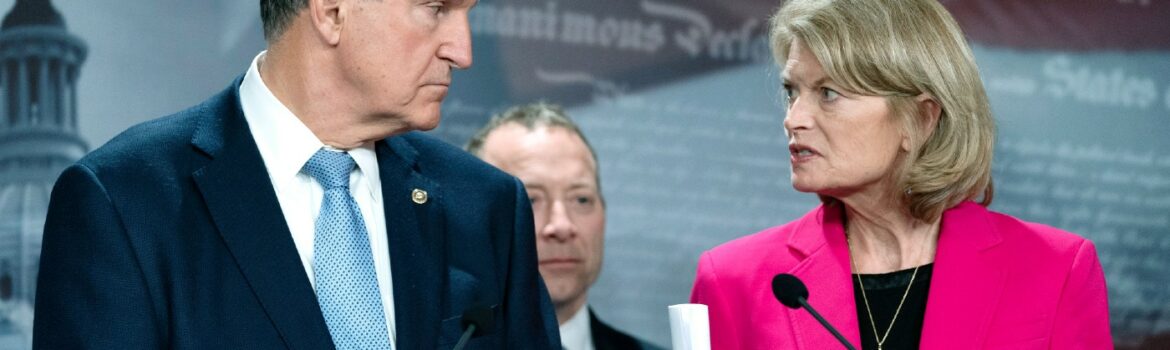
The complications facing the Senate were also on full display as two more senators — Joe Manchin (D-W.Va.) and Lisa Murkowski (R-Alaska) — tested positive for COVID-19, bringing the total number of those infected in the upper chamber to three (The Hill). Sen. Tom Carper (D-Del.) announced last week that he contracted the coronavirus, while Sen. Tina Smith (D-Minn.) has reportedly ended her quarantine, according to Punchbowl News.
The temporary loss of those Democrats — as well as Sen. Patrick Leahy (D-Vt.), who is recovering from hip replacement surgery — puts the party in a bind as it pushes to pass a scaled-down budget reconciliation bill by the end of next week. The package, which will require only a simple majority of members, is aimed at lowering the cost of prescription drugs and would greenlight a two-year extension of Affordable Care Act subsidies to keep premiums from increasing.
Many Democrats and progressives had hoped the bill would include climate-related provisions, but Manchin’s opposition kept them out of a final blueprint.
▪ NBC News: Congress sprints to address drug pricing, same-sex marriage and more before recess.
▪ New York magazine: COVID-19 outbreak hits Senate at worst possible time.
Looking ahead to September, Democrats will also be tasked with passing the National Defense Authorization Act, an annual must-pass bill, and a government funding resolution.
As The Hill’s Aris Folley writes, Senate Democrats are expected to unveil their government spending package in the coming days with the goal of keeping the lights on for fiscal 2023 and avoiding a shutdown. Negotiators are already playing down chances of passage for the chamber’s annual appropriations bills before a September deadline to avoid a shutdown.
▪ The New York Times: The administration is quietly trying to dissuade Speaker Nancy Pelosi (D-Calif.) from making her planned trip to Taiwan in August, wary of China provocation.
▪ The Hill: Senate panel turns to kids’ online safety.
LEADING THE DAY
➤ ADMINISTRATION
Five days after testing positive for COVID-19, the president on Monday corroborated a statement from his doctor saying his mild symptoms are rapidly ebbing while he’s working in isolation during a regimen that included antiviral Paxlovid pills and basic medications many patients would take for colds and flu (The Associated Press).
“I think I’m on my way to total recovery,” the president told reporters. He said he hopes to return to his office with staff members by the end of the week and still plans to talk with Chinese President Xi Jinping by the end of July (The Hill).
On Monday, Biden participated in two virtual events, one promoting pending legislation to manufacture semiconductor chips in the U.S., and another in which he accused GOP officials he identified as not being pro-law-enforcement because they oppose banning assault weapons (The Hill).
The president also tweeted a photo of himself working the phone from the Truman Balcony accompanied by his German shepherd, Commander (“man’s best co-worker”), panting in the shade on an outdoor sofa.
E&E News and The Hill: The White House promises more climate action this week focused on preparing for wildfires and extreme heat. … And the Agriculture Department on Monday pledged to plant 1 billion trees as part of a reforestation project (The Hill).
The Justice Department on Monday sued some of the largest U.S. poultry producers together with a proposed settlement seeking to end what it claims have been deceptive and abusive practices for workers. The suit, filed in federal court in Maryland, names Cargill, Sanderson Farms and Wayne Farms along with a data consulting company known as Webber, Meng, Sahl and Co. and its president. In its lawsuit, the government alleges the companies have been engaged in a multiyear conspiracy to exchange information about the wages and benefits of workers at poultry processing plants to drive down employee competition in the marketplace (The Associated Press).
The Department of Health and Human Services on Monday announced a proposed rule to strengthen transgender rights under the Affordable Care Act, which prohibits discrimination on the basis of race, color, national origin, sex, age and disability in certain health programs and activities. The law’s ban on sex discrimination includes sexual orientation and gender identity, according to the administration, and the proposed rulemaking would solidify protections consistent with the Supreme Court’s 2020 ruling that Title VII of the Civil Rights Act of 1964 protects employees against discrimination because they are gay or transgender (The Hill).
The Commerce Department on Thursday will release a closely watched report on U.S. gross domestic product, which is expected by many to indicate slower economic growth between April and July, the second consecutive quarter of contraction. The report will fuel new debate about whether the economy is technically already in recession, an assessment Biden and Democrats want to rebut using other, more favorable economic data amid a tough midterm election environment. Their reasoning: This year’s period of weak output is not accompanied by rising unemployment, which history would suggest has been a key factor during past recessions (The Hill).
Biden is downplaying various dire projections. For example, economist Nouriel Roubini, while being interviewed on Bloomberg TV on Monday about ideas he expressed this summer in a MarketWatch column, called “delusional” predictions that a U.S. recession will be short and shallow, estimating instead “a severe recession and a severe debt and financial crisis.” (News anchors called him “Dr. Doom.”)
Speaking to reporters on Monday, the president said the unemployment rate “is still one of the lowest we’ve had in history. … I don’t think we’re going to — God willing, I don’t think we’re going to see a recession” (The Hill).
The Food and Drug Administration said on Monday that Enjoy Life Natural Brands has issued a wider recall for additional baked goods after an internal investigation uncovered contamination with hard plastic pieces (Nexstar).
TheDepartment of Veterans Affairs could soon provide benefits to hundreds of thousands of veterans exposed to toxins during their military service if Congress approves pending legislation that would expand care to veterans exposed to toxic burn pits in the post-9/11 era and veterans exposed to the toxic herbicide Agent Orange, which was widely used by the U.S. military during the Vietnam war from 1961 to 1971 (The Hill).
Former President Trump scratched out words from a Jan. 7, 2021, address, including a condemnation of rioters who entered the Capitol one day earlier.
An initial draft of the speech as marked up by the former commander in chief includes additional evidence not shown by the panel during Thursday’s hearing. It was released on Monday morning by Rep. Elaine Luria (D-Va.), a member of the committee.
The draft shows Trump used a Sharpie pen to cross out a line saying, “I want to be very clear. You do not represent me. You do not represent our movement.” As part of the video released by Luria, a number of top White House aides said they opposed the changes and were not sure why Trump felt the need to make them.
“That needed to be stated forcefully,” then-White House counsel Pat Cipollone said in an interview with investigators.
Outtakes shown during Thursday’s hearing also showed Trump refusing to include language that the “election is now over” and wanting instead to just say that Congress had certified the results (The Hill).
The Jan. 6-related news did not end there on Monday as Marc Short, the former chief of staff to former Vice President Mike Pence, appeared last week before a federal grand jury probing the Jan. 6 attack.
According to ABC News, Short was at the D.C. District Court to respond to a subpoena.
▪ The Hill: Biden on Monday assailed Trump for lacking “courage to act” on Jan. 6.
▪ The Associated Press: Trump today is in Washington to deliver a policy-focused speech at a think tank conference, his first return engagement since departing the White House.
On the 2022 scene, the race to nab the Kansas governor’s mansion is hitting a crucial stretch, as Republicans view the contest as the best chance to flip a gubernatorial seat in the November elections.
Next week’s primary will likely cement a general election contest between incumbent Gov. Laura Kelly (D) and state Attorney General Derek Schmidt (R), a prospect that has brought in heavy investment by GOP outside groups. According to The Hill’s Julia Manchester, Republicans point to the national mood threatening Democrats and what they say is Kelly’s weakness as a candidate.
The Republican Governors Association has run a number of ads hitting Kelly, while various groups that endorsed her or stayed neutral in 2018 have gotten behind Schmidt. Kelly won her first term by defeating Kris Kobach, a far-right figure in the state.
Democrats argue that Kelly will be a tougher out than the GOP believes due to her status as an incumbent and growing voter frustration over the Supreme Court decision to overturn Roe v. Wade.
▪ Politico: Former Missouri Gov. Eric Greitens (R) drops to third place in Senate GOP primary after domestic abuse allegations.
▪ The Associated Press: Amid demonstrations for and against an abortion bill in Indiana, Vice President Harris on Monday in Indianapolis met with Democratic legislators and said Indiana’s proposed abortion ban reflects a health care crisis in the country.
▪ Niall Stanage: The Memo: Democrats see signs for hope in key midterm races.
▪ The Associated Press: Poll: 2 in 3 in U.S. favor term limits for Supreme Court justices.
▪ The Hill: GOP civil war on Ukraine builds between MAGA, Reagan Republicans.
■ Money alone won’t buy U.S. tech superiority, by Farah Stockman, The New York Times editorial board member. https://nyti.ms/3SbKzUS
■ Could genetics be the key to never getting COVID-19? by Katherine J. Wu, staff writer, The Atlantic. https://bit.ly/3b5xKdW
WHERE AND WHEN
The House will meet at noon with votes occurring after 6:30 p.m.
TheSenate convenes at 10 a.m. to resume consideration of the Honoring Our PACT Act, which supports veterans’ health care, and plans a cloture vote, delayed from Monday, on a semiconductor bill.
The president will virtually receive the President’s Daily Brief at 9:30 a.m. Biden will meet virtually at 2 p.m. with Chey Tae-won, chairman and principal owner of SK Group, a South Korea conglomerate, to discuss U.S. manufacturing and jobs. At 5 p.m., the president will virtually participate in the House Bipartisan Disabilities Caucus’ celebration of the 32nd Anniversary of the American Disabilities Act.
The vice president will meet with disability rights leaders at 1:15 p.m. Harris will also deliver remarks to commemorate the Americans with Disabilities Act at 6:45 p.m.
The White House daily briefing is scheduled at 3:15 p.m. Press secretary Karine Jean-Pierre will be joined at the podium by National Economic Council director Brian Deese.
Ukraine is staging a major offensive to retake the southern city of Kherson from Russian forces.“You could compare it to waves,” said a senior Ukrainian military official who spoke on the condition of anonymity to discuss military planning. “Right now we’re making small waves and creating conditions to make bigger ones” (The New York Times).
Russia, through energy company Gazprom, is tightening natural gas exports to Europe through the Nord Stream 1 pipeline, reducing supplies to Germany to 20 percent of capacity and sending shivers through European capitals (Reuters).
European Union governments today neared an agreement to ration natural gas this winter to protect against any further supply cuts by Russia (The Associated Press).
Russian Foreign Minister Sergey Lavrov on Mondaypresented a blunt rationale for the ongoing war with Kyiv, saying that the goal is to free Ukraine from what it deems an “unacceptable regime.” The top Moscow diplomat told envoys at an Arab League summit in Cairo that Ukraine and its allies are ensuring that the former Soviet state will become “the eternal enemy of Russia” (The Associated Press).
Today in Russia, the trial of WNBA star Brittney Griner resumes in court. She has pleaded guilty to drug possession charges and if convicted could face a sentence of 10 years (The Associated Press). The Russian Foreign Ministry maintains her arrest and detention in February were justified; the State Department asserts the opposite. The Senate last week approved a resolution condemning Griner’s arrest and calling for her immediate release.
▪ The New York Times: Kyiv nightlife comes back amid urge for contact. “This Is the cure.”
In Canada on Monday, Pope Francis issued a significant apology for the Catholic Church’s cooperation with Canada’s “catastrophic” policy of Indigenous residential schools, saying the forced assimilation and abuse of Native peoples destroyed their cultures, severed families and marginalized generations in ways still being felt today. “I am deeply sorry,” Francis said, to applause from school survivors and Indigenous community members gathered at a former residential school south of Edmonton, Alberta, the first event of Francis’s weeklong “penitential pilgrimage” to Canada. More than 150,000 native children in Canada were forced to attend state-funded Christian schools from the 19th century until the 1970s in an effort to isolate them from the influence of their homes and culture. The Canadian government has admitted that physical and sexual abuse was rampant at the schools (The Associated Press).
Two months after the first confirmed U.S. case of monkeypox, the White House is searching for a czar to coordinate the federal response to the outbreak, according to CNN. The number of U.S. cases of the virus has risen to 2,900. … The New York Times reports that the administration adopted a “watch and wait” response to monkeypox as cases spread at a time when 300,000 vaccine doses owned by the United States were stored in Denmark. The doses arrived in July shipments. “The federal response to monkeypox, including the limited testing capacity, has echoes of how public health authorities initially mismanaged COVID-19,” according to the Times.
The White House will host a meeting today with experts and stakeholders about the future of coronavirus vaccines (STAT News).
On Monday, Kentucky’s Jefferson County Public School District, the state’s largest, began requiring masks on school property because of high COVID-19 transmission in the community. Classes resume in two weeks. Regardless of vaccination status, anyone on district property or on school buses will be required to wear masks while the community’s COVID-19 transmission rate is designated “red.” When cases drop, face coverings will be optional (The Associated Press).
Fulton County, Ga., District Attorney Fani Willis, who is leading a criminal investigation of efforts in her state to overturn the 2020 election to benefit Trump, was disqualified by a judge on Monday from investigating state Sen. Burt Jones, one of 16 Republicans who served on a phony slate of pro-Trump electors in 2020 (The Hill). A judge said Willis hosted a fundraiser last month for a Democratic candidate who went on to win his party’s nomination and will now face off against Jones, a situation the judge described as an “actual and untenable” conflict for Willis and her office.
The Securities and Exchange Commission (SEC) on Monday charged former Rep. Stephen Buyer (R-Ind.) with insider trading, alleging that he purchased stocks after receiving nonpublic information in at least two instances. The SEC is seeking to force Buyer to disgorge profits he made from the alleged schemes. Buyer served in Congress from 1993 to 2011 (The Hill). … Ghislaine Maxwell was reportedly moved to a low-security federal prison in Florida to serve out her 20-year sentence for her part in Jeffrey Epstein’s sexual abuse and trafficking of underage girls (The Hill).
➤ NEWS MEDIA
NewsNation’s Dan Abrams talks with Chris Cuomo tonight, the first interview since the former CNN anchor was fired last year after privately advising his brother, former New York Gov. Andrew Cuomo, who resigned after being accused of sexually harassing female aides and other women (Next TV).
▪ The Associated Press: How AP reporter Jean Heller broke the Tuskegee syphilis story 50 years ago, revealing that the government for four decades denied hundreds of poor, Black men treatment for syphilis so researchers could study its ravages on the human body. “I thought, ‘It couldn’t be,’” Heller recalls. “The ghastliness of this.”
And finally … During this year’s Ernest Hemingway look-alike contest at Sloppy Joe’s Bar in the Florida Keys, attorney Jon Auvil, dressed in a cream-colored fisherman’s sweater, caught the judges’ eyes and walked off as the winner on Saturday.
The wacky contest is part of Key West’s annual Hemingway Days celebration, which ended on Sunday and included a short-fiction contest, some marlin fishing, a “running of the bulls” street fair and plenty of guys who resemble Santa Claus.
Auvil, who lives in Dade City, Fla., northeast of Tampa, said he shares Hemingway’s passion for fishing, has written some fiction and would like to do more writing. “Every man wants to write like Hemingway,” he added (The Associated Press).
The prize? A bust of Hemingway and fun photos HERE and HERE.
A GOP civil war is building over U.S. policy toward Russia and Ukraine, pitting Reagan Republicans against more isolationist “MAGA” Republicans who take their political cues from former President Trump.
The Reagan Republicans have been winning the battle, but the continued fight could shape future U.S. policy if the GOP takes the House or Senate in this fall’s midterms.
It may also shape the contest to be the next GOP presidential nominee, with Trump himself a possible candidate.
GOP lawmakers who want to continue U.S. support for Ukraine are sending out warning signals, calling for the U.S. to keep up its backing for Kyiv regardless of which party holds the congressional majorities.
“If freedom is under assault by dictatorship and we don’t back up freedom, then what message does that send?” Rep. Brian Fitzpatrick (R-Pa.), who sits on the House Intelligence and House Foreign Affairs committees and who worked in Ukraine as an FBI agent, told The Hill in an interview.
Most GOP lawmakers have backed military aide to Ukraine, but Fitzpatrick said he senses support waning.
Worries the U.S. could become fatigued with the fighting in Ukraine, or distracted by domestic problems, have never been far from the minds of policymakers on both sides of the Atlantic. High inflation and the prospect of a recession is another danger.
“The support early on was very strong and very bipartisan. Is some of that support waning? Yes,” Fitzpatrick said. “Part of it is natural just because it’s not in the headlines. … We can’t allow domestic politics to overshadow the fact that there’s genocide going on in Ukraine right now.”
Sen. James Risch (R-Idaho), the ranking member of the Senate Foreign Relations Committee, invoked Reagan’s name in calling on lawmakers to not waver in their support.
“I would say to those that criticize, do you really want to do this? Ronald Reagan would be deeply disappointed,” he said. “He’d hang his head in shame if he knew that we walked away from Ukrainians when we could help them and we have the ability to help them.”
GOP lawmakers who oppose support for Ukraine largely say they do not want to send money abroad when it can be used in the U.S. to fortify the southern border and invest in domestic energy production, among other issues.
In May, 57 House Republicans voted against a $40 billion aid package to Ukraine. The “no” votes included some of Trump’s most loyal allies, including Reps. Marjorie Taylor Greene (Ga.) and Matt Gaetz (Fla.).
In a tweet, Gaetz committed to ending U.S. support for Ukraine if Republicans take control of the House after November.
Ukrainian President Volodymyr Zelensky has issued a clarion call for the U.S. and democratic allies to help end Russia’s war by December, to stop the bloodshed but also anticipating waning global support.
“I think bipartisan support for Ukraine is still very strong in Congress, but it’s definitely something to watch,” Melinda Haring, deputy director of the Atlantic Council’s Eurasia Center, said of the split among Republicans. “The sentiment definitely is growing.”
Sen. Josh Hawley (Mo.), a Trump ally who voted against certifying President Biden’s election victory, is one of 11 Senate Republicans who voted against the $40 billion aid package for Ukraine in May.
He told The Hill that his vote against the aid “clearly” showed he was in the minority “in the caucus,” but added, “In the party, no.”
While a July Morning Consult poll showed large majorities in both parties are concerned about Russia’s war in Ukraine, it also found that the number of Republicans saying “not enough” is being done to halt Russia’s war in Ukraine had dropped by half since the first month of the Kremlin’s invasion, from 40 percent to 20 percent. And while 37 percent of GOP voters said “the right amount” is being done for Ukraine, 30 percent said “too much” is being done.
The elections could also bring more Ukraine skeptics to Congress.
Trump-backed Ohio Senate candidate J.D. Vance is running to succeed pro-Ukraine Sen. Rob Portman (R), who is retiring.
Vance has criticized Ukraine as a “corrupt nation run by oligarchs.” And while he has condemned Russia’s invasion, Vance has also called it “insulting and strategically stupid to devote billions of resources to Ukraine while ignoring the problems in our own country.”
Hawley, asked if he expects voters to support candidates who reflect his position on Ukraine, said, “If you look at people like J.D. Vance, for example, I think you would probably see a position close to the one that I hold.”
Hawley said he supports targeted military assistance but is against economic support that veers into “nation building,” saying it depletes funds needed to counter the threat from China.
Some Democrats say they are confident that the majority of their Republican colleagues will continue to support U.S. assistance for Ukraine.
“I actually think there’s been very strong bipartisan support for Ukraine. It was a minority of people who voted against the aid, and they sort of vote against everything. I don’t expect that to change,” Sen. Jeanne Shaheen (D-N.H.), co-chair of the Senate NATO Observer Group and a member of the Senate Foreign Relations Committee, told The Hill.
Others are much more concerned.
Rep. Abigail Spanberger (D-Va.), a former CIA official who serves on the House Foreign Affairs Committee, called a potential GOP majority “deeply concerning” because “we see such an extremist element on the other side of the aisle that’s self-aligning with [Russian President Vladimir] Putin, as well as a whole host of others with extreme positions.”
Rep. Dan Crenshaw (R-Texas), who traveled with Fitzpatrick to Ukraine in May, called it an “unholy alliance” between far-right isolationists and what he described as the anti-war left.
However, while progressive lawmakers are opposed to increased U.S. military spending in general, they have almost entirely backed legislation providing defensive aid to Ukraine — though with strict oversight.
Progressive Rep. Pramila Jayapal (D-Wash.) authored legislation requiring the Pentagon to report on efforts to prevent U.S. provided-weapons to Ukraine from “being sold on the black market or obtained by extremist groups.”
Crenshaw accused the “populist-right” of lying and seeking to “cherry-pick certain facts to degrade any kind of sympathy for Ukraine into increased sympathy for Russian interests.” But he said extremes on both the right and left pose a risk.
“You’re seeing that unholy alliance on this particular situation between the populist right and the far left and it’s very strange. These are people who never wanted us to win the Cold War, never would have won World War II — they’re loud, but they’re very few.”
Senate Democrats are running out of days before the midterm election to pass their legislative priorities and confirm President Biden’s judicial nominees, putting pressure on Senate Majority Leader Charles Schumer (D-N.Y.) to make tough calls about the schedule in the weeks ahead.
The resurgence of COVID-19 infections in the Senate Democratic Conference is making the situation more precarious, as Schumer’s plan to pass prescription drug reform before the August recess could be derailed if any of his Democratic colleagues test positive next week.
At least four senators have come down with COVID-19 in recent days and at least two are expected to miss votes this week: Sens. Joe Manchin (D-W.Va.) and Lisa Murkowski (R-Alaska).
Sens. Tom Carper (D-Del.) and Tina Smith (D-Minn.) announced positive tests late last week, but Smith was back at work Monday.
A fourth Democrat, Sen. Pat Leahy (Vt.), is out after undergoing a second hip surgery, though his office says he will be available to vote if needed.
The Senate suffered another setback Monday when extreme weather in the Washington area forced Schumer to postpone a vote on a long-delayed bill to provide $52 billion in funding to the domestic semiconductor manufacturing industry.
“Unfortunately, a number of storms on the East Coast disrupted plans of a significant number of senators,” Schumer said. “I remain hopeful that we can remain on track to finish this legislation ASAP.”
Schumer said the Senate would move next to the Honoring Our PACT Act, which will provide hundreds of billions of dollars to help military veterans who were exposed to toxic substances during their service.
The new wave of coronavirus infections may postpone action on the budget reconciliation bill, which Democrats hope to take up next week to lower prescription drug costs and extend Affordable Care Act health insurance subsidies.
“If they keep having people out with COVID, it’s going to be hard to do. Obviously they can’t do reconciliation,” said Senate Minority Whip John Thune (R-S.D.).
Thune urged Schumer to shelve the reconciliation bill and schedule votes instead on bipartisan bills that could pass even with a few Democratic absences.
“There’s a bunch of stuff that’s teed up that’s bipartisan,” he said, citing the defense authorization bill. “They’re prioritizing what gets considered on the schedule and what doesn’t, and we’ll find out a lot about their priorities in the next couple of weeks.”
Schumer can’t afford a single absence in the 50-50 Senate as every Republican is expected to vote against the reconciliation package.
The Democratic leader made a pitch to moderate Republicans such as Sens. Susan Collins (Maine) and Murkowski to consider voting for the prescription drug reform, even though he’s moving it with special budget rules to circumvent a GOP filibuster.
“I say it to our colleagues across the aisle, our Republican colleagues: If you want to help Americans better afford their health care and medications, then you should support passing this bill,” he pleaded.
But Republicans aren’t at all inclined to help Democrats get their agenda through, with a few exceptions such as the CHIPS bill and the defense authorization measure.
“They’re running out of runway, which is fine with me,” said Sen. John Cornyn (Texas), an adviser to the Republican leadership team.
The packed schedule and the dwindling number of days left to pass legislation means a bill to protect same-sex marriage, which passed the House overwhelmingly, likely won’t reach the Senate floor before Labor Day.
Schumer on Monday acknowledged “another busy week of an exceedingly busy work period” and warned “none of this is easy.”
“There’s a lot we must continue working on to lower costs for the American people, to strengthen health care and prescription drug costs, make sure they’re lower, confirm highly qualified nominees, protect our fundamental rights and fortify U.S. national security interests,” he said on the floor.
A bill sponsored by Sen. Amy Klobuchar (D-Minn.) to crack down on Big Tech monopolies may get squeezed out, and a resolution ratifying Sweden’s and Finland’s accession to NATO is hanging in limbo.
Meanwhile, vulnerable Sens. Mark Kelly (D-Ariz.) and Maggie Hassan (D-N.H.) are pushing for a vote on a bill to temporarily suspend the gas tax, and Schumer needs to figure out what to do about a bipartisan bill to cap insulin costs, which he said he wanted to get done before the August recess.
Those bills are getting pushed aside to make space on the calendar to help veterans suffering from toxic exposure. Schumer said that bill has to come back to the floor to fix “a technical error.”
The Senate this week is expected to wrap up work on the CHIPS bill, which will also provide $81 billion for the National Science Foundation and a 25 percent tax credit for investments in semiconductor manufacturing.
Senate Democrats are also facing 77 judicial vacancies, including seven appellate court and 66 district court openings, that they need to fill by year’s end. Democrats worry that if they lose control of the upper chamber in November, Senate Minority Leader Mitch McConnell (R-Ky.) will slow the pace of judicial confirmations to a crawl.
The Senate also needs to take up the annual defense authorization bill, the Water Resources Development Act and a short-term government funding measure to keep federal departments and agencies open after Sept. 30.
The Senate entered into agreement to take up the water bill, known as WRDA, at a time to be determined later.
Also on the list of must-pass legislation is a bill sponsored by Manchin and Collins to update the Electoral Count Act of 1887 to clarify that the vice president does not have sole authority to determine or adjudicate disputes over electors when Congress convenes in a joint session every four years to certify the results of the presidential election.
Senate Democrats are preparing to unveil sweeping legislation in the days ahead on how to keep the government running for the next fiscal year, even as negotiators already write off chances of the chamber’s annual appropriations bills passing by the current Sept. 30 deadline to avoid a shutdown.
Negotiators say they’re on track to release appropriations bills this week in the upper chamber, after months of hearings and as the House has already passed half of the dozen annual funding bills in recent weeks.
But with roughly two months to go, a lack of an agreement on a top-line number, disagreements over defense funding and prickly legislative riders in areas like abortion mean appropriators have their work cut out for them.
“I think it’s going to be a CR in September,” said Sen. Brian Schatz (D-Hawaii), chairman of the Senate Appropriations transportation subcommittee, referring to a continuing resolution, which will allow the government to remain funded at the current year’s fiscal spending levels to buy time for spending talks.
Schatz said he thinks Congress will likely pass its funding bills after the midterm elections in November.
“It’s the normal discussion about defense and nondefense, and definitional questions within,” Schatz said. “But that’s why it always feels impossible and then we always have a deal.”
House negotiators passed their own version of the fiscal 2023 defense bill that provided about $761.7 billion in total funding last month. The figure is a $32.2 billion jump from the current fiscal year and also on par with what Biden asked for in his budget request.
But that number for defense is well below what Republicans say is necessary for the coming fiscal year.
In remarks to reporters last week, Sen. Richard Shelby (Ala.), the top Republican on the Senate Appropriations Committee, said he plans to look “closely” at proposed dollars in the defense spending bill set to be unveiled soon.
“Do they meet this challenge of inflation to begin with?” Shelby said. “And we’re not sure about that. Nobody’s got their number around that.”
Shelby has pointed to the fiscal 2023 National Defense Authorization Act that passed the Senate Armed Services Committee, which provided a $45 billion increase above Biden’s request for defense dollars, as “a good step in the right direction.”
But he has signaled Senate Republicans aren’t ready to commit to a hard figure just yet, telling The Hill last week that they hadn’t “put a number on it yet.”
Sen. Jon Tester (D-Mont.), who chairs the Senate Appropriations Defense Subcommittee, also acknowledged “inflation is important” in recent remarks to The Hill and said “we need to talk about it and figure out the sweet spot for that.”
Tester also blamed the midterm fights for the failure to move toward a deal.
“I really think this is being motivated more by electoral politics than anything, and the American people should be mad about that,” he said.
While top negotiators have held talks in recent months around spending, negotiators have voiced frustration with the lack of an overall top-line agreement as they craft their funding bills.
Shelby said he has been in communication with Senate Appropriations Committee Chairman Patrick Leahy (D-Vt.) while Leahy recovers from hip replacement surgery. Shelby cast doubt on the chances of a meeting of the “Four Corners” — consisting of him, Leahy and the two top House appropriators — anytime soon to hash out negotiations.
“Well, there won’t be one right now,” he told The Hill on Wednesday, adding Leahy was in rehab at the time.
The Senate funding bills set to be unveiled this week are expected to be more partisan in nature, and there are also likely to be differences between the House and Senate bills, as some senators say they’ve been crafting their bills largely independent of House legislation that has been moving along.
At the same time, the House is gearing up to bring more funding legislation to the floor ahead of the roughly monthlong August recess.
House Majority Leader Steny Hoyer (D-Md.) has said leaders were eyeing bringing up the fiscal 2023 state and foreign operations funding bill, as well as two bills to fund the departments of Commerce, Justice, Labor, and Health and Human Services.
However, Hoyer wouldn’t say when the House would consider bills that stand a tougher chance in the Democratic-led chamber, such as funding legislation for defense programs and the Department of Homeland Security.
“Of the six bills left, the three that I’ve mentioned are the ones we’re really focused on and trying to move,” he told reporters, adding “the others, as you know, have had problems in the past for one reason or another.”
The road for passage in the Senate is tougher given the chamber is evenly divided between the two parties and bills need 60 votes to break a filibuster.
Appropriators also face an added time crunch due to the coming midterm races, when control of both chambers will be up for grabs, especially as both of the Senate’s top negotiators are retiring at the end of the current Congress.
Zach Moller, a former Senate Democratic budget aide who is now director of the centrist think tank Third Way’s Economic Program, told The Hill that the coming elections could complicate things for Democrats.
“Republicans will have more leverage if they flipped one or both chambers,” he said.
At the same time, negotiators on both sides are expressing confidence about getting a final deal before a new session of Congress begins in January — when Leahy and Shelby will be retired.
“I think the force and will of Richard Shelby and Pat Leahy retiring, and wanting to pass a proper appropriations bill, is going to be an overwhelming political force,” Schatz said. “I’m confident we will have an omnibus.”
The Biden administration is ramping up messaging that two quarters of negative growth do not mean a recession, bracing Americans for a likely tough economic report on Thursday.
Economists say new federal data could show U.S. gross domestic product (GDP) shrinking between April and June, marking the second straight quarter of contraction. That will likely fuel concerns that the U.S. economy is slipping into recession — if it hasn’t already.
“One quarter can just happen for weird quirky reasons,” Matt Darling, employment policy fellow at the Niskanen Center think tank, said in an interview. “But when two or three happen, you’re like, ‘OK, there’s something going on there.’”
President Biden and White House officials are attempting to avert the political blowback of a recession with the midterm elections just a few months away and are also aiming to prevent a bigger knock on the economy from Americans starting to act like there is a recession.
“We’re not going to be in a recession, in my view. The employment rate is still one of the lowest we’ve had in history, it’s in the 3.6 [percent] area. We still find ourselves with people investing,” Biden said Monday, adding he thinks rapid growth will instead become slower, steadier growth.
In recent interviews, Biden administration aides have focused on the technical definition of a recession to insist that months of strong job growth and healthy consumer spending prove a recession is not here yet and may not come at all.
“Certainly, in terms of the technical definition, it’s not a recession. The technical definition considers a much broader spectrum of data points,” Brian Deese, director of the White House Council of Economic Advisers (CEA), told CNN on Monday. “But in practical terms, what matters to the American people is whether they have a little economic breathing room, they have more job opportunities, their wages are going up.”
Economists turn to the National Bureau for Economic Research (NBER), a think tank not affiliated with the federal government, to officially determine when the U.S. is in recession. A special committee at NBER bases those decisions on a wide range of economic data beyond the GDP reports, including job growth and layoff data.
It can be difficult to know if a recession is occurring until it’s already started, which adds to the stakes and intrigue around the Thursday GDP report. But even as growth slows, the labor market is flashing signs of an economy far from hitting a recession.
Job growth and consumer spending have remained strong throughout 2022, with the U.S. adding more than 2.5 million jobs since the start of the year. U.S. households on the whole have powered through inflation by spending more each month on goods and services, which has helped fuel record numbers of job openings and high wage growth.
“That’s reasonable to say we’re not yet in recession because the job market is pretty strong,” said Desmond Lachman, an economic expert and senior fellow at the right-leaning American Enterprise Institute. “That’s a reasonable argument for them to be making but it’s just, if the economy falls off a cliff going forward, then the job market’s not going to be strong. Some of the job numbers are indicating that the job market is already beginning to cool.”
Despite the currently strong job market, economists acknowledge that the stubborn rise of inflation and the Federal Reserve’s attempts to fight it has brought the U.S. to the edge of recession.
“Just the fact that you had two negative quarters is, strictly speaking, not a recession but popularly, people will think that will be a recession,” Lachman said. “[But] the outlook is looking pretty grim. Whether people think that the recession began now or a few months earlier, you’re going to get a recession — at least I think — later this year or the beginning of next year.”
While job growth has remained strong, there are undeniable signs that the U.S. economy is starting to slow down.
Layoffs have risen steadily since the Fed began raising interest rates in March as more companies feel the strain of lower sales and tighter profit margins. Factory output has fallen off, business leaders are pulling back plans to hire more workers and home sales have fallen sharply over the summer — which is normally the hottest season for the sector.
The slowing economy and a surge of imports led to negative GDP growth in the first quarter of 2022 despite an increase in both consumer and business spending.
Economists are bracing for another decline in the second quarter. That could prove to be the start of a recession, but economic experts say two quarters of negative growth isn’t enough alone to make the call.
“It’s not the rule of thumb — maybe you call it — that two quarters of negative GDP growth equals a recession. That’s not what a recession is. In a technical sense, the White House is correct,” said Austan Goolsbee, economics professor at the Chicago Booth School of Business who served as CEA chairman under former President Obama.
Goolsbee noted that the downturn caused by the COVID-19 pandemic only lasted two months before the economy began to recover, but is still considered a recession.
A recent CEA blog post outlines how economists determine whether the economy is in a recession, arguing that two consecutive quarters of falling real GDP does not constitute a recession in terms of the “official definition” and “the way economists evaluate the state of the business cycle.”
Experts also agree the current rate of job growth in the U.S. wouldn’t indicate that the country is in a recession.
Goolsbee said it would be a “very weird recession” if the U.S. is in one, which won’t be evident until the NBER assesses it — and that could take several months.
“It is not just about GDP growth. We always look at real income, industrial productivity, unemployment, GDP growth, and a number of other factors,” he said. “It would be an extremely strange recession to be adding 372,000 jobs a month in a recession.”
“The economy on average, in a normal time, is putting up 100, 150,000 jobs a month and we’re putting up double, triple a normal boom time. That’s not what a traditional recession looks like,” Goolsbee added.
There is also an argument for the White House to keep hammering the narrative that the U.S. is not in a recession — and a recession isn’t inevitable — because that type of messaging could prevent a negative impact on the economy.
“That’s the right thing for them to be doing is to try to talk people out of recession, because a recession can become self-fulfilling,” said Lachman, adding people could cut back on spending and worry about losing their job.
Whether the U.S. economy is slowing toward a more normal pace of growth or sliding into a recession remains to be seen. Experts also stressed that GDP data is revised frequently and could eventually show that the U.S. economy never shrunk at all.
Even so, Darling warned that a recession will continue to be at the front of American minds as long as high inflation, rising interest rates and the shocks created by the war in Ukraine roil the economy.
“I have no idea what the technical definition of an avalanche is. At the same time, if I see a bunch of snow coming down at me, I want to get out of the way,” Darling said.
Democrats are seeing some reasons for optimism amid a grim political environment as they look at this year’s marquee midterm contests.
Even as the party struggles with a plethora of problems — inflation, still-elevated gas prices and President Biden’s low approval ratings, among others — its candidates are putting up an unexpectedly fierce fight in many statewide races.
Democrats are especially enthused about the chance of picking up a Senate seat in Pennsylvania, where several recent polls have given Lt. Gov. John Fetterman (D) the advantage over Republican Mehmet Oz, better known as TV’s “Dr. Oz.”
The Senate race in Georgia has seen GOP nominee and former football star Herschel Walker fumble as he seeks to oust Sen. Raphael Warnock (D).
And, in other races that have not gotten the same level of national attention, Democrats are also growing hopeful about their chances of retaining seats on the endangered list.
In Nevada, Sen. Catherine Cortez Masto (D) has led former state Attorney General Adam Laxalt (R) in several polls, though surveys of the race have been sporadic.
In New Hampshire, Sen. Maggie Hassan (D) leads her potential GOP challengers, though the picture there is complicated because the Republican vote may solidify once an actual nominee is chosen — something that does not happen in the Granite State until September.
Republicans are defending 21 Senate seats while Democrats are seeking to retain 14 spots in the upper chamber. For the GOP to win control of the Senate, they are likely going to have to hold Pennsylvania while winning at least one seat in Georgia, Nevada or New Hampshire. While there are other ways Republicans can win control, one thing is clear: They need to win most of the battleground states.
The landscape in the Senate is much different — and much better for Democrats — than in the House, where virtually everyone in Washington expects Speaker Nancy Pelosi (D-Calif.) to lose the gavel after November.
As of Monday, data and polling site FiveThirtyEight assessed each party’s chances of controlling the Senate after November as exactly 50-50. By contrast, the site gave Republicans an 85 percent chance of taking control of the House.
But it isn’t only in the Senate where Democrats see encouraging signs.
In Texas, Democratic gubernatorial candidate Beto O’Rourke has been narrowing the polling lead enjoyed by Gov. Greg Abbott (R).
In Michigan, Democratic Gov. Gretchen Whitmer — a target of fervent Republican opposition for years — enjoys a healthy polling lead over her challengers, one of whom will become the GOP nominee next week.
It seems, at one level, an incongruous picture given the prevailing political winds.
Biden’s approval rating has been plumbing new lows in several recent polls, standing at 37 percent approval and 57 percent disapproval in the latest RealClearPolitics average. Inflation is at its highest level in 40 years. Other issues including border security and crime also seem to be weighing Democrats down.
Part of the apparent discrepancy comes down to candidate quality.
In Georgia, Walker’s stumbles include failing to publicly acknowledge some of his children until recently, fictional claims of having worked in law enforcement and bizarre comments about climate change.
Democratic strategist Abigail Collazo said that Walker’s weaknesses as a candidate were only part of the picture, however. She pointed to the increased salience of reproductive rights as another key factor.
Abortion is “exactly the kind of issue that is going to galvanize enough Democrats — and Republicans who support reproductive rights, by the way. The threat [of Roe v Wade being struck down] is now real. It is now a fact of life, and it is absolutely going to motivate and galvanize folks, not just to vote Democrat but to turn up at the polls at all.”
The same dynamics are at play in the Senate race in Pennsylvania. There, Oz has proven vulnerable to accusations of opportunism, given his longtime residency in New Jersey.
Fetterman has sought to make hay from that, including by launching a petition to have Oz inducted into the New Jersey Hall of Fame.
Independent experts suggest Fetterman is also benefitting from the fact that Oz only just made it through a bruising GOP primary, where many of the same lines of attack were used by his main rival, businessman David McCormick.
Fetterman “is continuing the campaign used by Dave McCormick — Oz is ‘Dr. Hollywood,’ the carpetbagger,” said Terry Madonna, a senior fellow in residence at the state’s Millersville University and a veteran observer of Pennsylvania politics. “The major theme isn’t going to change.”
In the Texas gubernatorial race, by contrast, Abbott is a far more seasoned political campaigner.
But, in the view of some Democrats, he has been rendered vulnerable by a combination of factors — persistent problems with the state’s energy grid, the elevation of social issues including abortion and questions about the response, both by law enforcement and by politicians, to the Uvalde mass shooting.
O’Rourke narrowly lost to Sen. Ted Cruz (R-Texas) in 2018.
Texas Democratic strategist Keir Murray noted that there is a difference between a competitive race and one that was likely to produce a victory for his party.
“While I think Beto is making the race competitive, actually winning is going to be a tall order,” Murray said. “There has to be a further shift in the national prospects for Democrats for a win to be possible.”
He added: “That’s not an indictment of Beto as a candidate. He is the best candidate Democrats in Texas have had for a generation. It’s just that those headwinds look very hard to overcome.”
Even in Pennsylvania, Democratic strategist Mark Nevins sounded a similar note of caution.
The trend in the Senate race in the state “on a day-to-day basis seems to favor the lieutenant governor [Fetterman], but we Democrats are running in a tough environment,” he said.
Democrats know just how steep a gradient their candidates need to climb this year.
But, for now, they are at least taking heart from signs of progress.
The Washington, D.C., health department has announced that it has postponed administering a second dose of the monkeypox vaccine to residents, citing shortages and an increase in cases.
“Given the rapid increase in monkeypox cases, and the very limited supply of vaccine, DC Health has decided the most urgent priority is providing first doses of vaccine to high-risk residents,” the deprtment said in an emailed message sent to residents on Monday.
The department said the decision was based on seeing the one-dose vaccine distribution strategy being used in New York City, Canada and the United Kingdom, saying that the single dose has provided effective protection against the virus for at least six months.
“Using this single-dose strategy, DC Health will be able to vaccinate more people at risk and slow the spread of monkeypox in the community more quickly,” the email read. “Everyone who has received a first dose of vaccine will be offered a second dose, but just not at this time.”
The department added that limited second dose appointments will be available for those who have weakened immune systems caused by diseases such as HIV infection, lupus, rheumatoid arthritis or cancer.
“We continue to work with the federal government to advocate for more doses of monkeypox vaccine to help protect our community,” the email concluded. “Please continue to be vigilant for any unusual rashes, lesions, or other unusual bumps on your body or the bodies of your close contacts – and seek advice from a healthcare provider so that we can stop this outbreak.”
Forty-five U.S. states have confirmed cases of the rapidly spreading monkeypox virus, according to the Centers for Disease Control and Prevention.
In response, the Biden administration announced earlier this month plans to distribute up to 144,000 more doses of the monkeypox vaccine in an effort to combat the recent spread of the virus.
During an appearance on CBS’s “Face the Nation,” on Sunday, Rep. Adam Schiff (D-Calif.) reiterated criticisms that the administration had been slow to respond.
“But what we do now, early on, just as was the case with the pandemic, will determine just how bad this may get,” Schiff said. “And so, I want to light a fire under the administration and get them to make sure that we up production, that we up distribution and that people that are ready and willing and able to get vaccinated have the ability to protect themselves.”
window.loadAnvato({“mcp”:”LIN”,”width”:”100%”,”height”:”100%”,”video”:”7862272″,”autoplay”:false,”expect_preroll”:true,”pInstance”:”p1″,”plugins”:{“comscore”:{“clientId”:”6036439″,”c3″:”thehill.com”,”version”:”5.2.0″,”useDerivedMetadata”:true,”mapping”:{“c3″:”thehill.com”,”ns_st_st”:”hill”,”ns_st_pu”:”Nexstar”,”ns_st_ge”:”TheHill.com”,”cs_ucfr”:””}},”dfp”:{“adTagUrl”:”https://pubads.g.doubleclick.net/gampad/ads?sz=1×1000&iu=/5678/nx.thehill/news/landing&ciu_szs=300×250&impl=s&gdfp_req=1&env=vp&output=vmap&unviewed_position_start=1&ad_rule=1&description_url=https://thehill.com/homenews/feed/&cust_params=vid%3D7862272%26pers_cid%3Dunknown%26vidcat%3D/news%26bob_ck%3D[bob_ck_val]%26d_code%3D1%26pagetype%3Dsubindex%26hlmeta%3Dhomenews”},”segmentCustom”:{“script”:”https://segment.psg.nexstardigital.net/anvato.js”,”writeKey”:”7pQqdpSKE8rc12w83fBiAoQVD4llInQJ”,”pluginsLoadingTimeout”:12}},”expectPrerollTimeout”:8,”accessKey”:”q261XAmOMdqqRf1p7eCo7IYmO1kyPmMB”,”token”:”eyJ0eXAiOiJKV1QiLCJhbGciOiJIUzI1NiJ9.eyJ2aWQiOiI3ODYyMjcyIiwiaXNzIjoicTI2MVhBbU9NZHFxUmYxcDdlQ283SVltTzFreVBtTUIiLCJleHAiOjE2NTg4MDg5Njd9.jLAhcwf-zNoOY86rxuYN8WyRtVDVVRuDgTJkZqlMAeI”,”nxs”:{“mp4Url”:”https://tkx.mp.lura.live/rest/v2/mcp/video/7862272?anvack=q261XAmOMdqqRf1p7eCo7IYmO1kyPmMB&token=%7E6SC%2Fc5EAb0S5PypVYF2nVLloGseZvo70MQ%3D%3D”,”enableFloatingPlayer”:true},”disableMutedAutoplay”:false,”recommendations”:{“items”:[{“mcpid”:”7862272″,”title”:”Former VP Pence aide Marc Short slams Matt Gaetz”,”image”:”https://h104216-fcdn.mp.lura.live/1/938892/pvw_lin/A0C/07C/A0C07CF9B222F3CC948213103795A518_3.jpg?aktaexp=2082787200&aktasgn=624d32c1026bfa9d230169a3a519ceac”,”token”:”eyJ0eXAiOiJKV1QiLCJhbGciOiJIUzI1NiJ9.eyJ2aWQiOiI3ODYyMjcyIiwiaXNzIjoicTI2MVhBbU9NZHFxUmYxcDdlQ283SVltTzFreVBtTUIiLCJleHAiOjE2NTg4MDg5Njd9.jLAhcwf-zNoOY86rxuYN8WyRtVDVVRuDgTJkZqlMAeI”,”ad_unit_path”:””},{“mcpid”:”7862019″,”title”:”Technology & Care Delivery Panel Discussion | Future of Health Care Summit”,”image”:”https://h104216-fcdn.mp.lura.live/1/938892/pvw_lin/697/2F6/6972F68FC14491F784BFEF8694C2C3F0_5.jpg?aktaexp=2082787200&aktasgn=4455847a84763af77701bf43c94f774e”,”token”:”eyJ0eXAiOiJKV1QiLCJhbGciOiJIUzI1NiJ9.eyJ2aWQiOiI3ODYyMDE5IiwiaXNzIjoicTI2MVhBbU9NZHFxUmYxcDdlQ283SVltTzFreVBtTUIiLCJleHAiOjE2NTg4MDg5Njd9.jLFjXAn9tzlDCHEDx4BtdJGjmfhEoiUIhedBhpw6Qmk”,”ad_unit_path”:””},{“mcpid”:”7783804″,”title”:”This Puerto Rican software company is using satellite data to save the beaches”,”image”:”https://h104216-fcdn.mp.lura.live/1/938892/pvw_lin/55A/571/55A57198EBF0C935A93D53919F15E59D_6.jpg?aktaexp=2082787200&aktasgn=cbb6019fa21a73c4db77f7452da1d131″,”token”:”eyJ0eXAiOiJKV1QiLCJhbGciOiJIUzI1NiJ9.eyJ2aWQiOiI3NzgzODA0IiwiaXNzIjoicTI2MVhBbU9NZHFxUmYxcDdlQ283SVltTzFreVBtTUIiLCJleHAiOjE2NTg4MDg5Njd9.IAn6u7YqREV4UOS4nlziULY8OuLbk3EaqckZclMQ0pg”,”ad_unit_path”:”/5678/nx.thehill/changing_america/special_video_series/agents_of_change”},{“mcpid”:”7734931″,”title”:”Former lieutenant colonel: New US aid unhelpful for Ukraine”,”image”:”https://h104216-fcdn.mp.lura.live/1/938892/pvw_lin/1B4/ABE/1B4ABEF975046797C557C760F062B2F2_1.jpg?aktaexp=2082787200&aktasgn=b991e2443ba415a56e377d3abdb6bd69″,”token”:”eyJ0eXAiOiJKV1QiLCJhbGciOiJIUzI1NiJ9.eyJ2aWQiOiI3NzM0OTMxIiwiaXNzIjoicTI2MVhBbU9NZHFxUmYxcDdlQ283SVltTzFreVBtTUIiLCJleHAiOjE2NTg4MDg5Njd9.rU300pCs53zLrob9hQPvWGQnbTGbzmiOVjEGlbhje0I”,”ad_unit_path”:”/5678/nx.thehill/the_hill_tv/rising”},{“mcpid”:”7861291″,”title”:”White House Coronavirus Response Coordinator Dr. Ashish Jha | Future of Health Care Summit”,”image”:”https://h104216-fcdn.mp.lura.live/1/938892/pvw_lin/88E/E79/88EE79194E5415F8B0AAB33EC366CF32_1.jpg?aktaexp=2082787200&aktasgn=b6040791408104d2b0c7a956220ff299″,”token”:”eyJ0eXAiOiJKV1QiLCJhbGciOiJIUzI1NiJ9.eyJ2aWQiOiI3ODYxMjkxIiwiaXNzIjoicTI2MVhBbU9NZHFxUmYxcDdlQ283SVltTzFreVBtTUIiLCJleHAiOjE2NTg4MDg5Njd9.evHKtyhReBaHSiD-ix7LddaH90ROEZIJDzvuQIyupmg”,”ad_unit_path”:””},{“mcpid”:”7860426″,”title”:”News Nation: Baby Formula Update u2013 7/22/2022″,”image”:”https://h104216-fcdn.mp.lura.live/1/938892/pvw_lin/B13/E0E/B13E0EF242DF88EC166FD4628E225350_5.jpg?aktaexp=2082787200&aktasgn=cdd78ec99ac8aaa5c82b70213603d150″,”token”:”eyJ0eXAiOiJKV1QiLCJhbGciOiJIUzI1NiJ9.eyJ2aWQiOiI3ODYwNDI2IiwiaXNzIjoicTI2MVhBbU9NZHFxUmYxcDdlQ283SVltTzFreVBtTUIiLCJleHAiOjE2NTg4MDg5Njd9.VaTj8bGM0gD2DaaY-Uu20_BGzxCkaWyAc6gBkCntQyk”,”ad_unit_path”:””},{“mcpid”:”7860423″,”title”:”News Nation: RNC Immigration Classes u2013 7/22/2022″,”image”:”https://h104216-fcdn.mp.lura.live/1/938892/pvw_lin/E1F/179/E1F179D8360A2FDF35F6E82EA56D857D_2.jpg?aktaexp=2082787200&aktasgn=1bbe39e0685b395168e94912107d4aa9″,”token”:”eyJ0eXAiOiJKV1QiLCJhbGciOiJIUzI1NiJ9.eyJ2aWQiOiI3ODYwNDIzIiwiaXNzIjoicTI2MVhBbU9NZHFxUmYxcDdlQ283SVltTzFreVBtTUIiLCJleHAiOjE2NTg4MDg5Njd9.69l-HmCoZnMT0nZeUzW-CeQ2W58f05rVPf_NFUEa8ZE”,”ad_unit_path”:””},{“mcpid”:”7860428″,”title”:”KXAN: Newsom Ads Attacking Abbott u2013 7/22/2022″,”image”:”https://h104216-fcdn.mp.lura.live/1/938892/pvw_lin/A88/7AD/A887AD2C6853C6725C05DF18F25538DD_8.jpg?aktaexp=2082787200&aktasgn=b05b20f2ed8dc74dd7e032ef65a1b434″,”token”:”eyJ0eXAiOiJKV1QiLCJhbGciOiJIUzI1NiJ9.eyJ2aWQiOiI3ODYwNDI4IiwiaXNzIjoicTI2MVhBbU9NZHFxUmYxcDdlQ283SVltTzFreVBtTUIiLCJleHAiOjE2NTg4MDg5Njd9.Ixk_mcFJAswFbIpJT9QQLdX3QwHM8P0am-qnhWPCm7Q”,”ad_unit_path”:””},{“mcpid”:”7861036″,”title”:”USAID Assistant Administrator for Global Health Dr. Atul Gawande | Future of Health Care Summit”,”image”:”https://h104216-fcdn.mp.lura.live/1/938892/pvw_lin/3A5/F28/3A5F281621CF6A7F3D656FCF767492EF_1.jpg?aktaexp=2082787200&aktasgn=f86ccaa9ac14d46d3b13b7ee1f8ce625″,”token”:”eyJ0eXAiOiJKV1QiLCJhbGciOiJIUzI1NiJ9.eyJ2aWQiOiI3ODYxMDM2IiwiaXNzIjoicTI2MVhBbU9NZHFxUmYxcDdlQ283SVltTzFreVBtTUIiLCJleHAiOjE2NTg4MDg5Njd9.h1BY_c-XZFzNcc7sMJbLrwrKNzpHBTmU3epkBg1_mGw”,”ad_unit_path”:””},{“mcpid”:”7860968″,”title”:”Dr. Anthony Fauci (Director, NIAID) | Future of Health Care Summit”,”image”:”https://h104216-fcdn.mp.lura.live/1/938892/pvw_lin/80B/2C3/80B2C3AFF6F7B1C82140E6ECECFF8A59_1.jpg?aktaexp=2082787200&aktasgn=57c4b44ef50f2b80d2ba6fcc4fa41525″,”token”:”eyJ0eXAiOiJKV1QiLCJhbGciOiJIUzI1NiJ9.eyJ2aWQiOiI3ODYwOTY4IiwiaXNzIjoicTI2MVhBbU9NZHFxUmYxcDdlQ283SVltTzFreVBtTUIiLCJleHAiOjE2NTg4MDg5Njd9.dPu4t_l99K7krA-wK4KhilrlZXfBJe8mjsKwx_gMJgU”,”ad_unit_path”:””}],”duration”:5},”expectPreroll”:true,”titleVisible”:true,”pauseOnClick”:true,”trackTimePeriod”:60,”isPermutiveEnabled”:true});
Marc Short, a top aide to former Vice President Mike Pence, slammed Rep. Matt Gaetz (R-Fla.) for telling a crowd over the weekend that Pence could never be president, saying that the congressman would have no impact on such an outcome because “it’s more likely he’ll be in prison for child sex trafficking by 2024.”
Short was referring to reports that Gaetz is under federal investigation for having sex with a 17-year-old girl and that he violated federal sex trafficking laws, allegations Gaetz has denied.
During a guest appearance by Short on CNN’s “Erin Burnett OutFront” on Monday, a clip of Gaetz’s remarks at the Turning Point USA Student Action Summit was played in which the Florida Republican proclaimed, “Our America is proudly ultra MAGA, not some low-energy roadside rhino safari,” Gaetz said, referring to former President Trump’s 2016 campaign slogan of “Make America Great Again.”
“On that note, let me just say what everybody here knows: Mike Pence will never be president,” Gaetz said to cheers from the crowd. “Nice guy. Not a leader.”
When asked to respond by CNN host Erin Burnett, Short called out Gaetz for his reported pending legal issues.
“Well, I don’t know if Mike Pence will run for president in 2024, but I don’t think Matt Gaetz will have an impact on that.” Short told Burnett. “In fact, I’d be surprised if he was still voting, it’s more likely he’ll be in prison for child sex trafficking by 2024.”
“And I’m actually surprised that Florida law enforcement still allows him to speak to teenage conferences like that, so I’m not too worried about Matt Gaetz,” he added, referring to the event being attended by young conservative students.
The Hill has reached out to Gaetz office for comment.
Short’s appearance on CNN also included confirmation that he testified before a grand jury in Washington, D.C., on Friday in its investigation of Jan. 6, 2021. Short, who also served as Trump’s legislative affairs director, is the highest-profile Trump administration official to have appeared before the grand jury.
Short served as chief of staff to Pence for nearly two years and was in that role on the day of the Capitol riot, which is being investigated by the Justice Department as well as a select House committee.
Gaetz has denied the sex trafficking allegations, and no charges have been filed against him. The New York Times first reported the existence of the federal investigation into Gaetz in March 2021.
Hungarian Prime Minister Viktor Orbán is facing backlash for remarks he made about “mixed race” nations at an event over the weekend.
During a speech at the Bálványos Summer Free University and Student Camp, Orbán, a popular figure among U.S. conservatives who is set to speak at the Conservative Political Action Conference (CPAC) next month, said that migration is greatly affecting Europe and the West, positing that “these countries are no longer nations: They are nothing more than a conglomeration of peoples.”
“In such a multi-ethnic context, there is an ideological feint here that is worth talking about and focusing on. The internationalist left employs a feint, an ideological ruse: the claim — their claim — that Europe by its very nature is populated by peoples of mixed race. This is a historical and semantic sleight of hand, because it conflates two different things,” Orbán said in his speech.
“There is a world in which European peoples are mixed together with those arriving from outside Europe. Now that is a mixed-race world. And there is our world, where people from within Europe mix with one another, move around, work, and relocate,” he added.
The far-right Orbán, a key ally of Russian President Vladimir Putin, also used his speech to call out Western powers for their support of Ukraine during Russia’s ongoing war in the country.
The Association of Hungarian Jewish Religious Communities, the largest Jewish organization in the country, said the comments “caused serious concern” within their community.
“In view of the extremely difficult period facing our country, Mazsihisz considers it especially important to prevent public debates from escalating by maintaining the dialogue,” the organization said in a statement, adding that its president, András Heisler, has requested to speak with Orbán about the remarks.
“This is not only in the interest of the Jewish community, but also of Hungarian society. Following the Jewish religious laws, Mazsihisz undertakes solidarity with all distinguished communities in the spirit of humanity.”
Romanian Foreign Minister Bogdan Aurescu called the comments both “unacceptable” and “regrettable,” as reported by Politico.
“It is clear that we cannot agree with them,” Aurescu said.
Orbán, who is currently serving in his fourth term as Hungarian prime minister, was announced earlier this month as a CPAC speaker, with the organization saying in a statement to The Hill at the time that he is a “leading voice’ for those in Europe fighting for “national sovereignty.”
“He and President Trump forged a special relationship since they both understand that we should not be controlled by the [United Nations], the [European Union], radical, woke corporatists or the billionaires who think regular people cannot be trusted to make their own decisions,” the group had said, adding that “we are looking forward to Prime Minister Orban explaining to our CPAC audience and to people around the world how he is successfully fighting the radical Left in Europe.”
The Hill has reached out to CPAC for further comment.