The Hill's Morning Report — Pennsylvania Senate race goes to overtime

Pennsylvania will have to wait a little longer to find out who the GOP’s Senate nominee will be this fall. Candidates Mehmet Oz and David McCormick todayare deadlocked in the Keystone State and the winner is pending as a potential recount looms. 

As of press time, Oz leads McCormick by a margin of 2,672 votes (0.2 percent) with 94 percent of precincts reported. Both campaigns told supporters late Tuesday night that they are standing by and awaiting a result.

“We’re not going to have a result tonight. … “When all the votes are tallied, I am confident we will win,” Oz told attendees at his election night event in Newtown, Pa. “Get some rest. We’ve got a lot to do,” he added.

For the entire night, McCormick led the race until Oz finally overtook him shortly after midnight when a batch of outstanding votes from Bucks County put him into the lead. However, who ultimately wins remains very much up for grabs as there is still a significant amount of mail-in ballots that have not been counted. 

A recount is also an increasingly real possibility. One would be triggered immediately if the margin is 0.5 percent or less, meaning there might not be a nominee for the foreseeable future.

The Philadelphia Inquirer: What to know about Pennsylvania’s election recount rules. 

Heading into the evening, much of the attention was focused on Kathy Barnette, an unvetted, MAGA-inspired candidate who surged in the polls in recent weeks. However, her momentum was seemingly halted in the days leading up to Election Day after former President Trump — who had endorsed Oz — criticized her in multiple statements, having argued that she wasn’t a candidate who would “put America first” and a number of her incendiary comments and tweets emerged. 

As far as some national Republicans are concerned, they are more than fine with either Oz or McCormick and are relieved they will not have to worry about Barnette playing spoiler come November. 

“Totally good with either,” one GOP operative involved with Senate races told the Morning Report when asked if they preferred one candidate over the other in November.

Across the aisle, Pennsylvania Lt. Gov. John Fetterman (D) overwhelmingly took home the Senate Democratic primary nomination, defeating Rep. Conor Lamb (Pa.) with 59.2 percent support to only 26.2 percent for the centrist lawmaker. Fetterman won the race on the same day he underwent a procedure to implant a pacemaker days after he suffered a stroke (The Hill). 

The Pennsylvania gubernatorial contest is also set in stone as state Attorney General Josh Shapiro (D) will square off with state Sen. Doug Mastriano (R), a leading proponent of Trump’s claims of widespread voter fraud. Mastriano, who Trump endorsed over the weekend, topped former Rep. Lou Barletta (R-Pa.) by more than 24 percentage points (The Hill).

The Associated Press: Tight Pennsylvania GOP Senate race; Mastriano wins governor nod.

The Philadelphia Inquirer: Pennsylvania Republicans tried to stop Mastriano. But first they followed him.

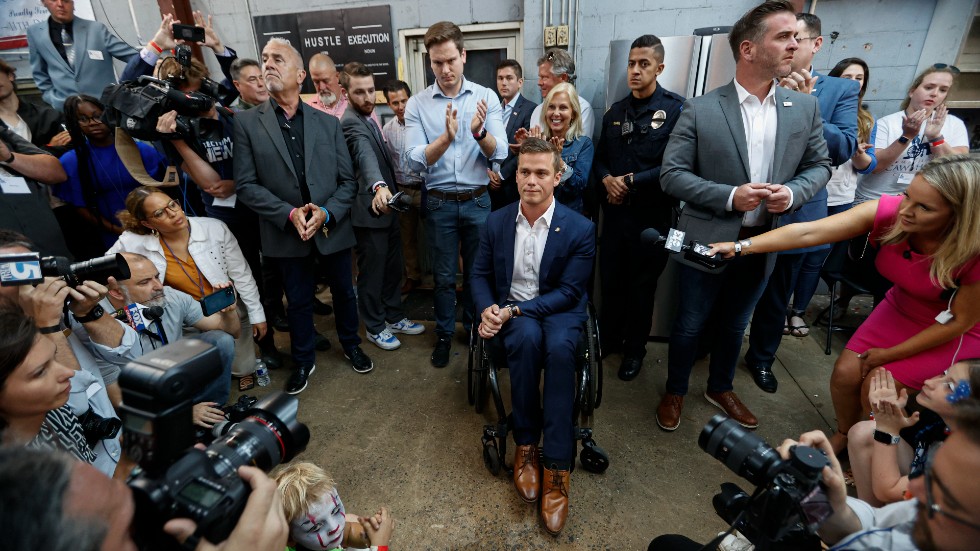
While Trump awaits the fate of Oz in Pennsylvania, he saw one of his endorsed candidates fall in North Carolina as Rep. Madison Cawthorn (R-N.C.) lost his bid for reelection on Tuesday to state Sen. Chuck Edwards (R). 

Cawthorn came under fire from a number of key state Republicans, including Sen. Thom Tillis (R-N.C.), who considered him an embarrassment. That sentiment only grew with every negative news story: he was twice stopped at an airport for carrying a gun, was accused of insider trading, called Ukrainian President Volodymyr Zelensky a “thug” and leveled claims that GOP lawmakers were participating in cocaine-filled orgies. 

However, the problem was simpler, operatives say.

“Primary voters turn on you when they feel like you don’t care about their problems. In a veteran-heavy N.C. district, Cawthorn phoned in constituent services and openly brushed off legislating, one GOP strategist with North Carolina ties told the Morning Report. The videos and scandals were the icing on a cake of bad decisions.”

Cawthorn is the second incumbent lawmaker to lose their primary this year so far, joining Rep. David McKinley (R-W.Va.) in those ranks. 

The Hill: Five takeaways from the Pennsylvania, North Carolina primaries.

© Associated Press / ​​Nell Redmond | Rep. Madison Cawthorn (R-N.C. in Hendersonville, N.C., on Tuesday night. 

Related Articles


The Hill: Rep. Ted Budd (R-N.C.), endorsed by Trump, wins Republican Senate primary, will face Democrat Cheri Beasley.

Niall Stanage, The Memo: Winners & Losers in Tuesday’s primaries.

The Associated Press: Idaho Gov. Brad Little (R) turns back Trump-backed challenger.

Politico: How Trump-backed candidates fared on the busiest primary day.

OPB: In Oregon’s 5th District primaries, Democrat Jamie McLeod-Skinner leads Rep. Kurt Schrader in a potential upset, while the GOP contest remains tight. 

The Hill: Tina Kotek (D) wins Democratic governor’s primary in Oregon.

Reid Wilson, The Hill: Governor’s races spoil Trump’s once-unblemished endorsement record.


Virtual Event Invite

The Opioid Crisis & the Criminal Justice System, Today at 1 p.m. ET

According to SAMHSA, nearly 20 percent of incarcerated individuals have reported regular opioid use. Yet only a small percentage of them are receiving medication-assisted treatment in jails and prisons. How do we improve access to addiction treatment within the criminal justice system? The Hill hosts a discussion on improving addiction treatment and recovery across the criminal justice system with Rep. Madeleine Dean (D-Pa.), Rep. Dave Joyce (R-Ohio), Fairfax County Sheriff Stacey Kincaid and more. RSVP now.


LEADING THE DAY

  ADMINISTRATION

President Biden on Tuesday called white supremacy a “poison” in the United States and called on Americans to reject the racist “great replacement theory” believed to have inspired an 18-year-old white gunman charged in Saturday’s mass shooting in Buffalo, N.Y., in which 10 people died and three were wounded, most of them Black. The suspect, who surrendered to police wearing body armor and armed with an assault rifle, has pleaded not guilty.

“I call on all Americans to reject the lie,” Biden said in emotional remarks Tuesday after meeting with grieving families and community leaders in Buffalo. “I condemn those who spread the lie for power, for political gain and for profit.” 

The president, who broadly faulted the news media, American politics and social media platforms for helping to fuel the radicalization that motivates some racist mass killers, described Saturday’s attack as domestic terrorism and a hate crime, The Hill’s Morgan Chalfant and Brett Samuels report.The murders at a Tops supermarket in east Buffalo remain under investigation by the FBI and state and local authorities.

The Associated Press: Buffalo shooting suspect: lonely, isolated, nerdy. A detailed online collection of diary postings has been attributed to him.

The president briefly revived a long-running appeal for federal gun legislation, including a ban on assault weapons, and he urged action to “address the relentless exploitation of the internet to recruit and mobilize terrorism.”

The Associated Press: Several mainstream GOP Senate candidates openly promote a conspiracy theory about a plot to “replace” the influence of white people in America, considered part of a white nationalist creed.

© Associated Press / Andrew Harnik | Bidens on Tuesday at a makeshift memorial to victims of a Buffalo supermarket mass shooting.

Enactment of gun control legislation this year is unlikely at best. Republicans oppose additional federal gun restrictions, and Democrats need at least 10 Republicans to vote with them in the Senate to overcome any legislative filibuster to pass most legislation. 

The Hill’s Alexander Bolton reports that the events in Buffalo motivate Senate Democrats to respond legislatively, but centrist Sen. Joe Manchin (W.Va.), a swing vote in the caucus, favors a pared-down proposal frowned on by his colleagues that he helped negotiate in 2013 with the National Rifle Association (NRA). Manchin’s position on a gun control measure puts Senate Majority Leader Charles Schumer (D-N.Y.) on the spot if the goal is to respond to public calls for action in Washington.

Meanwhile, Senate Republicans said legislating gun rights is not the answer. “I think I heard a Black person from Buffalo on television say that guns don’t kill, people kill. So, what do you hope to accomplish by gun control?” Iowa Republican Sen. Chuck Grassley said (The Hill).

Grassley received an A-plus rating from the NRA Political Victory Fund in 2016. He is campaigning this year for another six-year term at age 88. Iowa state Sen. Jim Carlin, who promotes Second Amendment rights as part of his campaign platform, is challenging Grassley in Iowa’s June 7 GOP primary (WeAreIowa). 

The Hill: The Denver City Council passed a ban on concealed guns in city buildings and parks on Monday. 

The Hill: U.S. seeks to reset its relationship with oil-rich United Arab Emirates.

  CONGRESS

The House Select committee investigating the Jan. 6 attack on the Capitol is not expecting to call Trump to testify before the panel, Chairman Bennie Thompson (D-Miss.) told reporters Tuesday. 

“We’ve looked at talking to a lot of people. We’ve not canceled out anything, but there’s no feeling among the committee to call him as a witness at this point,” Thompson said of the ex-president. 

“We’re not sure that the evidence that we received can be any more validated with his presence. … I think the concern is whether or not he would add any more value with his testimony,” he added.

As The Hill’s Rebecca Beitsch points out, Thompson’s remarks raise questions about how aggressively the investigatory panel is seeking interviews with other high-ranking Republicans and Trump officials. He did add that the committee is still seeking an interview with former Vice President Mike Pence, adding that conversations with his legal team are ongoing. 

House Democrats also made moves legislatively on Tuesday, headlined by a move to address the nationwide baby formula shortage as House Appropriations Committee Chairwoman Rosa DeLauro (D-Conn.) filed a $28 million supplemental funding bill to help the Food and Drug Administration address the issue (The Hill). 

Speaking at a press conference unveiling the proposal, Speaker Nancy Pelosi (D-Calif.) suggested there could be indictments for those responsible for deaths of two infants who consumed baby formula that may have been contaminated.

“When it comes to babies, it’s the here and now and in this moment. … I think that when all of this is done … I think there might be a need for indictment,” Pelosi said (The Hill).

Finally, lawmakers on Tuesday warned that UFOs pose a “potential national security threat” to the U.S. and need to be treated as such during the first congressional hearing on the topic in more than 50 years. 

Rep. André Carson (D-Ind.), the chairman of the House Intelligence Counterterrorism, Counterintelligence and Counterproliferation Subcommittee, made the remark during the event, which featured top Pentagon intelligence officials, adding that the department swept the issue “under the rug” for years (The Hill).

Reid Wilson, The Hill: The Supreme Court makes another campaign finance slice in McCain-Feingold’s “death by 1,000 cuts.”

IN FOCUS/SHARP TAKES

  UKRAINE CRISIS

Finland and Sweden on Tuesday plowed ahead with their plans to join the NATO alliance despite an eleventh-hour attempt by Turkey to derail the process over their alleged backing for Kurdish fighters. 

Turkish President Recep Tayyip Erdoğan’s opposition to the nonaligned nation’s potential entrance surprised the two Nordic nations, particularly after Erdoğan told Finnish President Sauli Niinistö in early April that he was “supportive,” according to the Finnish leader. 

“Turkey’s statements have changed very quickly and hardened in recent days. But I am sure that we will resolve the situation with constructive talks,” Niinistö said Tuesday in Stockholm. “He said that the Finnish membership should be assessed favorably. Now it seems that there are different opinions. We must continue to discuss.”

To further discuss the NATO move, Niinistö and Swedish Prime Minister Magdalena Andersson are also set to visit  Washington to meet with Biden on Thursday, the White House announced (The Hill).

Reuters: Finland and Sweden hold out hope Turkey’s NATO objections can be overcome.

© Associated Press / Martin Meissner | Finnish Parliament on Monday. 

Russia moved a step closer to defaulting on its debt after the Biden administration indicated that it would fully block Moscow’s ability to pay U.S. bondholders beyond next week’s deadline. 

Shortly after issuing a batch of sanctions against Russia in February, the U.S. also rolled out a waiver to allow Moscow the ability to pay its debts through May 25. However, the U.S. indicated that it would not extend that waiver further, meaning the Russians could be on the verge of their first default on foreign debt in more than a century  (Bloomberg News). 

The decision reportedly came after the Treasury Department and State Department determined that a default would not have a significant economic impact (The New York Times). Russia’s next two bond payments are set for May 27 and June 24. 

“This is something that we are actively examining right now,” Treasury Secretary Janet Yellen said at a Senate Banking Committee hearing last week about the possibility of a default. “We want to make sure that we understand what the potential consequences and spillovers would be of allowing the license to expire.”

Meanwhile, the Russian parliament on Tuesday discussed a proposed law to ban prisoner exchanges with Ukraine after more than 200 soldiers who were part of the Azov Regiment in Mariupol surrendered to Russian forces. The soldiers surrendered after dozens were wounded and required medical treatment and could not escape.

One member of Russian parliament, in a translated video, described the group as a “Nazi” militia and denounced a prisoner swap with the soldiers (The Hill).

The Associated Press: Ukraine hopes to swap steel mill fighters for Russian POWs.

Reuters analysis: Russian President Vladimir Putin takes Mariupol, but a wider Donbas victory is slipping from reach.


📝 Introducing NotedDC, The Hill’s curated commentary on the beat of the Beltway. Click here to subscribe to our latest newsletter


OPINION

■ Bill Clinton’s recipe for economic growth, by William A. Galston, columnist, The Wall Street Journal. https://on.wsj.com/3a7rOAl 

■ The long game of white power activists isn’t just about violence, by Kathleen Belew, author and opinion contributor, The New York Times. https://nyti.ms/3PlLWPn

WHERE AND WHEN

The House meets at noon. The House Judiciary Committee holds a hearing at 10 a.m. about Roe v. Wade and “revoking your rights.

The Senate convenes at 10 a.m. and will resume consideration of Jennifer Rochon to be district judge for the Southern District of New York.

The president will receive the President’s Daily Brief at 10:15 a.m. Biden and the first lady will depart the White House for Joint Base Andrews, where the president will receive a briefing from advisers about hurricane preparedness at 1:45 p.m. Biden will return to the White House.

The first lady will depart Joint Base Andrews today for upcoming itineraries in Ecuador, Panama and Costa Rica through Monday in advance of the U.S.-hosted Summit of the Americas planned in Los Angeles in early June. Her first stop today is in Quito, Ecuador. Upon arrival, she will meet with U.S. embassy staff.

Vice President Harris will deliver the keynote address during the U.S. Coast Guard Academy’s commencement ceremonies in Connecticut, which begins at 11 a.m. (CBS News).

Secretary of State Antony Blinken is in New York where he meets with Pakistani Foreign Minister Bhutto Zardari at 10 a.m. Blinken meets with foreign ministers from Democratic Republic of the Congo, Egypt, Gabon, Ghana, Kenya, Mauritania, Nigeria, South Africa, Zambia and Senegal at 11 a.m. He meets at 1:30 p.m. with Turkish Foreign Minister Mevlut Cavusoglu, the first such meeting in three years between the two NATO members. The secretary at 3 p.m.participates in a food security ministerial meeting.

Yellen will hold a news conference at 9 a.m. EST near Bonn, Germany, at ​​Schloss Drachenburg in advance of the Group of Seven finance ministers and central bank governors meetings.

The White House daily briefing is scheduled for 1:30 p.m. National security adviser Jake Sullivan will join press secretary Karine Jean-Pierre at the podium. The White House coronavirus response team will brief journalists at 10:45 a.m.


🖥  Hill.TV’s “Rising” program features news and interviews at http://thehill.com/hilltv, on YouTube and on Facebook at 10:30 a.m. ET. Also, check out the “Rising” podcast here.


ELSEWHERE  

  CORONAVIRUS 

Healthy children ages 5 to 11 are expected to soon be eligible to receive booster doses of the Pfizer-BioNTech COVID-19 vaccine to refortify their immune systems, a step authorized by the Food and Drug Administration on Tuesday and subject to final approval by the Centers for Disease Control and Prevention (CDC), which meets on Thursday (The Associated Press).

The Hill’s Joseph Choi reports that diagnosis and treatment for “long COVID” and even a sense of how prevalent long-term effects from COVID-19 infection may be in the population are unclear. While recent reports and the CDC indicate there are factors that describe symptoms and that certain underlying health conditions could predispose some individuals to the condition, the National Institutes of Health wants to dig deeper.

🦠 Rep. Sheila Jackson Lee (D-Texas) announced through her staff on Tuesday that she tested positive for COVID-19 and was fully vaccinated and boosted. She participated in a Saturday event with parents and children in Houston and was masked throughout, according to local media coverage (The Hill).

Antigua, Barbuda, Lesotho in South Africa and Taiwan have been added by the CDC to the U.S. COVID-19 travel destination warning list (The Hill).

North Korea is experiencing a serious COVID-19 problem in a country with poor health care, inadequate medical testing, food shortages, no safety net for those who are ill and desperate to work, and a government that has refused international offers of vaccines and other pandemic assistance. Without help from China or other international sources, “North Korea may end up with the pandemic’s worst death and infection rates in the world for its population size,” said Kim Sin-gon, a professor at Korea University College of Medicine in Seoul (The Guardian).

Days after confirming COVID-19 infections for the first time last week, North Korea said it sent three aircraft to China to pick up medical supplies on Monday, according to media reports (Reuters). The country with 25 million people reported a total of 1.48 million people with fever symptoms as of Monday evening, including 56 reported deaths, according to the North’s official KCNA news agency. There was no information about how many North Koreans may have tested positive for the coronavirus in a country without a massive testing infrastructure (The New York Times). 

Total U.S. coronavirus deaths reported as of this morning, according to Johns Hopkins University (trackers all vary slightly): 1,000,205. Current average U.S. COVID-19 daily deaths are 274, according to the Centers for Disease Control and Prevention.

STATE WATCH

New Mexico Gov. Michelle Lujan Grisham (D) on Tuesday during a phone call with Biden about devastating wildfires in her state emphasized a partnership with the administration for recovery assistance, which Biden affirmed, according to a White House statement. … In California, U.S. authorities on Friday discovered an underground drug smuggling tunnel stretching from Tijuana to San Diego. The subterranean route, disclosed on Monday, featured rail and ventilation systems, electricity, and reinforced walls. Six people, ages 31 to 55, were charged with conspiring to distribute cocaine. All are Southern California residents (The Associated Press). … Traffic fatalities across the country in 2021 hit a 16-year high and were up more than 10 percent over 2020, according to the National Highway Traffic Safety Administration on Tuesday. Multiple vehicle crashes, crashes on urban roads and accidents involving drivers older than 65 were to blame for much of the surge (The Hill). … Here’s another way U.S. lives could be saved through vehicular changes: If the U.S. eliminated auto emissions, it could prevent approximately 11,700 premature deaths per year, with local and regional health benefits, according to an air quality health study published on Monday (NBC News).

THE CLOSER

© Associated Press / Nam Y. Huh | Fan seeks autograph at Yankee Stadium on Sunday. 

And finally … justice is served for a young baseball fan. 

Elyjah Blankenberg, an 11-year-old Yankees fan and autograph enthusiast, suffered heartbreak during a March spring training game when a binder full of baseball cards, autographed and not, was either stolen or lost, including one signed card featuring his favorite player, Yankees star D.J. LeMahieu.

After his mother posted a shot-in-the dark plea on Facebook in an attempt to retrieve the missing card binder and a local reporter aired a story on the situation (and left an address for anyone to either return the binder or help Elyjah rebuild his card collection), the card and autograph collectors of America sprung to action. In the weeks following the reporter’s piece, dozens of packages arrived at the address featuring signed balls and memorabilia of sports stars, including a number of Baseball Hall of Famers and even famous teams, and full baseball card sets.

In addition, LeMahieu himself sent an autographed ball made out to Elyjah directly. And that is the magic of baseball (ESPN). 


Stay Engaged

We want to hear from you! Email: Alexis Simendinger and Al Weaver. Follow us on Twitter (@alweaver22 & @asimendinger) and suggest this newsletter to friends!

Source: TEST FEED1

Connecticut Gov. Lamont holds 13-point lead over potential rival

Connecticut Gov. Ned Lamont (D) holds a 13-point lead over his potential GOP opponent, business executive Bob Stefanowski, according to a new poll from The Hill and Emerson College.

Fifty-one percent of Connecticut voters said they planned to support Lamont, while 38 percent said they planned to back Stefanowski. Another 12 percent said they were undecided.

Lamont is running for a second term as governor, while Stefanowski is widely considered to the likely Republican nominee in the general election.

If Stefanowski wins the GOP nomination, it will mark a rematch between him and Lamont. Lamont defeated Stefanowksi in the 2018 gubernatorial race by roughly three points.

Still, Stefanowski could face an uphill climb going up against a Democratic incumbent in the blue state. The non-partisan Cook Political Report rates the race as “likely Democratic.”

The same poll also showed fifty-five percent of voters said they approved of the job Lamont was doing, while 32 percent said they disapproved.

Lamont appears to be performing slightly better than President Biden ahead of the November election. Biden has a 53 percent approval and 42 percent disapproval rating in the state.

However, Biden and Lamont’s approval ratings among independent voters in the state appear to be vary. Fifty-three percent of independent voters said they disapproved of Biden, while 40 percent said they disapproved of Lamont. Forty-seven percent of independent voters said they approved of the job Lamont was doing.

The Hill/Emerson College survey was conducted on May 10-11, 2022 among 1,000 registered voters. The poll’s margin of error is plus or minus three percentage points.

Source: TEST FEED1

Manchin throwing a wrench into Democrats’ push for broader gun control

A racially motivated mass shooting in Buffalo is putting new pressure on Democrats to consider gun-control legislation — but once again centrist Sen. Joe Manchin (D-W.Va.) is emerging as a problem. 

Manchin says the pared-down Manchin-Toomey proposal to expand background checks, which he helped negotiate in hope of getting support from the National Rifle Association in 2013, is the only reform that has a chance of passing the 50-50 Senate, undercutting Democrats’ hopes of passing broader legislation. 

While more ambitious proposals to ban assault weapons and high-capacity magazines never had a chance of getting 60 votes in the Senate, Democrats hoped to at least unify their caucus behind the background checks legislation passed by the House last year.

But Manchin on Tuesday said his old proposal negotiated with the retiring GOP Sen. Pat Toomey (Pa.) that could expand background checks for commercial transactions is the best option. 

“I support the Manchin-Toomey, I’ve always done that,” he said. “The Manchin-Toomey is the one. I think if you can’t get that one, then why try to do something just for basically voting for the sake of voting?”  

He made his comments shortly before President Biden called for new gun-control legislation during nationally televised remarks after speaking with the families of people who were killed or severely injured at a racially motivated mass shooting in Buffalo.  

“There are certain things we can do. We can keep assault weapons of our streets. We’ve done it before. I did it when I passed the crime bill,” Biden said, referring to the 10-year assault weapons ban included in the 1994 Violent Crime Control and Law Enforcement Act.  

Also speaking in Buffalo, Senate Majority Leader Schumer (D-N.Y.) pledged “to work towards finally ridding our streets of weapons of war.”  

Manchin’s stance means that Democrats won’t likely get his support for the broader background checks bill passed by the House in March of last year and certainly not for more ambitious proposals to ban assault-style rifles or large-capacity ammo magazines.  

Manchin told reporters in March of last year that he thought the House-passed bill went too far.  

“What the House passed? Not at all,” he told reporters at the time when asked whether he could support legislation that extended background checks to all sales and transfers of firearms.  

On Tuesday, Manchin said he hadn’t paid much attention to what the House did.  

Instead, he reiterated his view that the pared-down Manchin-Toomey proposal, which expanded background checks to include gun shows and Internet sales but exempted transfers between friends and family, is the best way to go.  

“The best piece of legislation that we’ve ever had, that most people agreed on, was the Manchin-Toomey. We didn’t infringe on anyone’s rights privately,” he said.  

He added “the biggest problem” that needs to be dealt with is keeping firearms out of the hands of people who are dangerously mentally ill.   

“The biggest problem that we have — we haven’t done enough with mental illness in this country, and that’s something we should all agree on needs to be absolutely stepped up,” he said.  

Leading Senate Democratic advocates for gun-control legislation, however, say Manchin-Toomey doesn’t go far enough.  

“I’ve never signed on. It needs to be made stronger. But I haven’t even heard that it’s in the works anyway,” said Sen. Richard Blumenthal (D-Conn.), the chairman of Judiciary’s Constitution Subcommittee, who held hearings last year on proposals to reduce gun violence.  

“I don’t know what Manchin-Toomey is at this point. It is a shapeshifting, kind of vague proposal without any specifics,” he said.  

Sen. Chris Murphy (D-Conn.), another outspoken advocate for expanding background checks, told The Hill last year that he wanted to pass legislation that goes further than the Manchin-Toomey proposal from nine years ago.  

“It’s hard to define what a commercial sale is,” Murphy said at the time the House passed its stronger background-checks legislation. “If it’s selling to a stranger, but that didn’t occur online or at a gun show, is that a commercial sale?”  

He said a better option would be to create a clear carveout for sales and transfers between family members.  

Some Democrats, eager to rack up more legislation accomplishments before the midterm election, may be willing to take less than they initially hoped for after taking over the Senate last year.  

“At this point we got nothing and it’s a non-stop blockade,” said Sen. Sheldon Whitehouse (R-R.I.) of entrenched Republican opposition to the gun-control measures passed by the House in March of last year.  

But there are serious doubts about whether Manchin-Toomey could even get 10 Republican votes to overcome a Senate filibuster.  

As of Tuesday, Sens. Susan Collins (R-Maine) and Toomey are the only two Senate Republicans to express support for the legislation. They are the only two Republicans who voted for it in 2013 still in Congress.

“I still support the policy. The political path forward is not obvious to me,” Toomey said before the weekly caucus lunch.  

Two other key moderates, Sens. Lisa Murkowski (R-Alaska) and Mitt Romney (R-Utah) told The Hill Tuesday that they haven’t given any serious thought to supporting the legislation. 

Murkowski, who was in the Senate in 2013, voted against it, along with most of her caucus and several moderate Democrats who have since left Congress, including former Sens. Max Baucus (D-Mont.), Mark Begich (D-Alaska), Heidi Heitkamp (D-N.D.) and Mark Pryor (D-Ark.).  

“You’re going back too much in time for me to give you a really thoughtful and informed answer,” she said, when asked if she might change her mind about Manchin-Toomey. “I have not keyed in on what is currently out there in the legislative portfolio of what’s being considered on guns.”  

Romney said he told voters during his 2018 Senate campaign that he did not support new gun control measures.  

“However, the exception was with regard to more effective background checks. So I would have to look at the specific proposals to make that determination,” he said.  

Senate Republican Leader Mitch McConnell (R-Ky.) declined to say whether there would be 10 Republican votes to pass Manchin-Toomey, which he voted against years ago.  

“I’d love to be the majority leader. I hope to be after November. But that’s a better question to ask of Sen. Schumer,” he said.  

Source: TEST FEED1

Senate GOP resists calls for gun control after Buffalo shooting

Senate Republicans are resisting calls for gun reform in response to the recent mass shooting in Buffalo, N.Y., frustrating their colleagues across the aisle who say more action is needed in wake of the massacre.

While Republicans have been quick to denounce the racist mass shooting, in which 10 people were killed and 3 were wounded at a supermarket in a predominantly Black neighborhood, members of the party and leadership have also been swift in countering growing Democratic-backed calls for gun reform.

“It just doesn’t seem to be helpful to me to go after law-abiding citizens and our Second Amendment rights, so I’m going to continue to hold that position,” Sen. John Barrasso (R-Wyo.), a member of GOP leadership, said Tuesday.  

“I think I heard a Black person from Buffalo on television say that guns don’t kill, people kill. So what are you going to accomplish by gun control?” Sen. Chuck Grassley (R-Iowa) said on Monday. “Particularly, if it’s a violation of the Second Amendment?”

The comments underscore what Democrats say would be a heavy lift for significant action on gun reform following the shooting in the evenly split Senate, where the party would need the support of all of its members, and at least 10 Republicans, to pass gun reform legislation.

“I think we’ve got to continue to organize around it. But clearly, if we can’t get the votes for Manchin-Toomey in the Senate right now, it’s going to be hard to move any bills,” Sen. Cory Booker (D-N.J.) said on Tuesday, referring to gun reform legislation first introduced by Sens. Joe Manchin (D-W.Va.) and Pat Toomey (R-Pa.) years back, following the Sandy Hook Elementary School shooting.

Manchin expressed similar frustration on Monday when discussing his and Toomey’s legislation, which sought to mandate background checks for all gun commercial sales.

“We can’t even get Manchin-Toomey, which didn’t violate anyone’s rights. It just said there should not be a commercial transaction unless there’s a background check,” Manchin said. “It’s the most, I think it’s the most agreed upon, it’s the most accepted in the country and we can’t even get that done.”

The Saturday shooting in Buffalo has been regarded as the deadliest in the United States this year.

The massacre occurred at a Tops Friendly Markets on Saturday afternoon, when officials say a white gunman opened fire on people outside and inside the store. Eleven of the 13 victims were identified as Black in the shooting. 

Officials have said the shooting was motivated by racist hatred, after the suspect, 18-year-old Payton Gendron, was found to have pointed to the so-called great replacement theory in writings ahead of the shooting.

In the days since the shooting, some Republicans opposing calls for gun reform have voiced support for measures focused on mental health, but Democrats and advocates have called for further action, ranging from expanding background checks to red flag laws.

Josh Horwitz, co-director of the Johns Hopkins Center for Gun Violence Solutions, said he thinks there needs to be more national legislation for gun reform, particularly while discussing the guns used by the suspect, which NPR reports included an AR-15-style assault rifle and a high-capacity magazine currently banned in New York.

“I think that speaks for a nationwide law to address these issues, because, right now, we have a patchwork of state laws,” Horwitz said. “And I think it’s highly important that, when you’re talking about these types of weapons, that we have a strong national policy, and especially on these high-capacity magazines.”

The White House has also stepped up pressure on Congress for action, with President Biden advocating for gun reform during his visit to Buffalo on Tuesday.

“I know tragedy will come again. It cannot be forever overcome. It cannot be fully understood either. But there are certain things we can do. We can keep assault weapons off our streets,” Biden said.

“We’ve done it before. I did it when we passed the crime bill last time. And violence went down, shootings went down,” continued Biden, who helped work on the Federal Assault Weapons Ban of 1994 that expired almost two decades ago. 

Democrats like Sen. Elizabeth Warren (D-Mass.) say the party should nix the filibuster in order pass significant gun reform action without GOP support. But chances of success for such an effort are dim given past opposition from Manchin and Sen. Kystren Sinema (D-Ariz.) to change the rule, which requires 60 votes of passage for most legislation.

“​​Legislative reform will require rolling back the filibuster, and to do that, we need two more Democrats,” Warren said on Tuesday.

“That’s why more and more this midterm election is going to be asking some really powerful questions,” Booker said. “So, are we going to elect people that don’t do common sense gun rights reform or not? That’s something I’m gonna be pushing for.”

Source: TEST FEED1

Governor's races spoil Trump's once-unblemished endorsement record

Former President Trump’s once-unblemished record of exercising his influence over Republican primary voters has run into a rough patch with voters who are picking nominees in gubernatorial contests, where his unrivaled authority is not always proving a winning ticket.

Idaho voters on Tuesday rejected Trump’s chosen candidate, Lt. Gov. Janice McGeachin (R), who picked a fruitless fight against Gov. Brad Little (R). The race was called for Little with just over 30 percent of the vote counted.

Those results come a week after Nebraska voters chose university regent Jim Pillen (R) over Charles Herbster (R), a rancher and major Trump backer who had been accused of harassment by multiple women. And in Georgia, voters are a week away from delivering another likely blow to Trump’s record; polls show Gov. Brian Kemp (R) easily outpacing former Sen. David Perdue (R), one of the few candidates for whom Trump has actually spent money.

When it comes to federal races for U.S. Senate or House seats, Trump’s record of picking winners is formidable. But political observers say voters think differently about gubernatorial contests, the winners of which will have to handle more mundane tasks like building roads and bridges and managing disasters.

“Races for governor are different.  When people vote for governor, they are thinking about state-level issues,” said John Pitney, a former research director at the Republican National Committee (RNC) and a political scientist at Claremont McKenna College. 

Pitney pointed to former Montana Gov. Steve Bullock (D) — once a student of his — along with former Hawaii Gov. Linda Lingle (R) and former Massachusetts Gov. William Weld (R). All won gubernatorial elections in states that generally favor the other party, and all lost subsequent elections for U.S. Senate seats even though voters gave them high job approval ratings.

“People generally look at governors differently than they do other elected positions,” said Michael Steele, the former RNC chairman and lieutenant governor of Maryland who ran for a U.S. Senate seat in 2006. “Voters looked at me differently. The expectations were much different on me as a federal candidate than as a statewide candidate. Not more or less, just different.”

Though Trump’s influence is less powerful in gubernatorial contests, it is not meaningless, and it has not stopped even incumbent governors from seeking his endorsement. Trump has publicly backed incumbent governors of Texas, Alaska, Tennessee, South Carolina, South Dakota and Oklahoma this year. 

Showcasing Trump’s hold on his party, he made his endorsement of Alaska Gov. Mike Dunleavy (R) conditional on Dunleavy staying neutral in Sen. Lisa Murkowski’s (R) re-election bid, a condition to which Dunleavy agreed.

But where Trump’s nod once cleared Republican primary fields, gubernatorial candidates who do not win his blessing are no longer shrinking away. 

Trump backed Pennsylvania state Sen. Doug Mastriano (R) only in the closing days of the Commonwealth’s primary, long after it became clear Mastriano — who was in Washington during the Jan. 6 insurrection — would win the Republican nod. He has backed candidates in Nevada and Arizona who lead their respective fields, though they have not yet won.

Trump’s “supporters — and the former president himself — are more energized by national ‘hot-button’ issues and less by the more managerial challenges governors generally must address,” said John Weingart, director of the Center on the American Governor at Rutgers. “So they may be more open to parting ways with him when evaluating potential state chief executives.”

If the first two gubernatorial losses Trump suffered are outliers — Herbster’s accusers put their names on the record in a series of explosive stories before primary day, and McGeachin made the mistake of challenging a sitting incumbent who had not committed a fireable offense — next week’s election in Georgia may represent a different set of cracks in Trump’s armor. 

Trump and Perdue have relentlessly attacked Kemp for two years for the Georgia governor’s apostasy of failing to overturn Trump’s lost election, over which Kemp had no control. But Trump’s attempt to bring his national cry of a stolen election — for which he has offered no evidence — to a state-level race apparently has not swayed those who are supposed to be his core voters. 

What was once a close race, in which Kemp and Perdue were running virtually tied, has exploded into a rout, and recent polls show Kemp will win the Republican primary without the need for a runoff.

The false allegations of a stolen election “is the most polarized national issue, forced on the states,” said Thad Kousser, chair of the political science department at the University of California-San Diego. “Wins by gubernatorial candidates who resist the ‘Stop the Steal’ narrative can be taken as evidence of the limits of the appeal of that message in races for the most pragmatic and responsible office in American politics, where voters look for someone they can fully trust.”

Source: TEST FEED1

Winners and losers from Tuesday’s primaries

Tuesday was the most dramatic primary night so far this election cycle. 

High-profile battles were fought in Pennsylvania and North Carolina, while voters in Idaho, Kentucky and Oregon also went to the polls.

The night’s marquee contest — the GOP Senate primary in Pennsylvania — has yet to be decided, with TV personality Mehmet Oz and businessman David McCormick only a hair’s breadth apart in the early hours of Wednesday. 

Here are the big winners and losers so far.

WINNERS

Lt. Gov. John Fetterman

Fetterman was the clearest winner of the night — from his hospital bed.

Fetterman, 52, suffered a stroke on Friday and had a pacemaker device fitted on Tuesday. The candidate says he did not incur any “cognitive damage” from his stoke.

His health drama appears to have had no negative impact on his electoral performance. With almost 90 percent of returns in by midnight, Fetterman had racked up more than twice as many votes as his closest rival, Rep. Conor Lamb (D-Pa.).

It was a striking victory for Fetterman, whose unorthodox appeal is underlined by his shaven-headed appearance and fondness for dressing in shorts and hoodies.

Fetterman leans toward the more progressive side of the Democratic Party, so his victory gave the left a much-needed boost.

He will have to wait to see whom he will face in November, but his margin of victory on Tuesday demonstrates striking enthusiasm for his candidacy among his party’s base.

Election denialism

Another of the more emphatic results of the night was notched up by state Sen. Doug Mastriano, who became the GOP’s gubernatorial nominee in Pennsylvania.

Mastriano has trafficked in false claims of fraud in the 2020 election and came to Washington on Jan. 6, 2021, though he has said he did not enter the Capitol itself. 

After the election, but before the insurrection, Mastriano had pushed for an alternate slate of electors to be appointed by the state legislature in Pennsylvania — a move that would likely have overturned the election result in the state had it been successful. 

Democrats’ alarm about Mastriano’s beliefs is leavened by their confidence that their nominee, Attorney General Josh Shapiro, can defeat the Republican in November. 

Still, Mastriano’s victory underlines, one more time, just how the fictions propagated by former President Trump have been mainstreamed among Republican voters.

Perhaps that should be no surprise: An Economist/YouGov poll last week indicated that 76 percent of GOP voters believe President Biden was not the legitimate winner of the 2020 election.

Progressive Democrats

There are some results still to come but Tuesday was shaping up to be a solid night for the left of the Democratic Party. 

In addition to Fetterman’s victory, an even more left-wing candidate, Summer Lee, was holding onto a lead, albeit a minuscule one, against the more centrist Steve Irwin in a House primary in Pennsylvania’s 12th district.

Early returns from the Democratic primary in Oregon’s 5th district — which could still change — showed progressive favorite Jamie McLeod-Skinner pulling ahead of incumbent Rep. Kurt Schrader.

If McLeod-Skinner pulls off the victory, it will be cause for jubilation on the left — and embarrassment at the White House. President Biden endorsed Schrader.

Sen. Thom Tillis and GOP House leadership

Controversial Rep. Madison Cawthorn (R-N.C.) was defeated in his primary by state Sen. Chuck Edwards (R), despite having been endorsed by Trump.

Sen. Thom Tillis (R-N.C.) had supported Edwards, a remarkable and risky intervention that ultimately paid off.

There won’t be too many tears shed among GOP leaders in Washington over Cawthorn’s loss either.

Cawthorn was a headache for GOP leadership, sparking furors ranging from the emergence of photos of him dressed in women’s lingerie to his assertion that he had been invited to orgies. 

House Minority Leader Kevin McCarthy (R-Calif.) said after the latter controversy that he had told the freshman congressman he had “lost my trust.”

MIXED

Former President Trump

Tuesday was a mixed night at best for Trump. 

Cawthorn’s defeat was one blow. 

Another came with the uncertainty in the Pennsylvania Senate primary. Trump backed Oz there. Even if the TV personality prevails in the end, it will be by the skin of his teeth.

Trump can point to other, more favorable results. 

In North Carolina, his pick in the GOP Senate primary, Rep. Ted Budd, won with consummate ease over former Gov. Pat McCrory. 

Trump left it very late to endorse Mastriano in the Pennsylvania gubernatorial primary— but Mastriano is cut from very Trump-like cloth.

Overall, it was a night that saw Trump’s hold on the GOP appear not quite so solid as previously thought.

Democratic general election hopes

Democrats had hoped that conservative commentator Kathy Barnette’s late surge in the Pennsylvania GOP Senate primary would propel her to victory. 

Most Democratic insiders believed Barnette, with her history of inflammatory statements and scant political experience, would be the easiest candidate to defeat in November.

Instead, they have wound up with either McCormick or Oz, who are likely to be tougher adversaries.

On the other hand, Democrats believe Mastriano’s wide victory in the gubernatorial race gives them a real opening there.

Losers

Rep. Madison Cawthorn (R-N.C.)

The 26-year-old congressman’s defeat was one of the biggest headlines of the night.

The dynamics behind that defeat have been mentioned above, but it was still a remarkable fall for the pro-Trump provocateur.

He can easily find a prominent place in the conservative media firmament if he wants one, post-Congress. But a primary defeat before his first term is out must surely be a bitter pill nevertheless.

Rep. Conor Lamb (D-Pa.)

Just four years ago, Lamb was a rising star in the Democratic Party. 

In 2018, he won a special election in a Republican-leaning district to become a congressman at the age of just 33.

At the time, Lamb’s ideological moderation and military record — he served in the Marine Corps — was perceived to be an ideal recipe to win competitive districts. 

But the congressman never gained traction in the Senate race this year. 

Some blamed the fact that he entered the race six months after Fetterman. But it also seemed as if Democratic primary voters simply weren’t buying the conventional centrism that Lamb represents.

The Associated Press called the race for Fetterman less than an hour after polls closed — an embarrassing loss for Lamb, given his previously elevated reputation.

Kathy Barnette

Barnette looked like the woman of the moment in the final stretch of the GOP Pennsylvania Senate primary.

Her momentum appeared so pronounced that there were real prospects of a Barnette victory as Tuesday dawned. 

In the end, she didn’t come particularly close.

Clarity

Tuesday’s results — and the lack of results in some places — made it tougher than normal to draw clear lessons.

Trump’s endorsement mattered some places — but not in others.

An ultra-MAGA approach was Mastriano’s ticket to victory — but not enough for Barnette.

Ultimately, the night was a reminder that candidates, and the dynamics of each individual race, can matter as much as the big national trends.

Source: TEST FEED1

Five takeaways from the Pennsylvania, North Carolina primaries

Key nominating contests in Pennsylvania and Oregon headed into Wednesday morning without any clear resolution. 

But the May 17 primaries in five states offered some valuable clues about where both parties and their voters stand less than six months out from the 2022 midterm elections that will decide control of both chambers of Congress. 

Here are five takeaways from Tuesday’s races.

Trump’s endorsement power remains in question

Tuesday’s primaries were a mixed bag for Trump.

His preferred candidate in North Carolina’s GOP Senate primary, Rep. Ted Budd (R-N.C.), easily defeated former Gov. Pat McCrory and former Rep. Mark Walker (R-N.C.) to clinch the party’s nomination. And in the state’s 13th congressional district, Trump’s endorsement helped propel former college football player Bo Hines to victory, despite the candidate’s questionable ties to the district.

But that’s about where the good news stopped for Trump. 

Rep. Madison Cawthorn (R-N.C.), a staunch ally of the former president who received his endorsement last year, was denied a second term in Congress after losing to state Sen. Chuck Edwards in the GOP primary for North Carolina’s 11th District. Cawthorn faced numerous controversies that made him a pariah even among some in his own party.

Meanwhile, in Idaho, Trump’s endorsed candidate for the Republican gubernatorial nod, Lt. Gov. Janice McGeachin, was soundly defeated by incumbent Gov. Brad Little.

And while the former president had hoped that his support would push celebrity physician Mehmet Oz across the finish line in Pennsylvania’s GOP Senate primary, the race appears increasingly likely to head to a recount, with former hedge fund manager David McCormick holding his own. 

Of course, there were other factors at work. In the North Carolina GOP Senate primary, for instance, Budd benefited heavily from the support of the conservative Club for Growth, which spent more than $11 million to boost him ahead of the primary.

And Cawthorn faced a series of damaging revelations and missteps ahead of his primary that may have simply been too much for Trump’s endorsement to overcome.

All that’s to say that Trump’s endorsement may not always be the ticket to victory that he wants it to be.

The GOP establishment bounces back 

In the midst of the fierce civil war between the GOP’s traditional and hardline flanks, Tuesday marked a key victory for the establishment.

In Pennsylvania, Oz maintained the narrowest of leads in the GOP Senate primary, with McCormick right on his tail, outpacing many late polls. Meanwhile, trailing about 6 points behind, is Barnette, a conservative commentator and firebrand who likely would have caused headaches for leadership if she made it to the upper chamber.

And in North Carolina, Cawthorn’s loss showed that there are limits to what voters will tolerate.

Cawthorn faced a wave of rebukes in recent months over comments he made suggesting fellow Republican lawmakers invited him to cocaine-fueled orgies; insider trading allegations; driving with an expired license; trying twice to bring a loaded gun through airport security; and more.

GOP leaders mobilized against Cawthorn, with Sen. Thom Tillis (R) making a stunning endorsement of Edwards.

And in Idaho, Little, a staunch conservative with a record of cutting taxes and restricting abortion access, fended off a challenge from his deputy, McGeachin. The latter had launched her primary challenge to Little after she said he should have banned mask and vaccine mandates. Little never imposed any mandates but allowed localities to make their own decisions.

The night wasn’t without any successes for GOP firebrands, however.

State Sen. Doug Mastriano did win the GOP nod in Pennsylvania’s gubernatorial race. But even that nomination came after Republican officials sought to head off his nomination over concerns his intense focus on unsubstantiated voter fraud claims from 2020 would hinder his electability.

Fetterman triumphs

Pennsylvania Lt. Gov. John Fetterman had a victorious night on Tuesday, clinching the Democratic nomination in Pennsylvania’s Senate race and capping off a campaign that saw him leading the primary field for nearly the entire race.

Fetterman fended off bids from Rep. Conor Lamb and state Rep. Malcolm Kenyatta, an unsurprising result given the lieutenant governor’s consistent, double-digit polling lead in the primary’s closing weeks.

Still, the nomination comes after months of speculation over Fetterman’s electability in a general election.

Fetterman has been pegged as a progressive, in part due to his support for Sen. Bernie Sanders’s (I-Vt.) presidential bids and policies like a $15 minimum wage and marijuana legalization.

Some Democrats have voiced concern that that reputation could turn off swing voters in November. However, others suggest that his hulking six-foot-nine-inch frame, goatee and forearm tattoos could draw support from the kinds of blue-collar voters who have deserted Democrats in droves.

Just days before Election Day, Fetterman also suffered a stroke, throwing an 11th-hour curveball into the primary. However, Fetterman’s campaign quickly informed voters that he was anticipated to make a full recovery, and his win in every single Pennsylvania county hands him the chance to run for retiring Sen. Pat Toomey’s (R) seat.

Trumpism remains potent force 

Regardless of Trump’s record Tuesday evening, his broader impact on the party was still on display.

His influence was clearly seen in his endorsed candidates, particularly Mastriano, who has ardently taken up the former president’s rallying cry that the 2020 race was “stolen” from him.

But even candidates who missed out on Trump’s imprimatur ran on his agenda.

McCormick, who had vied for Trump’s support before Oz won the endorsement, still ran ads in the primary’s final stretch touting himself as an “America First” conservative and tying himself to Trump.

And in Idaho, Little still voiced support for Trump’s policies and emphasized during his campaign the positive working relationship the two had during the previous administration.

In the end, Tuesday’s primaries showed that even when Trump’s chosen candidate falls short, the victor is still taking pages out of the MAGA playbook.

Progressives have reason to be happy

Fetterman’s victory in the Pennsylvania Democratic Senate primary may have been the highest-profile win for the party’s left flank on Tuesday. But progressives also saw a number of bright spots in down-ballot races, giving them reason for optimism after a series of disappointing defeats.

In the Democratic primary to represent Pennsylvania’s new 12th District, state Rep. Summer Lee is leading attorney Steve Irwin and appears on track to notch a win. 

Lee has the backing of top progressives like Sen. Bernie Sanders (I-Vt.) and has been billed as a potential future member of the “Squad,” the group of left-wing lawmakers that includes Reps. Alexandria Ocasio-Cortez (D-N.Y.), Ilhan Omar (D-Minn.), Ayanna Pressley (D-Mass.), Rashida Tlaib (D-Mich.), Cori Bush (D-Mo.) and Jamaal Bowman (D-N.Y.).

Similarly, in Oregon’s 5th District, moderate Rep. Kurt Schrader (D-Ore.) appears to be in real trouble in his bid against progressive challenger Jamie McLeod-Skinner, who has also racked up endorsements from top progressive groups and labor unions.

To be sure, progressives suffered some disappointments, as well. Nida Allam, who carried the endorsements of Sanders and Ocasio-Cortez, lost a Democratic House primary in North Carolina’s 4th District, while former state Sen. Erica Smith lost a primary for another North Carolina House seat to state Sen. Don Davis, handing progressives a defeat.

Still, the Democratic Party’s left flank has some wins to celebrate, especially after a long streak of lackluster performances.

Source: TEST FEED1

Little fends of Trump-backed primary challenge in Idaho governor primary

Idaho’s incumbent Gov. Brad Little (R) successfully fended off several Republican challengers on Tuesday, one of whom was backed by former President Trump, and is projected to have secured Idaho’s GOP gubernatorial nomination.

ABC News and CNN both called the race not long after 12 a.m. ET.

Little’s victory is seen as a defeat for Trump, who had thrown his support behind Lt. Gov. Janice McGeachin (R). Trump saw one of his other endorsed gubernatorial candidates lose a primary last week, when businessman Charles Herbster lost to James Pillen in Nebraska.

While McGeachin was seen as his most formidable opponent, Little was facing a total of seven primary challengers.

Little is one of two sitting GOP governors who Trump has gone against this primary season. Trump backed former Sen. David Perdue (R-Ga.) in his primary challenge against Georgia Gov. Brian Kemp (R).

Little and McGeachin have clashed in the past, particularly on coronavirus policies. Last year, McGeachin banned mask and vaccine mandates on two separate occasions when Little was out of state.

Source: TEST FEED1

Bo Hines wins GOP nomination for North Carolina House seat

Former college football player Bo Hines is projected to win the Republican nomination to represent North Carolina’s 13th Congressional District on Tuesday, beating out a crowded field of rivals with the help of former President Trump’s endorsement.

The Associated Press called the race for Hines at 11:32 p.m.

Hines, a 26-year-old former wide receiver at North Carolina State University, faced criticism in the race for his questionable ties to the district; he filed to run in two other districts before settling on a bid in the 13th.

His main opponent in the primary, attorney Kelly Daughtry, attacked Hines repeatedly as a carpetbagger while spending heavily to highlight her conservative credentials.

But Hines benefited from his name recognition and the support of Trump and the conservative Club for Growth, which spent more than $2 million to boost him in the primary. 

That backing ultimately paid off for Hines on Tuesday when he defeated seven Republican candidates to clinch the nomination outright, saving him from a potential July primary runoff. 

North Carolina’s open 13th District is considered competitive for both parties this year, with the Cook Political report, a nonpartisan election handicapper, putting the race in the toss-up column. 

Source: TEST FEED1

Kotek wins Democratic governor's primary in Oregon

Former Oregon House Speaker Tina Kotek (D) is projected to win the state’s Democratic gubernatorial primary, defeating fourteen other candidates for the party’s nomination.

The Associated Press called the race at 11:30 p.m. ET.

Kotek was seen as the frontrunner in the intraparty gubernatorial battle, but state Treasurer Tobias Read appeared to be in striking distance of winning the nomination in the runup to the primary.

According to a poll that was conducted on behalf of Read’s campaign last month, Kotek held a five-point lead over Read, 25 percent to 20 percent.

Kotek’s primary victory is likely to result in a general election win in November, given Oregon has not had a GOP governor in over 30 years.

Source: TEST FEED1